

 Español
 عربى
عربىYes, extra large dish drying racks are made, and they come mainly from specialist metal homeware manufacturers rather than from the big appliance names. The difficulty is that "extra large" is a marketing label, not a standardised size class. Two racks carrying the same description can differ by four inches in width and by six plates of capacity. The practical move is to stop reading the label and compare three numbers instead: the overall footprint, the usable depth in front of the plate slots, and the clear height between the base tray and the upper tier.
What follows covers how extra large racks are actually sized, where they fail in daily use, which materials survive years of wet plates, and how a custom size gets specified when nothing in stock is big enough.
What "Extra Large" Means in Real Measurements
An extra large dish drying rack usually measures 18 to 22 inches wide, 13 to 16 inches deep and 7 to 9 inches tall, with a plate capacity of roughly 12 to 18 items.
Below that band, racks are sold as standard or large. Above it, you are generally looking at a semi-custom or custom build, because retail packaging, container loading and shelf space all push manufacturers towards compact footprints. The ranges below reflect what most metal rack factories in this category work to.
| Size band | Typical footprint (W x D x H) | Plate capacity | Best suited to |
|---|---|---|---|
| Compact | 13-15 x 9-11 x 5-6 in | 6-8 | One or two people, small counters |
| Large | 16-18 x 12-13 x 6-7 in | 9-12 | Typical family kitchen |
| Extra large | 18-22 x 13-16 x 7-9 in | 12-18 | Households of four or more, batch washing |
| Oversized or custom | 22 in and above, depth made to order | 18+ | Fixed counter runs, light commercial use |
Note the difference between the last two rows. An 18-inch rack and a 22-inch rack are not the same product scaled up: the deeper unit normally adds a second tier and a longer drainboard, which changes where it can sit on the counter.
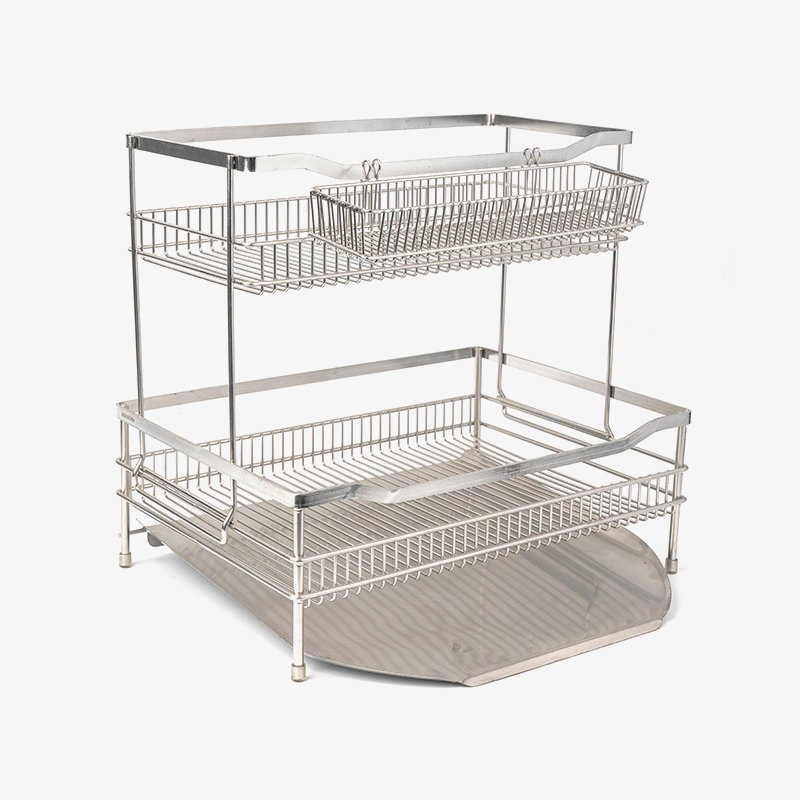
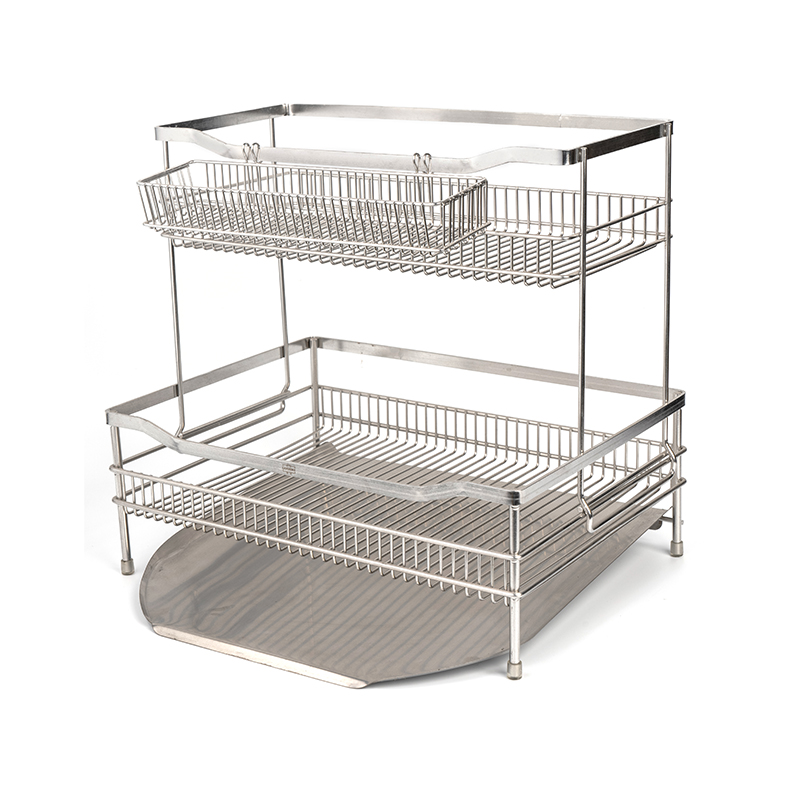 Stainless Steel Double Layer Dish Drying Rack with Drainboard, CZ 13A two-tier 304 stainless steel countertop rack with drainboard, concave feet, and stable frame for loaded dishes in busy kitchens.View Product →
Why So Many Racks Sold as Large Still Run Out of Room
The limiting factor is rarely the outer width. It is how the interior is divided.
- Single-level trays. A 20-inch rack with one flat tray holds fewer plates than a 17-inch rack with two offset tiers, because the second tier uses vertical air that was otherwise wasted.
- Over-steep plate slots. Aggressive angles look generous on the box, but they force you to leave gaps, and plates pushed into the back row never see airflow.
- Short drainboards. If the board is narrower than the plate rack, water drips onto the counter and people leave the rack half empty to compensate.
- Fixed dividers. Welded dividers stop you mixing bowls, mugs and chopping boards; adjustable or removable sections add real capacity at the same footprint.
- Height that does not fit. A 9-inch rack under a 16-inch wall cabinet leaves no room to lift a plate out, so the top tier becomes storage rather than drying space.
Materials and Build: Where Extra Large Racks Fail First
On an extra large rack, material choice matters more than it does on a small one, because the same wire diameter is carrying roughly double the load every day.
- 304 stainless steel. The best corrosion resistance, no coating to chip, and it stays hygienic around food residue. Heavier and more expensive; look for 4-6 mm wire rather than thin decorative rod.
- Carbon steel with powder coating. Cheaper and available in colours. The weak points are the welds and the feet, because once the coating cracks, rust starts inside the joint.
- Chrome-plated wire. Bright finish, thin plated layer. Fine in a dry kitchen, prone to pitting in a constant splash zone.
- Coated plastic or bamboo. Rare at this size and generally too flexible to support a full load of dinner plates.
Two checks work better than any spec sheet: press the base with one hand and see whether the frame flexes, then look at the underside of the welds for gaps or thin spots. For the deeper technical comparison between stainless and coated options, this note on stainless steel bowl racks compared with other materials is a useful reference.
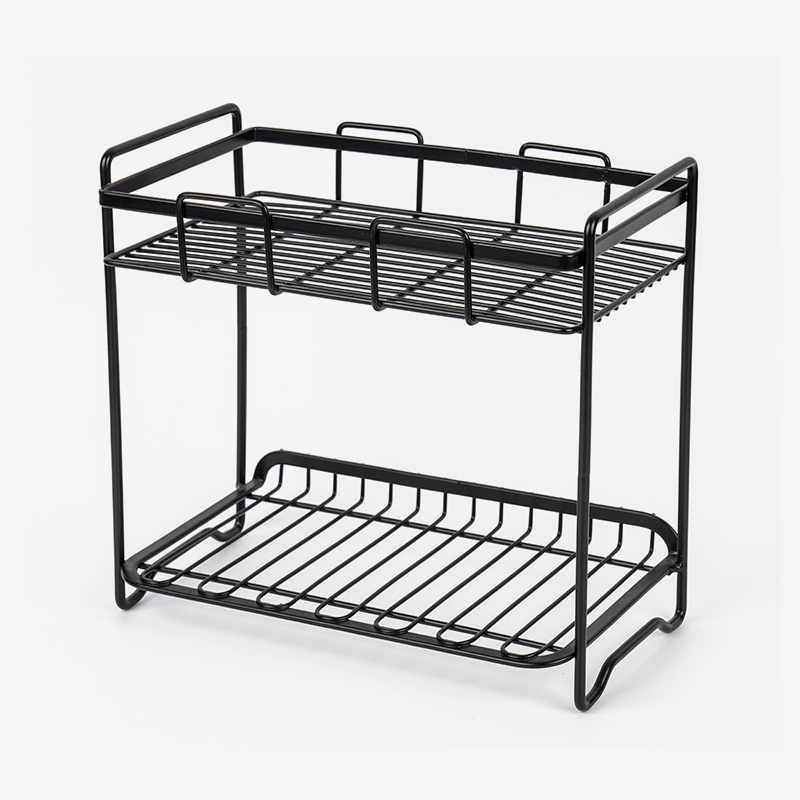
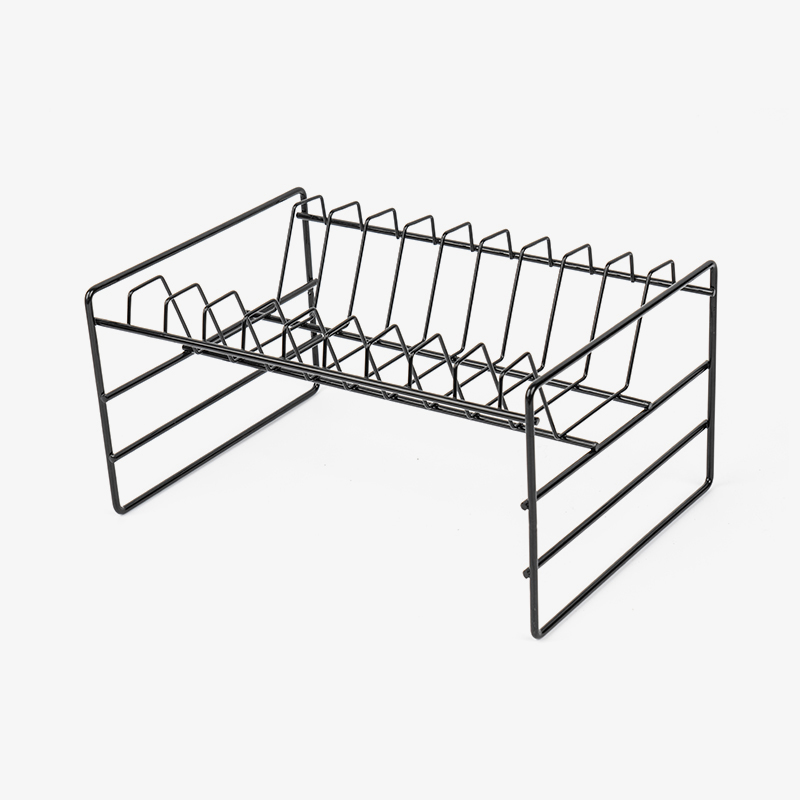
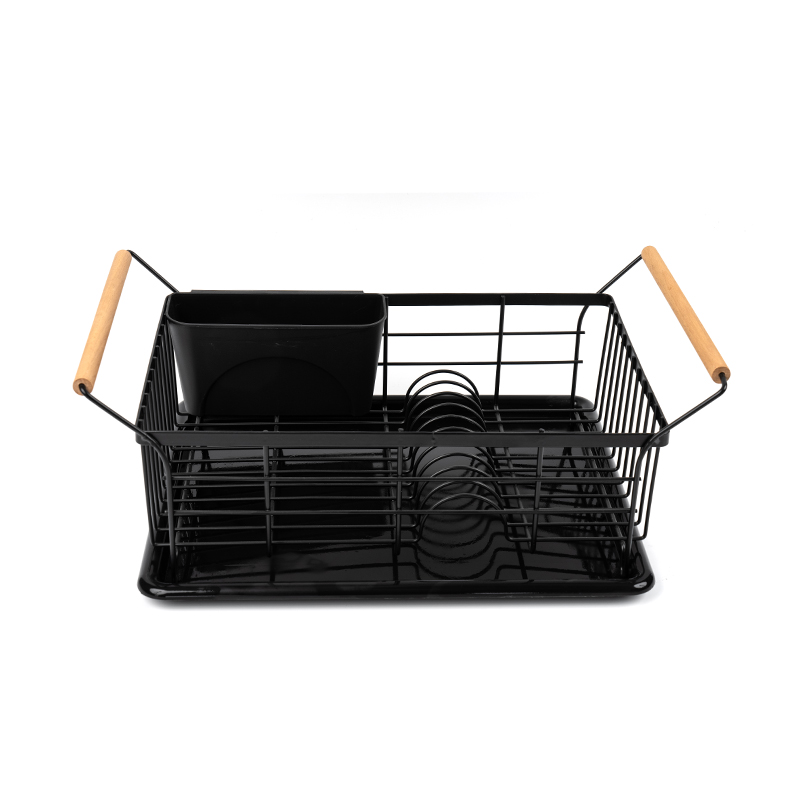 Bowl and Plate Drying Rack with Wooden Handle, CZ 06A stainless steel expandable over-sink or countertop rack with wooden handle, designed for upright draining and space-saving kitchen organization.View Product →
Fitting an Extra Large Rack Into a Normal Kitchen
Measure three clearances, not one
Width is the easy number. Also check the clearance under wall cabinets, and the distance from the sink edge to the front lip of the counter, because a 16-inch deep rack with a loaded drainboard can overhang the edge and drip onto cabinet fronts.
Where an XL rack earns its footprint
Three situations justify the extra size: a household of four or more that washes up once a day, batch cooking that produces a stack of mixing bowls alongside plates, and kitchens without a dishwasher where the rack is effectively permanent furniture. In a one-person kitchen the same footprint usually ends up as cluttered surface space instead.
Who Actually Makes Extra Large Racks
Extra large sizes come from three sources, and only one of them will build to your exact dimensions.
- OEM and ODM metal homeware factories. They produce to a brand's drawing and can adjust width, depth, plate-slot count, wire gauge, finish and packaging. This is the route for anyone who needs a specific size rather than a slightly bigger one.
- Housewares brands with their own tooling. They sell what fits their packaging and shelf plan, which is why the very largest sizes quietly disappear from catalogues after a season or two.
- Commercial catering ranges. Often stainless and genuinely large, but designed around different hygiene rules and different counter depths than a domestic kitchen.
If no stocked size works, the conversation starts with a footprint drawing: counter width, depth limit, largest plate diameter, and how many plates must clear in one wash. A factory that runs its own stamping, laser cutting and welding equipment can normally quote a modified frame without new tooling for the whole product. Expect minimum order quantities in the hundreds of units and two to four weeks for samples.
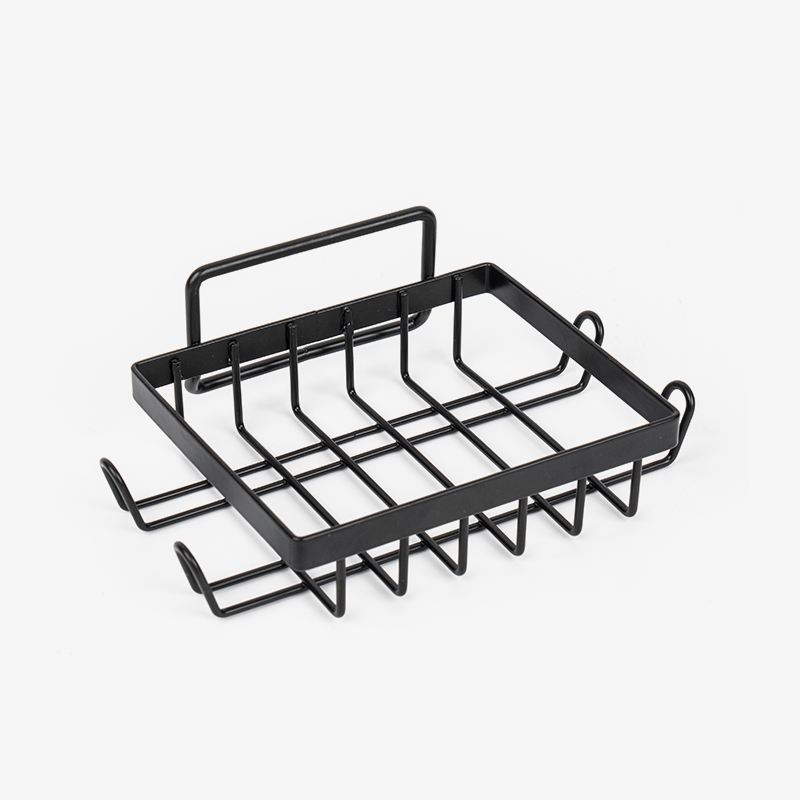
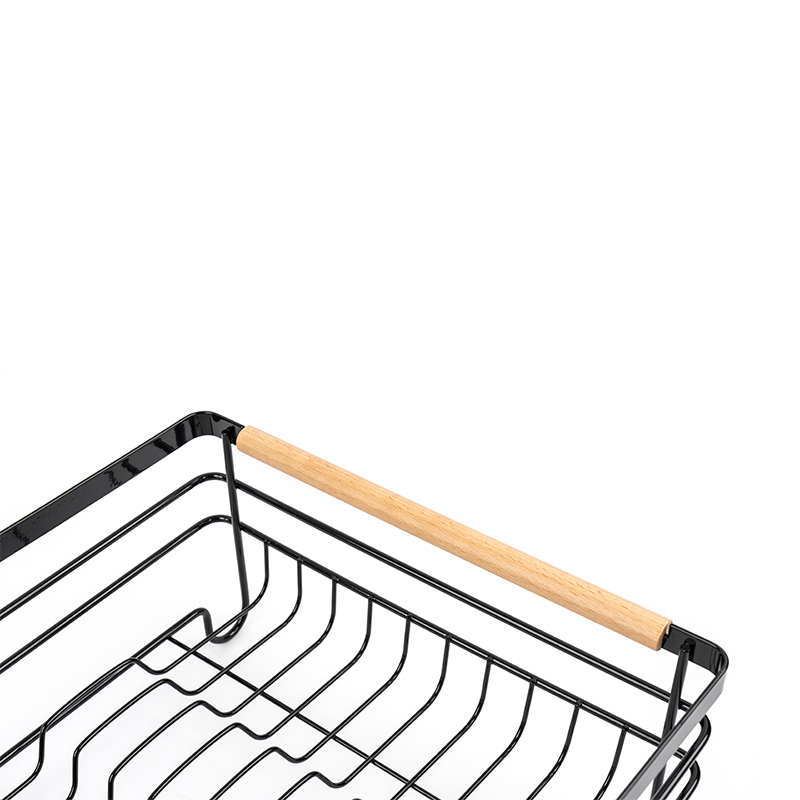 Metal Dish Drying Rack with Wooden Handles, CZ 14An iron and wood countertop dish rack with wooden handles, fully assembled, suited to retail, home organization, and OEM/ODM sourcing.View Product →
Frequently Asked Questions
Does anyone make a dish rack wider than 20 inches?
Yes. Racks between 20 and 24 inches are produced, but they are sold mainly through manufacturers that supply housewares brands and through catering suppliers. Retail availability is thin because oversized cartons cut how many units fit into a container, which raises the landed cost per piece.
Is 304 stainless steel worth it on a large rack?
Yes, if the rack sits beside the sink every day. A coated rack saves money up front, but a full load of wet plates keeps the joints damp for hours, which is exactly the condition that starts rust at a chipped weld.
Can a rack be made to my exact counter depth?
Yes, and it is a normal request rather than a special favour. Width, depth and tier spacing are set by the frame jig, so changing them costs design time rather than new moulds, as long as the design stays within standard tube and wire sizes.
Does a bigger rack dry dishes faster?
Not automatically. Drying speed depends on spacing, tilt angle and whether water drains away from the plate foot. A crowded extra large rack can dry more slowly than a well-ventilated mid-size one.
So the short answer is yes, extra large dish drying racks are made; they are simply made by specialist metal manufacturers more often than they are stocked by general retailers. Fix the footprint you need first, choose the material second, and check the frame's rigidity third, and you will rarely end up with the wrong rack.