

 Español
 عربى
عربىThe cleanest way to hide a dish drying rack is to stop giving it counter space in the first place. Four setups do that: a rack that slides out of the cabinet directly above the sink, an over-sink rack that spans the basin, a flip-down board mounted on the wall beside the sink, or a rack hung from the underside of the upper cabinets. Only the first one makes the rack genuinely disappear when it is not in use.
Start with the arithmetic, because it explains why the counter always feels cramped. A typical dish rack runs about 45 cm wide and 32 cm deep. A standard countertop is 60 cm deep. The rack is therefore eating more than half the usable depth, every single day, for an object that sits empty most of the time. Reclaiming that footprint usually costs far less than any other kitchen upgrade.
The rest of this guide runs from the most invasive method to the least, and it begins with measurements, because nearly every purchase mistake on this topic is a size mistake.
Measure these three numbers before you change anything
Three figures decide which options are even available in your kitchen. Write them down before you shop.
- Clearance between the sink rim and the bottom of the upper cabinets. This is the vertical gap above the basin. Below roughly 45 cm, over-sink racks and under-cabinet hanging racks generally will not fit, because a loaded rack needs room for plates to stand upright.
- Internal height of the cabinet above the sink. Measure from the cabinet floor to the underside of the shelf or top panel. A rack loaded with plates needs about 28–33 cm, depending on plate diameter. A 12 cm tall cabinet insert is only good for cutlery and cups.
- Internal depth of that same cabinet. Measure from the inside face of the closed door to the back panel. Most cabinets run 33–35 cm deep, and a pull-out rack should stay at or under 30 cm so the door still shuts.
Two more details are worth checking while the tape measure is out: where the cabinet hinges sit, since they can block a slide-out frame, and how thick the cabinet side panels are. Anything under 16 mm will struggle to hold the screws that carry a loaded pull-out rack.
Pull-out cabinet racks: the only method that truly hides the rack
A pull-out cabinet rack is the one approach that removes the drying rack from view completely. The rack rides on drawer slides mounted inside the cabinet directly above the sink. Pulled out, it hangs over the basin, so water from wet dishes falls straight back into the sink. Pushed back and the door closed, nothing is visible from the rest of the room.
Three conditions have to be met first:
- The cabinet floor has to be opened up. Either cut a rectangular opening beneath the rack or remove the base panel entirely. Without that opening, water pools inside the cabinet and particle board starts swelling within a few months.
- At least 30 cm of internal height. Shorter cabinets will not clear a dinner plate, and the door will not close over a loaded rack.
- 16–18 mm cabinet sides. Slide hardware needs enough material for the screws to bite into. Thin panels plus a loaded rack is exactly how rails tear out of a cabinet.
One detail gets overlooked until installation day: the cabinet door. A standard side-hinged door swings through the same space the rack slides through, so it blocks the rack halfway out. Most builds either convert the door to a flip-up lift mechanism or drop the door entirely and keep only a drawer front.
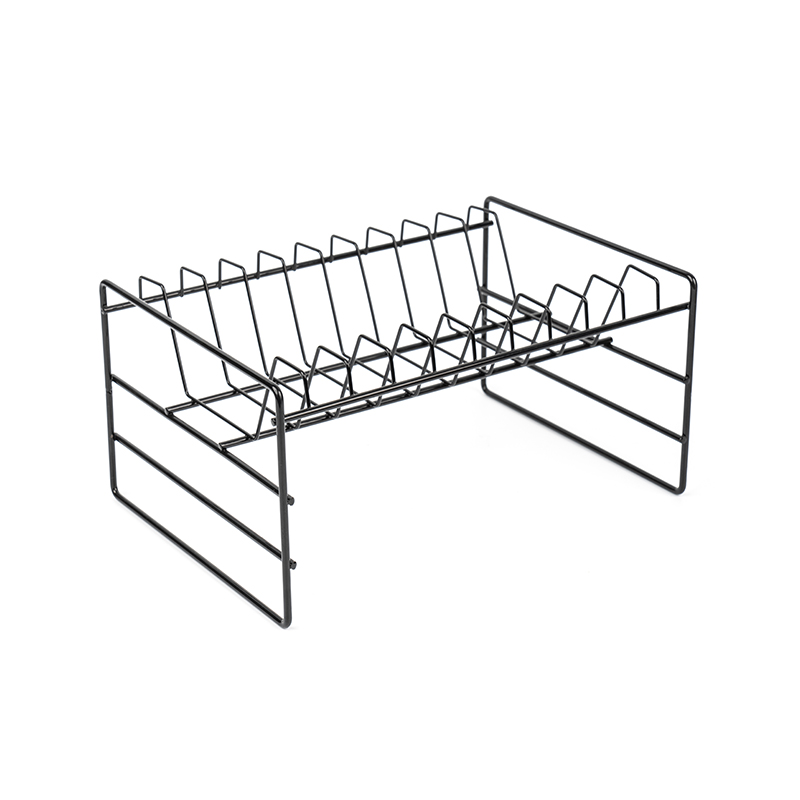 Black Multifunctional Sink Storage Rack for Utensils CZ 11Countertop sink-side organizer in iron with anti-rust coating and non-slip base; useful where cabinet-door clearance limits pull-out racks.View Product →
Over-sink and spanning racks: no modification, but still visible
If you are not willing to cut into a cabinet, a spanning rack over the sink is the practical compromise. It moves the drying zone back over the basin so the counter stays usable, but the rack itself remains in plain sight.
These racks either rest on the sink rim on two side brackets, or stand on legs straddling the basin on the countertop. Water from wet dishes drips directly into the sink. Two thirds of the problem is solved; the visual clutter is not.
Check three things when choosing one:
- Bracket span against your sink rim. Too wide and the rack slides side to side; too narrow and it drops in. As a rule of thumb, the sink opening should be 2–4 cm narrower than the rack span so both ends have solid contact.
- Internal height of the drying area. Budget models often stop at 12 cm, which will not take a deep bowl or a stockpot. 15 cm and up is a realistic working minimum.
- Rubber or silicone feet. Bare metal resting on quartz or ceramic leaves grey ring marks that will not polish out later.
There is also a hanging variant that suspends the rack from the underside of the upper cabinets instead of the counter. It uses the space between the cabinet base and the sink, which again means you need roughly 45 cm of clearance to fit plates underneath.
Folding, flip-down and wall-mounted options
When you want both counter space and zero cabinet modification, a wall-mounted flip-down board is usually the least complicated answer. It costs nothing in permanent counter area and it does not require touching the cabinetry at all.
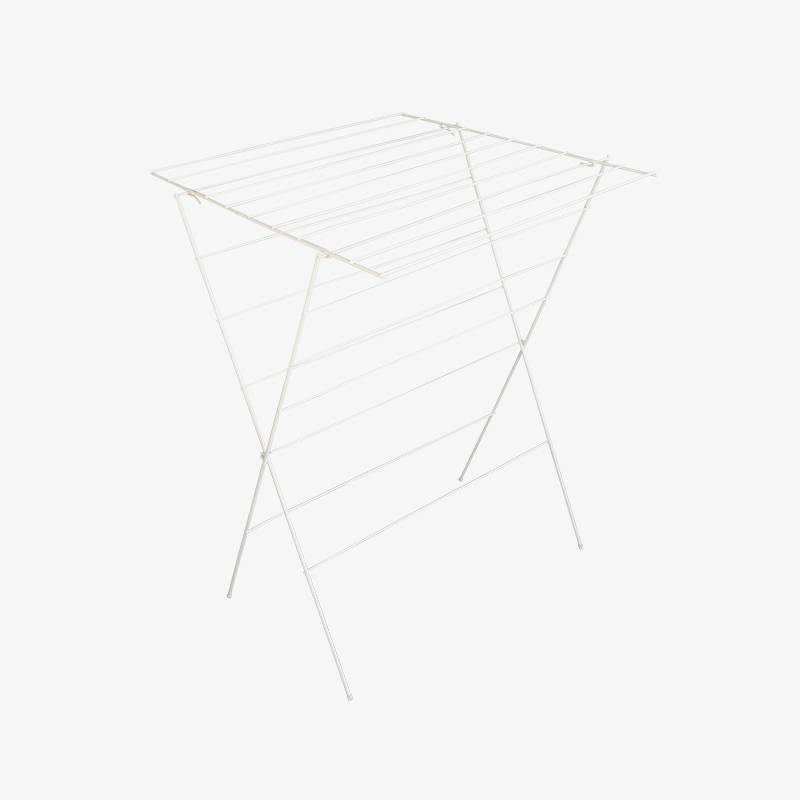
These units hang flat against the wall or the inside of a cabinet door when stowed, and only become a drying rack when folded out. Folding countertop models work the same way, hinging in the middle instead. Both suit kitchens where the counter is already small and cabinet work is not an option.
Three buying points:
- Hinges and the support frame. Plate weight concentrates at the outer edge. Weak hinges sag within a few months, the board tilts into a slope, and dishes start sliding outward on their own.
- The mounting surface. On tile, check first whether the tile is hollow underneath. On block or lightweight partition walls, use dedicated expansion anchors; standard plastic plugs will not hold.
- Rated load. Manufacturers quote static capacity, typically 5–10 kg. Dishes are loaded and unloaded repeatedly, so treat half the rated figure as the working limit.
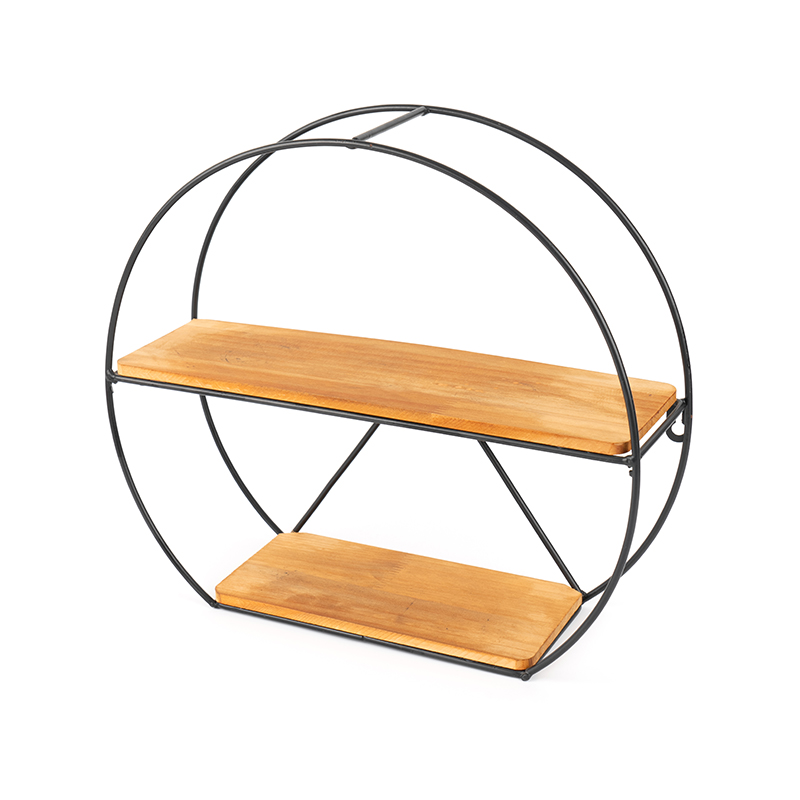 Golden Wall Shelf and Hanging Kitchen Storage Basket CZO 18Iron wall-mounted basket for kitchen or room organization; size 37 x 33 x 11 cm and 780 g; compare material suitability for damp spots.View Product →
Material and drainage decide how long the setup lasts
To state the conclusion first: in a permanently damp spot that sees daily drips and repeated contact with quartz or ceramic, 304 stainless steel outlasts powder-coated carbon steel and black ironwork.
- 304 stainless steel — essentially rust-free in a normal kitchen, dishwasher safe, and medium weight. It costs more, and it shows fingerprints.
- Powder-coated carbon steel — lighter and cheaper, and fine while the coating is intact. Once a spatula or knife chips it, bare steel starts rusting from that single point.
- Black ironwork — visually heavy, best reserved for decorative flip-down boards. Weld points are the weak spots; they rust before the tubing does.
- Aluminium — rust-proof and light, but low on load capacity, so it suits folding models rather than loaded pull-out frames.
Drainage matters more than most buyers expect. An over-sink rack with no guiding structure lets water run along the cross bars onto the countertop, and the joint line darkens over time. The test is simple: check whether the tines slope toward the sink, or whether there is a separate drip tray. Flat, level bars are bad news.
For a closer comparison of how stainless bowl racks behave day to day in a wet kitchen, see our notes on why stainless steel bowl racks hold up better in damp kitchens.
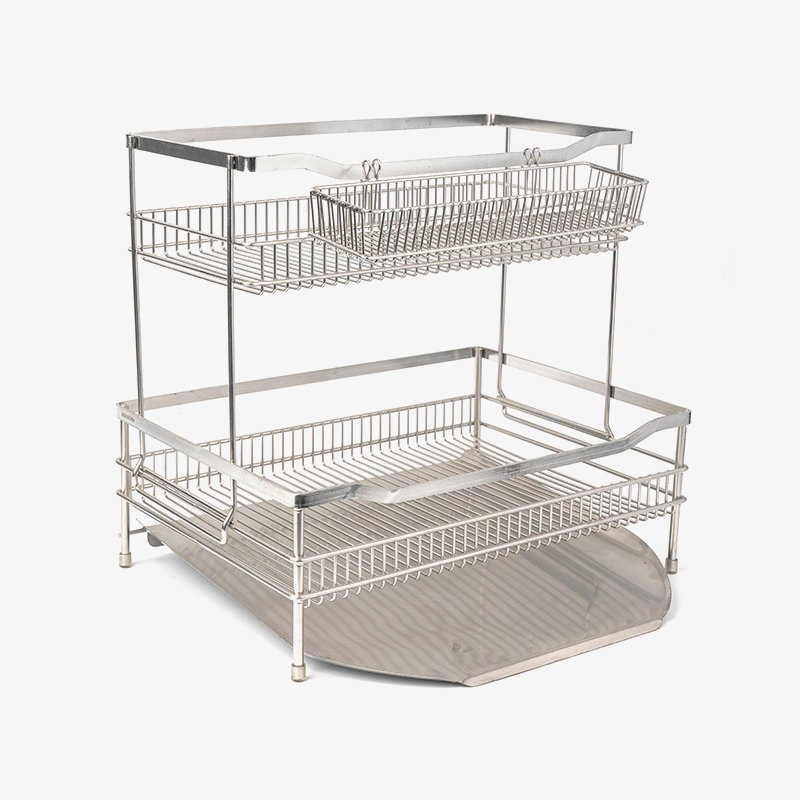
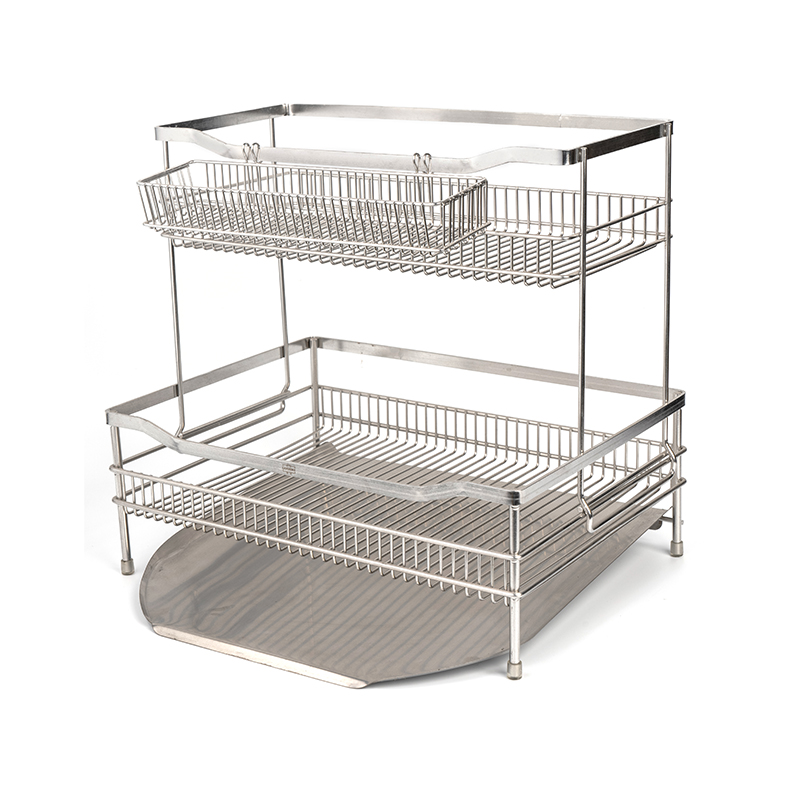 Stainless Steel Double Layer Dish Drying Rack with Drainboard CZ 13Two-tier 304 stainless steel countertop rack with drainboard; check sink clearance and cabinet height before choosing this 41 x 39 x 40 cm design.View Product →
Compare the five hiding methods
Use the table below to match each method against your actual kitchen. Two numbers usually make the decision for you: the clearance above the sink and the internal height of the cabinet.
| Method | Visible when idle | Modification needed | Typical cost | Best for |
|---|---|---|---|---|
| Pull-out cabinet rack | No | Cut cabinet floor, fit slides | Medium | A cabinet directly above the sink |
| Over-sink spanning rack | Yes | None | Low | Renters and no-drill kitchens |
| Under-cabinet hanging rack | Yes | Drill hooks into the cabinet base | Low | Kitchens that already have upper cabinets |
| Wall-mounted flip-down board | Folds flat against the wall | Wall anchor points | Low to medium | Clear wall space beside the sink |
| Folding countertop rack | Only while stowed | None | Low | Small kitchens, occasional use |
Frequently asked questions
Can a drying rack be installed in a normal cabinet?
Yes, but the cabinet floor has to be vented or opened. A sealed cabinet traps moisture, the board swells at the edges, and the metal parts start to corrode. If you would rather not cut anything, choose a rack with good drip collection and open the door to air it out regularly.
Does an over-sink rack block the whole sink?
It takes up a substantial part of the space above the basin, so washing a roasting pan or a large wok becomes awkward. That trade-off makes it a good fit for small households and a poor fit for kitchens that cook large meals daily.
Do stainless steel racks really never rust?
304 stainless resists rust in a normal kitchen, but chlorinated cleaners and very salty water can still leave pitting around weld points. Wiping the rack dry after use, or rinsing it periodically with plain water, meaningfully extends its life.
When this product goes into OEM production, the design difficulty concentrates in three places: the fit tolerance between slides and cabinet, the slope of the drip-collection structure, and the polishing of stainless weld points. Those three decide whether the finished unit wobbles, puddles, or shows rust spots within six months.
A metal workshop normally covers stamping, laser cutting, bending, welding and coating, so the path from drawing to sample mostly depends on tooling and how long new stamped parts take to prepare. If only dimensions and hole positions change, reusing existing tube and mesh profiles shortens sampling considerably.
The practical conclusion: settle the method first — pull-out, spanning or wall-mounted — and discuss price second. More detail on equipment and capacity is available on the about our manufacturing page.
Hiding a dish drying rack ultimately comes down to getting it off the counter. A pull-out cabinet rack hides it completely at the cost of cabinet work; spanning and under-cabinet hanging racks need almost no modification but stay visible; folding and wall-mounted boards sit between the two. Before comparing prices, measure the clearance above the sink and the internal height of the cabinet — those two figures will eliminate most of your options, and the one or two that remain are worth judging on material and drainage.