

 Español
 عربى
عربىThe most direct answer to saving space for a dish drying rack is to move it off the flat countertop. Saving space does not mean buying a tiny rack; it means choosing a position that keeps the usable countertop clear while dishes still dry properly. An over-sink rack turns the basin into drying space, a wall-mounted rack uses a tiled backsplash that would otherwise sit empty, and a foldable rack disappears into a cabinet between uses. Measure your sink, counter depth, and wall clearance first, then choose the smallest rack type that handles your typical dish load.
Measure the Counter, Sink, and Wall Before You Buy
The rack that saves the most space is the one that fits the space you already have. A rack that is too deep blocks traffic, a rack that is too wide covers the tap, and a wall-mounted unit installed in the wrong spot never gets used. Take three measurements and write them down before comparing products.
| Measurement | Typical value | Why it matters |
|---|---|---|
| Counter depth | 24 in (61 cm) | Sets the maximum rack depth so the rack does not overhang the counter edge. |
| Sink basin width | 20 to 33 in (51 to 84 cm) | Determines whether an over-sink rack can rest safely on the rim. |
| Counter-to-cabinet gap | 18 in (46 cm) | Limits the height of stacked or under-cabinet racks. |
| Available wall width | Varies by kitchen | Tells you how much room a wall-mounted shelf or rail can occupy. |
If you plan to place the rack beside the sink instead of over it, also measure the distance between the sink edge and the side wall. That space is often 6 to 12 inches wide, which is enough for a narrow compact rack but not for a full-width model.
Choose a Rack Type Based on Where Your Unused Space Is
The right type of rack depends on which part of the kitchen is underused. Kitchens usually have one of three opportunities: the empty basin during drying, a tiled wall beside the sink, or a cabinet gap above the counter. Match the rack to the opportunity rather than buying a generic countertop unit.
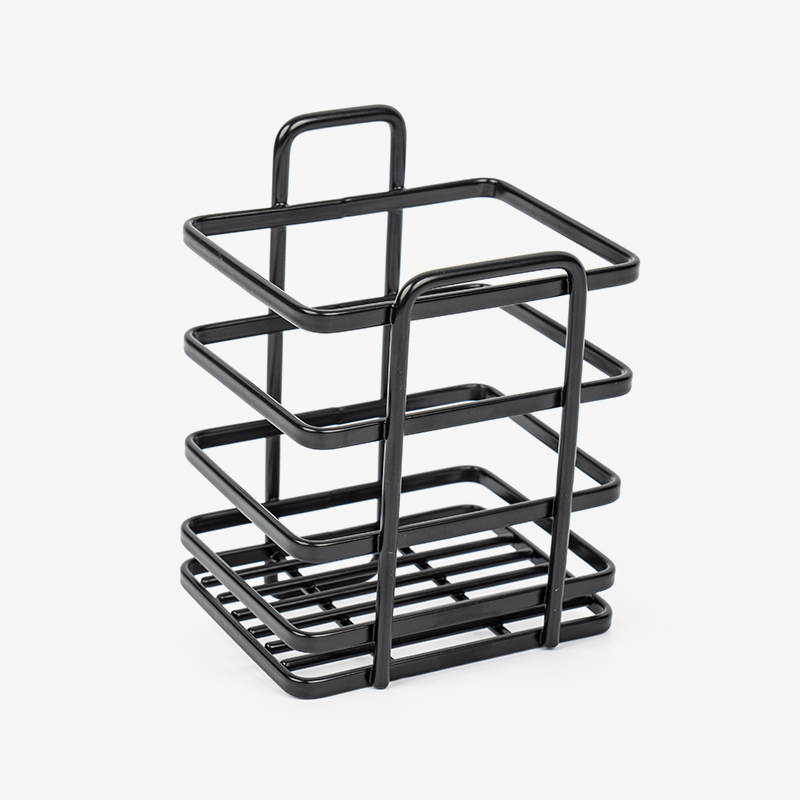
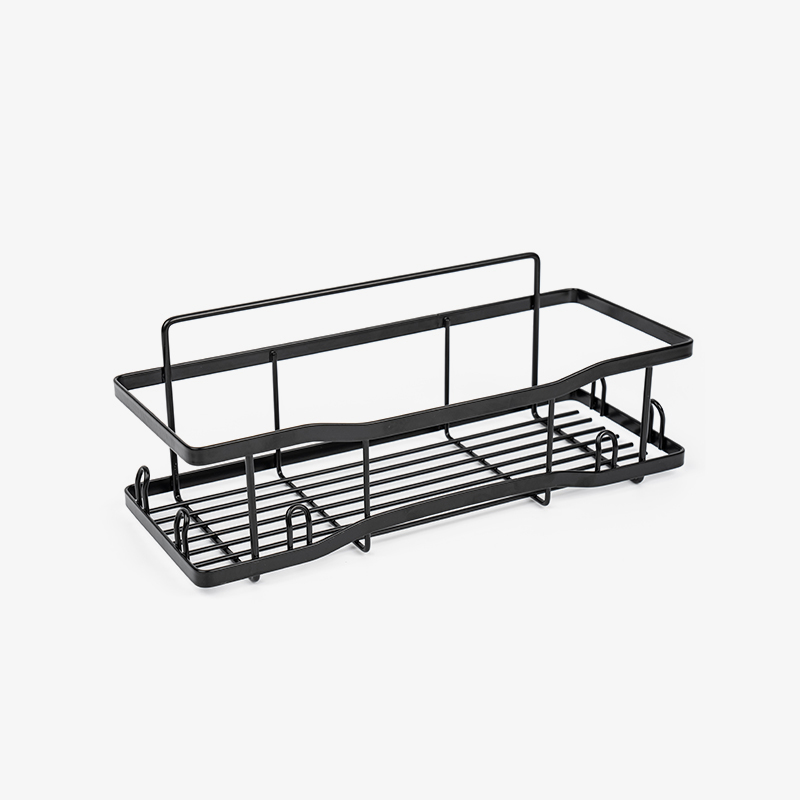
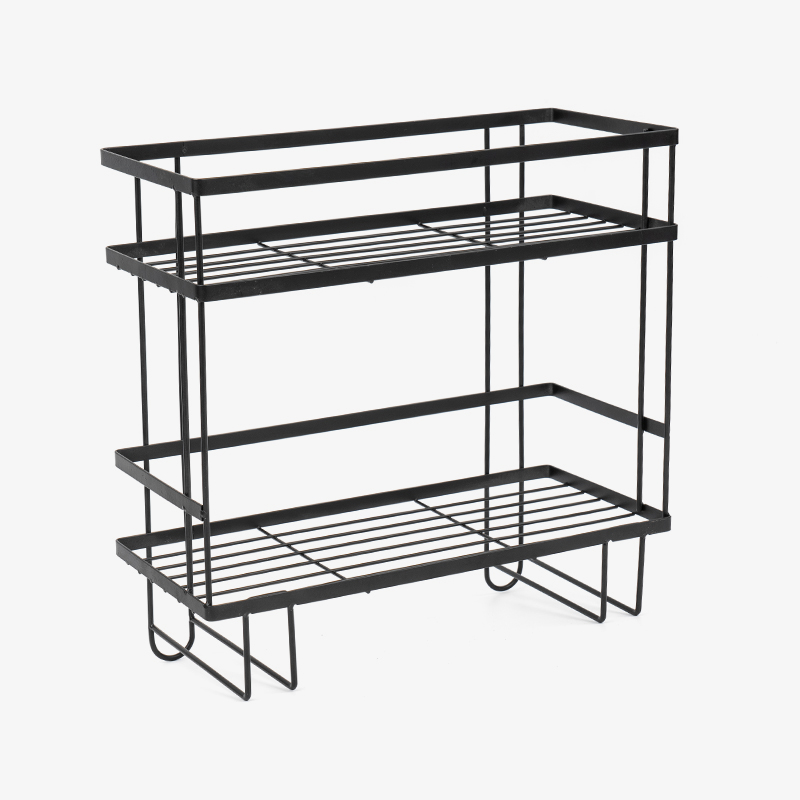
 Black Multifunctional Over-Sink Utensil Storage RackThis compact iron rack with an anti-rust coating fits the sink area to keep utensils organized and countertops clear, making it a practical choice for kitchens with limited space.View Product →
- Over-sink racks bridge the basin and keep every inch of countertop free.
- Wall-mounted shelves and rails dry plates and cups vertically on a backsplash.
- Under-cabinet racks clamp to a shelf above and hold cups, lids, or utensils.
- Foldable racks expand over the counter when needed and fold flat for storage.
- Compact countertop racks suit tiny kitchens where the sink is too narrow for an over-sink model.
Keep the daily volume of dishes in mind. A household of two rarely needs a rack taller than 12 inches, while a family of five may need a two-tier over-sink rack to handle a sinkful of plates and bowls at once.
Use an Over-the-Sink Rack to Free the Entire Countertop
An over-the-sink rack is the most effective space-saving option for most kitchens because it uses the basin area and drains directly into the sink. The countertop beside the sink stays completely clear, which matters more when the kitchen has under 8 feet of counter space. The two things to verify are the width of the sink at its narrowest point and the weight rating of the rack.
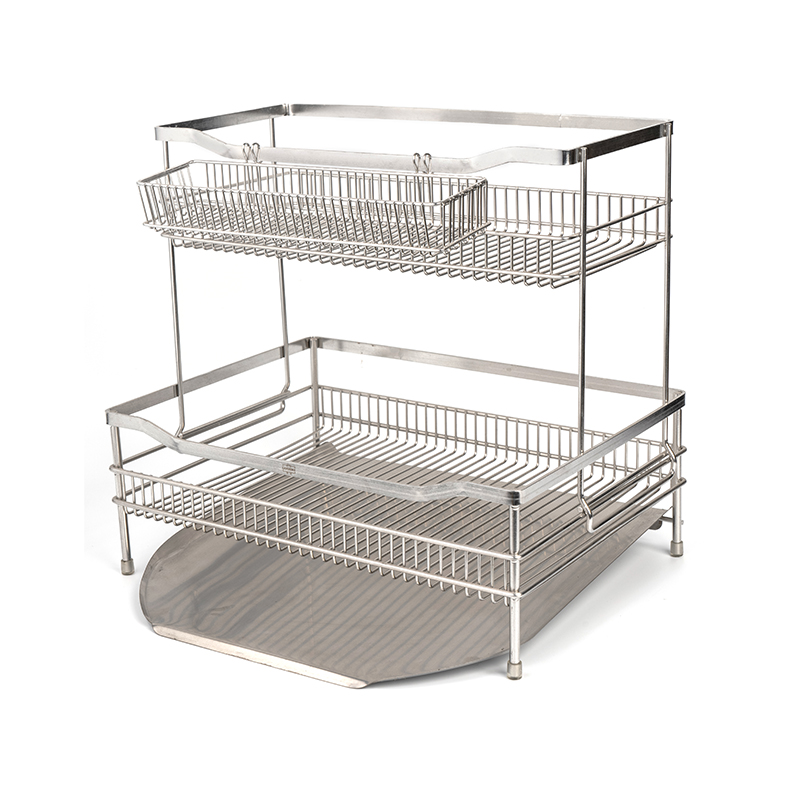 Double-Layer Stainless Steel Dish Drying Rack with DrainboardA two-tier 304 stainless steel rack designed to sit over the sink, featuring a drainboard that directs water into the basin while providing ample space for plates, cups, and utensils.View Product →
Measure the sink opening from rim to rim in both directions. An over-sink rack should overlap the rim by at least 1 inch on each side to stay stable, and the feet should sit on a flat surface rather than on the sink divider. Check that the rack does not block the tap; the faucet needs clearance to fill pots and rinse vegetables while the rack is in place.
Mount a Wall Shelf or Rail Beside the Sink
If the side wall next to the sink is tiled and uncluttered, a wall-mounted storage rack gives you drying space without touching the counter at all. Plates stand upright in the channel, cups hang from hooks, and water drips onto a small tray that you empty periodically. This solution works best for households that hand-wash a moderate number of dishes and want the counter permanently clear.
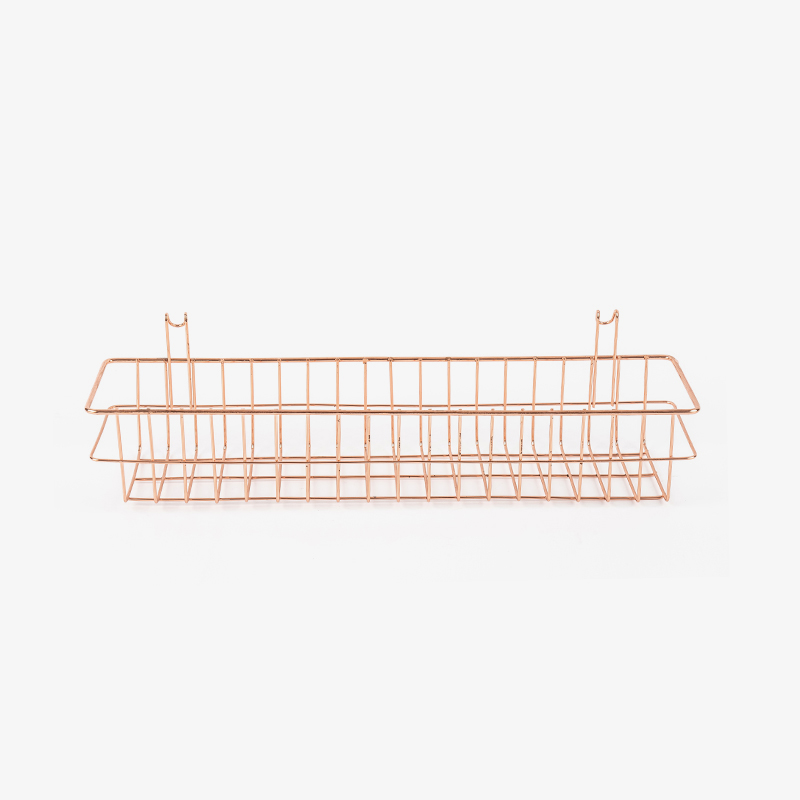
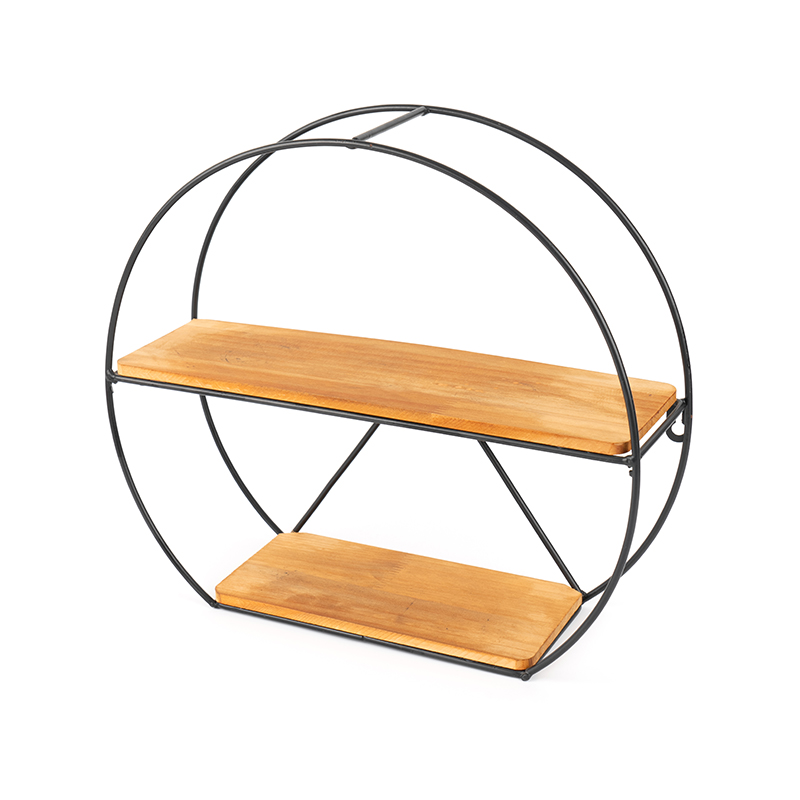 Golden Wall-Mounted Storage Basket with Hanging ShelfA wall-mounted storage basket that keeps plates and cups off the counter, ideal for tiled walls near the sink. Its simple design suits kitchens where counter space is precious.View Product →
Install the rack into tile with a diamond bit and into drywall with rated anchors; the rack must hold a full load of wet plates without pulling away from the wall. Leave at least 20 inches of clearance below the rack for tall glasses and pitchers.
Use a Foldable Rack for Occasional Dishwashing
A foldable or collapsible rack is the right choice when you wash dishes by hand only a few times a week. It sets up over the counter once the plates are done, then folds to about 2 inches thick and slides into a cabinet or drawer. The trade-off is capacity; most foldable racks hold around eight plates and a few cups, so they suit one- or two-person households.
Compare the Main Space-Saving Options
The table below summarizes the practical differences among the common space-saving rack types.
| Type | Counter space used | Drip management | Storage when not in use | Best for |
|---|---|---|---|---|
| Over-sink rack | None | Drains into sink | Stays in place or folds | Daily hand-washing |
| Wall-mounted rack | None | Needs a drip tray | Permanent mount | Tiled wall beside sink |
| Foldable rack | Flat footprint | Drip tray or mat | Cabinet or drawer | Occasional use |
| Compact countertop rack | About 12 by 8 in | Built-in channel | Stays on counter | Very small kitchens |
Nine Storage Ideas That Keep the Drying Area Efficient
Once the rack is in place, the habits around it determine how much space it really saves. These nine ideas cover the common mistakes and quick wins for kitchens of any size.
- Measure the counter depth and sink width before you buy, and keep the numbers with your shopping list.
- Choose an over-sink rack first; it eliminates the largest source of clutter in the drying zone.
- Mount a wall rail or shelf beside the sink for items you dry daily, such as mugs and lids.
- Use an under-cabinet rack for cups and small prep tools so the counter stays open.
- Switch to a foldable rack if you wash dishes by hand only occasionally.
- Stand plates upright in the rack channels instead of leaning them, which doubles usable capacity.
- Add small hooks under the cabinet above the rack for utensils, measuring cups, and cloths.
- Keep a drying mat or tray on a rolling cart or nearby shelf for overflow on heavy cooking days.
- Choose 304 stainless steel so the rack does not rust after months of wet-dry cycles.
Material choice deserves special attention because it affects both hygiene and longevity. Stainless steel, particularly 304 grade, resists corrosion and handles hot water and detergent better than chrome-plated carbon steel. As we explain in our comparison of stainless steel bowl racks, the material holds up when left wet for long periods, which is exactly what happens in a drying rack.
Frequently Asked Questions
Can I put a dish drying rack over a double sink?
Yes, provided the rack is wide enough to span the divider and the feet sit flat on the rims. Measure the basin width on each side and the overall width across the divider, then choose a rack rated for that span. Some over-sink racks include adjustable arms that lock onto the rim.
What size dish drying rack is best for a small kitchen?
Match the rack to the smallest dimension that still holds your daily load. For a typical 24-inch-deep counter, choose a rack no deeper than 16 inches so you can still prep food in front of it. If the counter is shorter than 20 inches, switch to an over-sink or wall-mounted model instead of a countertop rack.
Are foldable dish racks as durable as fixed ones?
Foldable racks are durable enough for normal home use, but the hinges and sliding parts wear faster than a welded fixed frame. Inspect the joints before buying, avoid overloading the folded sections, and expect a foldable rack to last three to five years with daily use, versus longer for a welded stainless steel rack.
How do I stop a wall-mounted rack from dripping onto the counter?
Install a small stainless drip tray under the rack or angle the rack slightly so water runs to a single point. Empty the tray after each drying cycle, or place the rack above the sink so drips fall into the basin. A tray that holds water overnight can leave mineral marks on the counter.
The common thread in every space-saving approach is choosing a rack that fits the kitchen rather than forcing the kitchen to fit the rack. Start with the over-sink position, measure the sink and counter, and verify the build quality before purchase. A rack with welded joints, stable feet, and even coating will keep working for years; the same criteria apply whether you buy a compact model or a full-width unit. If you are evaluating different suppliers, check how they handle strict quality control on welded joints and surface finish, because those details decide whether the rack still looks and works well after a year of daily dishwashing.