

 Español
 عربى
عربىDishes typically take between 30 minutes and 4 hours to air dry completely in a drying rack, depending on the material, the shape of the item, humidity levels, and airflow around the rack. Lightweight glassware and stainless steel utensils often dry in under an hour, while thick ceramic bowls, ridged plastic containers, and mugs with handles can take 2 to 4 hours or longer in humid conditions. Understanding these variables can help households organize their kitchen routine, reduce the risk of bacterial growth, and choose the right rack setup for their space.
Why Drying Time Matters More Than People Think
Dishes that stay wet for extended periods create favorable conditions for bacterial growth, which is why understanding drying speed is not just a matter of convenience. Standing water on dishware, especially in warm kitchens, can allow microorganisms to multiply within just a few hours. According to food safety guidance published by the United States Department of Agriculture, bacteria can double in number in as little as 20 minutes under the right temperature and moisture conditions, which is part of why fully air-drying dishes before stacking or storing them is widely recommended.
Beyond hygiene, drying speed affects overall kitchen efficiency. A household doing two or three loads of dishes per day loses meaningful counter space and time if items take four or five hours to dry rather than one or two. Slow-drying racks also tend to develop water spots, mineral scale, and even mold along drainage grooves, which creates an additional cleaning burden over time. This is why the design of the drying rack itself, not just the dishes being placed on it, plays such a large role in the overall outcome.
There is also an energy and resource angle to consider. Air drying uses no electricity, unlike a dishwasher's heated dry cycle, which the U.S. Department of Energy estimates can account for a meaningful share of a dishwasher's total energy use per cycle. For households trying to reduce utility costs, understanding how to make air drying faster and more effective can be a practical way to skip the heated dry setting altogether without sacrificing hygiene.
Average Drying Times by Dish Type
Material and shape are the two biggest factors determining how fast an item dries. Non-porous, smooth surfaces like glass and stainless steel shed water quickly, while porous or textured materials like unglazed ceramic and silicone hold onto moisture longer. Below is a general breakdown based on common household observations, kitchenware manufacturer care guides, and typical indoor drying conditions.
| Dish Type | Material | Average Drying Time |
| Drinking Glasses | Glass | 20 to 45 minutes |
| Flatware (forks, spoons, knives) | Stainless Steel | 30 to 60 minutes |
| Dinner Plates | Glazed Ceramic | 1 to 2 hours |
| Coffee Mugs | Ceramic | 1.5 to 2.5 hours |
| Mixing Bowls | Stoneware | 2 to 3 hours |
| Food Storage Containers | Plastic | 2 to 4 hours |
| Baking Pans | Non-stick Metal | 1 to 2 hours |
| Silicone Bakeware | Silicone | 3 to 5 hours |
| Cast Iron Cookware | Cast Iron | Should be towel-dried immediately, not air dried |
| Wooden Cutting Boards | Wood | 4 to 8 hours |
Comparison of average air-drying times by dish material and type in a standard kitchen environment
These figures assume dishes are placed with adequate spacing and normal indoor humidity around 40 to 50 percent. In more humid climates, drying times can increase by 30 to 50 percent, while in dry climates or well-ventilated kitchens, drying can happen noticeably faster. Wooden items are included as a special case, since wood absorbs water into its fibers rather than simply holding surface droplets, which is why boards and utensils made from wood take considerably longer to dry and should never be left soaking or stacked while damp.
Key Factors That Affect Drying Speed
Airflow, humidity, temperature, and rack design together determine how quickly moisture evaporates from a dish. Each of these factors can be adjusted individually to speed up the process, and understanding how they interact makes it easier to diagnose why dishes in one kitchen dry faster than in another.
1. Airflow Around the Rack
Open racks with wide spacing between slots dry dishes up to twice as fast as closed cabinets or crowded racks. Placing a rack near an open window, a running exhaust fan, or a slightly cracked cabinet door increases air circulation and speeds evaporation. Overcrowding is one of the most common mistakes; when dishes touch each other, water gets trapped in the contact points and drying time can double or even triple in tightly packed racks.
2. Kitchen Humidity Levels
Relative humidity above 60 percent can slow drying by 40 percent or more compared to a dry kitchen environment. This is why dishes in coastal or tropical regions often take noticeably longer to dry than those in arid climates. The National Weather Service notes that evaporation rates drop significantly as the surrounding air approaches saturation, since the air has less capacity to absorb additional moisture. A dehumidifier or simple ventilation fan can meaningfully cut down drying time in humid households.
3. Dish Material and Surface Texture
Smooth, non-porous materials shed water in sheets, while porous or textured materials hold onto droplets. Glass and polished stainless steel allow water to run off quickly due to low surface tension resistance. Unglazed ceramic, cast iron, and silicone have microscopic pores or textured surfaces that trap moisture, which is why these items are usually the last to fully dry on a rack. Ridged or textured plastic containers, such as those with grip patterns on the base, are also notably slower to dry than smooth plastic items.
4. Rack Design and Material
Stainless steel wire racks dry dishes faster than plastic-coated racks because metal does not retain water in the same way plastic coatings can. Racks with sloped drainage channels that direct water into a sink or tray also reduce the amount of standing water dishes sit in, which shortens overall drying time. Racks with adjustable or removable pegs allow better spacing for large items like pots and baking sheets, further improving airflow.
5. Room Temperature
Warmer room temperatures speed up evaporation because warm air holds and moves moisture more readily than cool air. A kitchen kept around 75 degrees Fahrenheit will generally dry dishes faster than one kept at 65 degrees, all other conditions being equal. This is one reason dishes seem to dry more quickly in summer than in winter, even without any change in rack setup.
6. Water Quality and Mineral Content
Hard water with high mineral content can leave behind residue that slows visible drying and creates spotting. While mineral deposits do not necessarily extend the time it takes for water to evaporate, they do leave a film that can make dishes appear wet or cloudy even after the water itself has dried, which is a common source of confusion in households with hard water supplies.
Drying Rack Types Compared
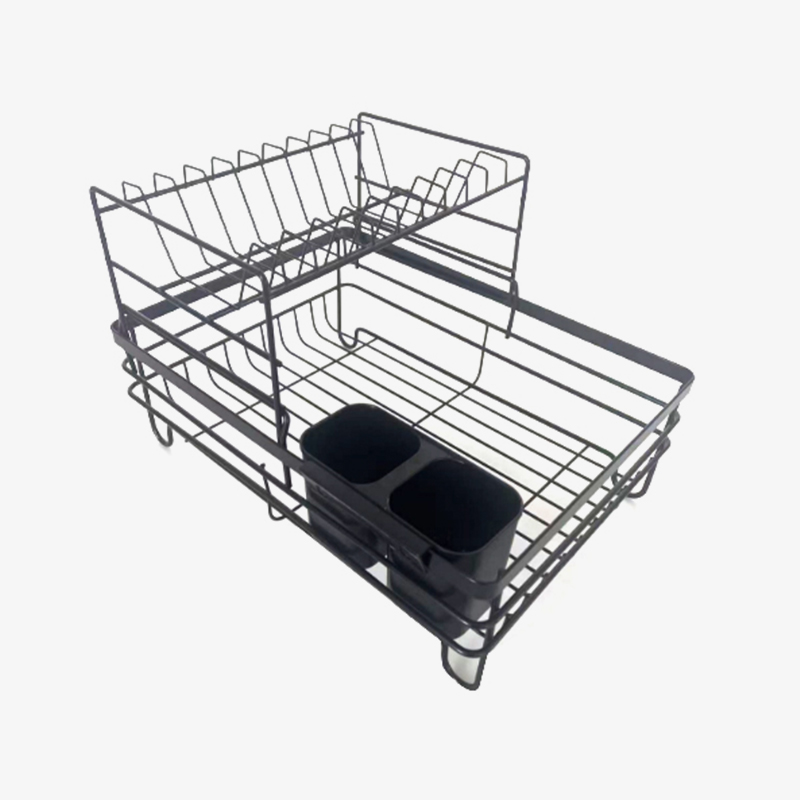
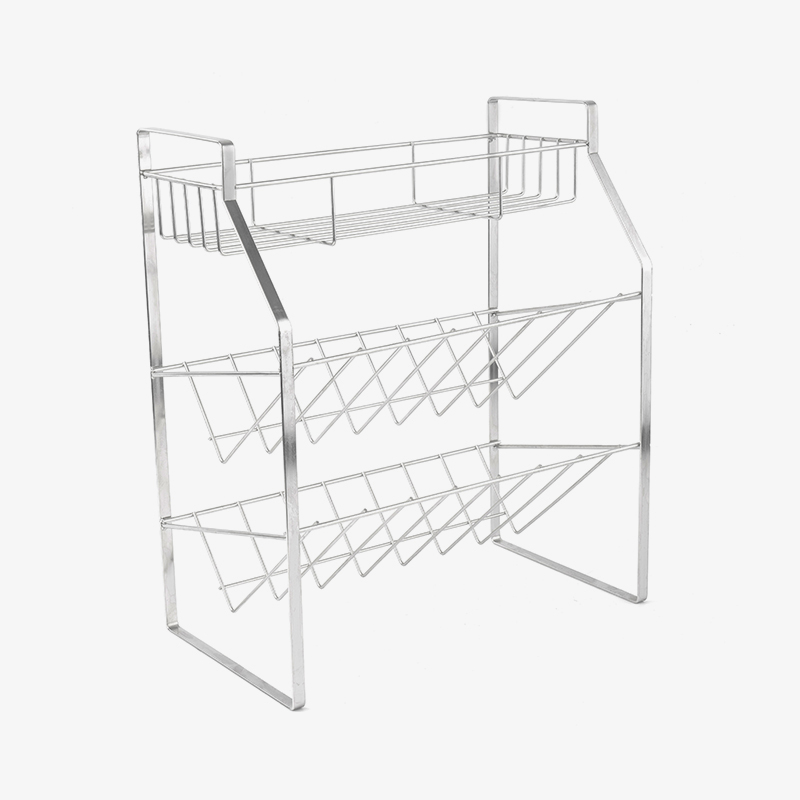
Two-tier racks and racks with built-in drainage boards tend to dry dishes the fastest among common designs. The table below compares the most widely used drying rack styles based on ventilation, drainage, and typical household suitability.
| Rack Type | Relative Drying Speed | Best Use Case |
| Single-Tier Open Rack | Fast | Small households, limited items |
| Two-Tier Rack with Drainage Board | Fastest | Families, high dish volume |
| Over-the-Sink Rack | Fast | Small kitchens, limited counter space |
| Enclosed Cabinet-Style Rack | Slow | Hiding dishes from view |
| Foldable Compact Rack | Moderate | Apartments, temporary use |
| Roll-Up Silicone Mat Rack | Moderate | Travel, small counters, RVs |
Comparison of common dish rack designs based on ventilation and drainage efficiency
Enclosed cabinet-style racks, sometimes chosen for their tidy appearance, tend to trap humidity inside their frame, which is why they consistently rank as the slowest option despite being visually appealing. If drying speed is the priority, an open design with maximum airflow will almost always outperform a closed one.
Air Drying vs. Towel Drying vs. Dishwasher Drying
Air drying on a rack is generally more hygienic than towel drying, though it takes longer than a dishwasher's heated dry cycle. Each method has trade-offs worth understanding before deciding which approach fits a given household.
Air Drying: Takes 30 minutes to 4 hours depending on the factors above, but avoids reintroducing bacteria from a damp towel and requires no additional effort once dishes are placed on the rack.
Towel Drying: Dries dishes in minutes, but a used kitchen towel can transfer bacteria from previous uses back onto clean dishware unless the towel is fresh and completely dry, since damp fabric is one of the most bacteria-friendly surfaces in a typical kitchen.
Dishwasher Heated Dry: Fully dries a load in about 20 to 40 minutes using heated air, but consumes considerably more electricity than passive air drying and can be harsher on delicate glassware over time due to repeated heat exposure.
Seasonal Differences in Drying Time
Dishes generally dry 20 to 40 percent faster in summer than in winter due to higher ambient temperatures and, in many regions, lower indoor humidity from air conditioning use. During winter months, indoor heating can either help or hurt depending on the system used. Forced-air heating tends to dry out indoor air and can speed evaporation, while radiator or baseboard heating systems that do not circulate air as actively may leave humidity levels higher, slowing dish drying somewhat. Households that notice seasonal changes in how long their dishes take to dry are often observing the combined effect of temperature and humidity shifts rather than any change in the dishes or rack itself.
Practical Tips to Speed Up Drying Time
Simple adjustments to placement and rack maintenance can cut drying time nearly in half. The following practices are commonly recommended by kitchenware manufacturers and cleaning professionals for improving air-drying efficiency at home.
Space items apart: Leave at least one inch between dishes so air can circulate freely on all sides.
Tilt bowls and cups: Angling hollow items downward prevents water from pooling inside them.
Use a fan or open window: Light air movement can reduce drying time by 20 to 30 percent.
Rinse with hot water: Hot water evaporates faster than cold water because it starts closer to its evaporation point.
Clean the rack regularly: Mineral buildup and mildew on the rack itself can trap moisture and slow drying over time.
Sort by drying speed: Placing slower-drying items like plastic containers and ceramic mugs at the front, where airflow is strongest, helps even out drying times across a full load.
Avoid stacking wet plates: Standing plates vertically in a rack slot dries them far faster than laying them flat or leaning them against each other.
Common Mistakes That Slow Down Drying
Overloading the rack is the single most common mistake that slows down drying time in households. Beyond overcrowding, several other habits tend to work against fast, effective air drying.
Placing the rack in a low-airflow corner: Corners near walls or inside cabinets receive less air movement than open counter space.
Leaving bowls and cups upright: This traps water inside rather than letting it drain out, sometimes doubling the time needed to dry.
Using a rack with a solid, non-draining base: Solid trays without perforations force water to pool and evaporate slowly rather than draining away.
Skipping regular rack cleaning: A rack that develops mildew or mineral buildup actually holds moisture longer, which slows drying for every subsequent load.
Frequently Asked Questions
How long should dishes stay on a drying rack before putting them away?
Most dishes should stay on the rack for at least 1 to 2 hours before being stored. Checking that items are fully dry to the touch, including undersides and rims, prevents moisture from being trapped in cabinets or drawers, where it can encourage mold growth over time.
Does the type of dish soap affect drying speed?
Yes, soaps with rinse-aid properties help water sheet off dishes faster, reducing drying time. Standard dish soap without a rinse aid can leave a thin film that causes water to bead rather than run off, slightly slowing evaporation compared to a proper rinse-aid formula.
Why do plastic containers take longer to dry than glass?
Plastic has a slightly porous, low-energy surface that causes water to form beads instead of sheets, which slows evaporation. Glass has a smoother, higher-energy surface that encourages water to spread thin and evaporate more quickly, which is why glassware is almost always the first item dry on a rack.
Can leaving dishes on a rack too long cause problems?
Yes, dishes left too long on a rack can develop water spots, mineral deposits, or attract dust and pests. It is generally best to put dishes away within a few hours of full drying rather than leaving them indefinitely on open display.
Is it safe to stack dishes before they are fully dry?
Stacking damp dishes is not recommended because trapped moisture between surfaces can encourage bacterial and mold growth. Waiting until each item is completely dry before stacking is a widely recommended food safety practice used in both home kitchens and commercial food service settings.
Does the material of the drying rack itself matter?
Yes, stainless steel and coated wire racks generally outperform solid plastic racks in terms of drying speed. Wire designs allow water to drip through immediately, while solid plastic trays can hold a thin layer of standing water that slows the drying of dishes resting directly on the surface.
Why do dishes sometimes still feel damp even after several hours?
Persistent dampness after several hours is usually caused by poor airflow, overcrowding, or high indoor humidity rather than the dish material itself. Rechecking rack placement, spacing between items, and room ventilation typically resolves the issue.
Final Takeaway
On average, expect glassware and metal utensils to dry within an hour, while ceramic, plastic, and silicone items may need 2 to 5 hours depending on airflow and humidity. Choosing a well-designed rack, spacing dishes properly, improving kitchen ventilation, and staying mindful of seasonal humidity shifts are the most effective ways to shorten drying time and maintain a hygienic, efficient kitchen routine.