

 Español
 عربى
عربىThe fastest way to get hard water off a dish drying rack is to soak it in warm white vinegar for 10 to 15 minutes, then scrub with baking soda and rinse thoroughly. Hard water spots are mineral deposits, not grease, so standard dish soap will not dissolve them. An acid soak will.
The rest of this guide covers what causes the scale, how to remove it without damaging the rack, and how to keep it from returning.
Why Hard Water Leaves White Scale on Dish Drying Racks
Hard water leaves scale because dissolved calcium and magnesium stay on the rack when water evaporates. The deposits are more visible on flat trays, basket joints, and surfaces that dry slowly.
- Water with more than 100 ppm of calcium carbonate leaves scale faster.
- Racks that stay wet overnight develop a thicker crust.
- Rough finishes give minerals more places to cling.
- Hot water speeds evaporation and increases residue.
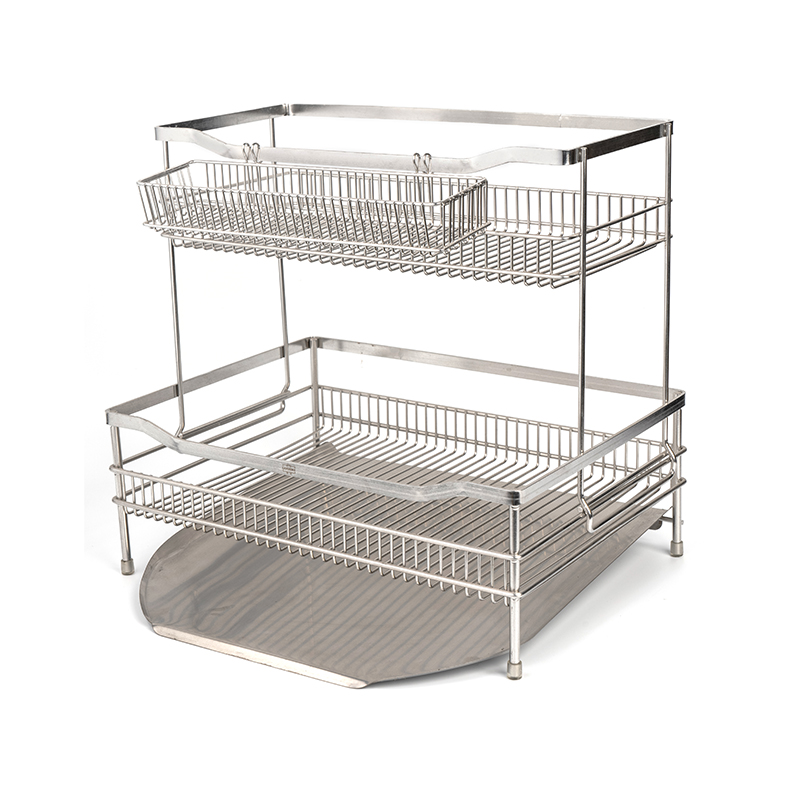 2-Tier Stainless Steel Dish Drying Rack with DrainboardThis heavy-duty 304 stainless steel rack has a nano-coated surface and anti-slip feet, offering organized storage for plates, cups, and utensils while keeping counters dry.View Product →
What You Need to Remove Hard Water Stains
You only need a few household supplies, and none of them are expensive.
- White vinegar at 5% acidity
- Baking soda
- Warm water
- Non-scratch sponge or soft nylon brush
- Microfiber cloth
How to Get Hard Water Off a Dish Drying Rack
Start with a vinegar soak, then use baking soda only on the remaining spots; this keeps the finish safe and removes most scale in one pass.
- Empty the rack and remove all detachable parts.
- Rinse it with warm water.
- Fill a sink or tub with warm water and add 1 to 2 cups of white vinegar.
- Soak the rack for 10 to 15 minutes; let thicker deposits soak for up to 30 minutes.
- Scrub the white areas with a paste made from baking soda and water.
- Rinse with clean water and dry the rack immediately with a microfiber cloth.
Material-Specific Tips
The right treatment depends on the material; stainless steel can handle a longer vinegar soak, while plastic and wood need shorter contact time.
| Rack material | Best approach | Avoid |
|---|---|---|
| Stainless steel | Soak in vinegar; scrub with baking soda. | Steel wool and bleach. |
| Plastic | Short vinegar soak for 5 minutes; soft cloth. | Very hot water and harsh abrasives. |
| Coated metal | Wipe with diluted vinegar; rinse and dry. | Metal scrapers or long soaking. |
| Bamboo or wood accents | Wipe with diluted vinegar; dry immediately. | Submerging in water. |
How to Remove Stubborn Scale and Rust Spots
If scale remains, repeat the acid treatment instead of scrubbing harder.
- Place a vinegar-soaked cloth over the stained section for 20 minutes.
- Use a baking soda paste on rough areas and let it sit for 10 minutes.
- Rub stainless steel in the direction of the grain.
- For light rust, use a lemon juice and baking soda paste, then rinse and dry.
How to Keep Hard Water from Coming Back
Scale cannot build up if the rack dries before water evaporates on it.
- Dry the rack after each use, especially the underside of trays.
- Use filtered water for the final rinse in hard-water areas.
- Remove and clean the drain tray weekly with vinegar.
- Leave space between dishes so air can circulate.
Choosing a Dish Drying Rack That Resists Hard Water
A smooth 304 stainless steel rack is the most practical choice for hard-water areas because mineral deposits do not grip the surface easily.
The metal grade matters: 304 stainless steel is used for kitchen racks because it resists corrosion better than lower grades. A rack built under a strict quality control process will have fewer weld defects and rough spots where scale starts.
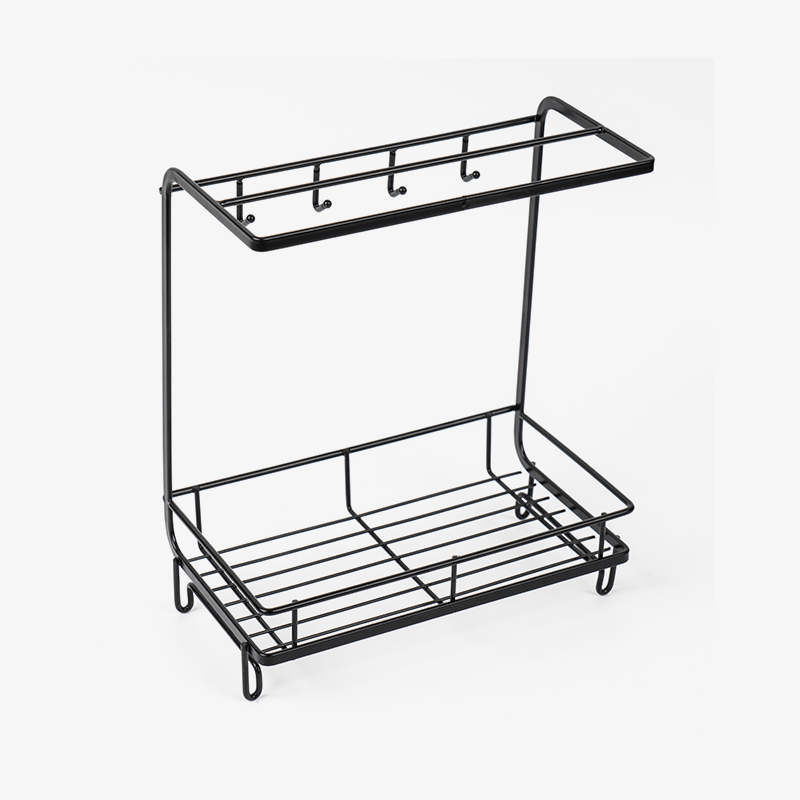
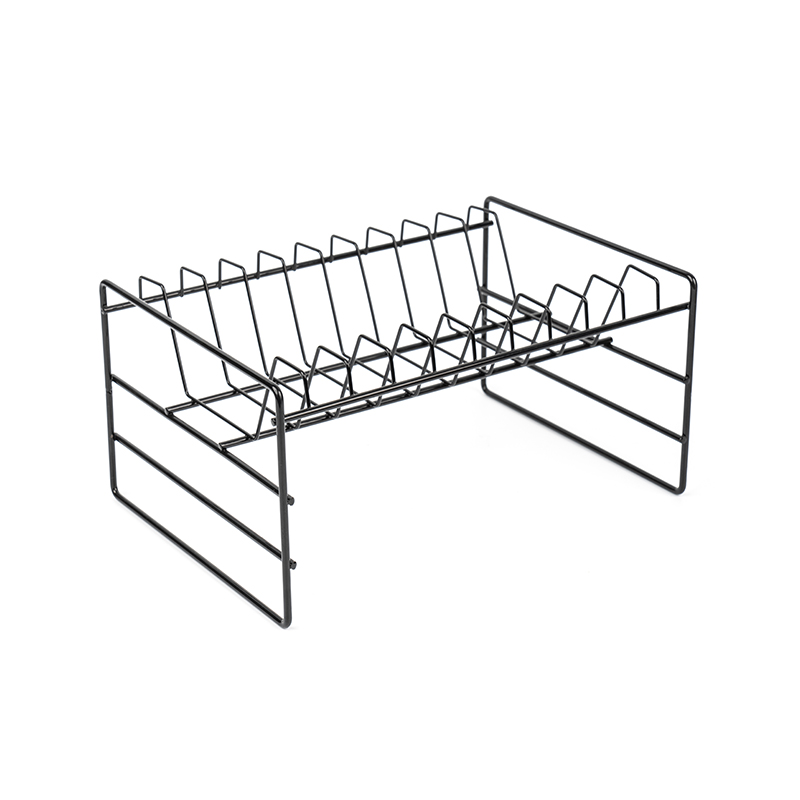 Black Multifunctional Sink Storage Rack for UtensilsMade of iron with a rust-resistant coating, this compact rack features a non-slip, scratch-proof base, making it a sturdy and hygienic choice for sink-side utensil storage.View Product →
Frequently Asked Questions
These are the common questions that arise when cleaning hard water stains from a dish rack.
Does vinegar damage a stainless steel dish drying rack?
No, when used correctly. A 5 percent vinegar solution is safe on stainless steel for 15 to 30 minutes, then rinse it off.
Can I use bleach to remove hard water stains?
No. Bleach does not dissolve mineral scale and can leave corrosive residues that damage the finish.
Does lemon juice work as well as vinegar?
Yes. Lemon juice contains citric acid that dissolves minerals similarly; use it in a 1:1 mix with warm water.
Final Thoughts
White vinegar removes the mineral crust, baking soda adds gentle abrasion, and daily drying breaks the hard water cycle. If your current rack is pitted or the coating is damaged, replacing it with a stainless steel or acid-resistant drain rack will save more cleaning time than repeated soakings.
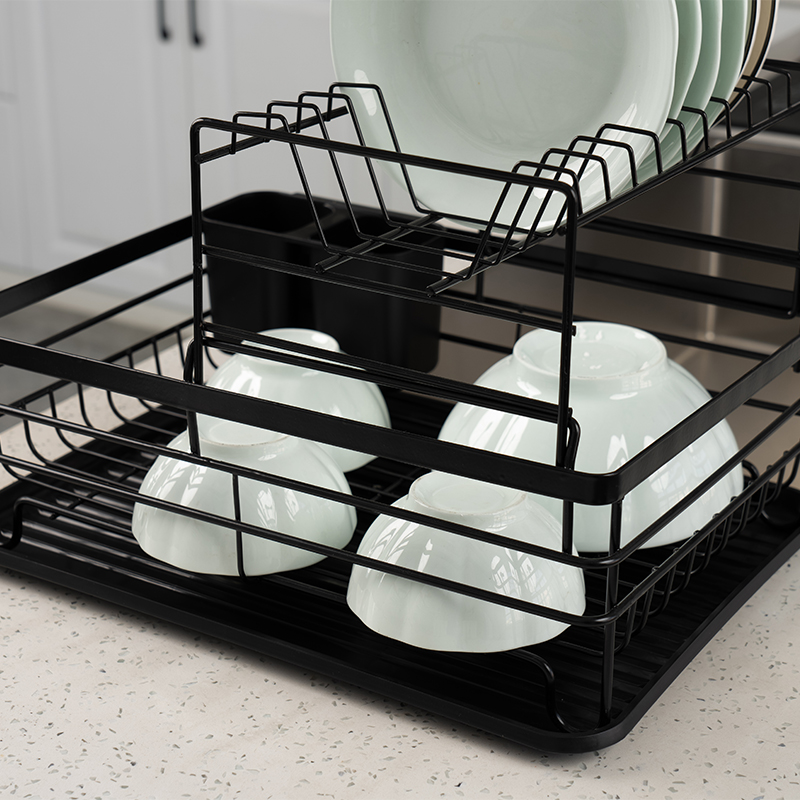 Black Kitchen Countertop Drain Rack with DrainboardBuilt from thick, heavy wires, this space-saving dish rack assembles quickly and is easy to clean, providing efficient drying and countertop protection for smaller kitchens.View Product →