

 Español
 عربى
عربىYour knife block sits at the far end of the counter, and the dish rack hogs the space beside the sink. To put a knife away, you carry it across a wet counter, past the cutting board, and into a wooden block that rarely gets cleaned. A built-in dish-drying rack and knife block removes that routine: washed dishes drain in the rack, and freshly rinsed knives drop into a protected slot a few centimetres away. The best units are made of 304 stainless steel, drain water away from blades, and fit the depth of a standard countertop. Here is what to check before you buy.
What Is a Built-In Dish-Drying Rack and Knife Block?
A built-in dish-drying rack and knife block is a single countertop fixture that combines a draining platform for plates, bowls, cups, and utensils with an integrated knife holder in the same footprint. Knives stand vertically in individual slots, usually along the back or one side of the rack, and stay there until you need them.
Because both functions share one base, the unit occupies no more counter area than an ordinary drain rack. That is the core benefit: you gain knife storage without dedicating a second block of space to a separate holder.
Why Combine Dish Drying and Knife Storage?
Combining the two functions saves counter space, shortens the path from sink to storage, and keeps freshly washed knives away from the prep surface. For daily cooking, the advantage shows up in the first week.
- One footprint instead of two, which matters when the counter is only 60 centimetres deep.
- A wet knife goes straight from rinse into a slot; no puddle, no dripping across the counter.
- Fewer separate objects to wipe, move, and rearrange during cleanup.
- Knives stay in the same zone as the dishes you prep, so you are not reaching across the kitchen.
For most households, the trade-off is acceptable: you lose the flexibility of moving the knife block elsewhere, but you gain a cleaner, faster daily routine.
What to Look For: Material and Construction
Material quality separates a unit that lasts a decade from one that rusts in eighteen months. Choose a rack made of 304 stainless steel, the same food-grade alloy used in commercial kitchen equipment.
- 304 stainless steel resists corrosion from water, detergent, and acidic food residue. Lower-cost 201 or 430 grades discolor and pit far sooner.
- Welded joints are stronger than press-fit or riveted connections, especially where the knife block meets the drain base.
- Edges must be deburred and smoothed; the inside of each knife slot matters as much as the outer frame.
- A weighted base or non-slip feet keep the unit from shifting when you pull out a knife.
A manufacturer that documents its strict quality control process is more likely to get these details right. If the seller cannot confirm the steel grade or the frame thickness, treat that as a warning.
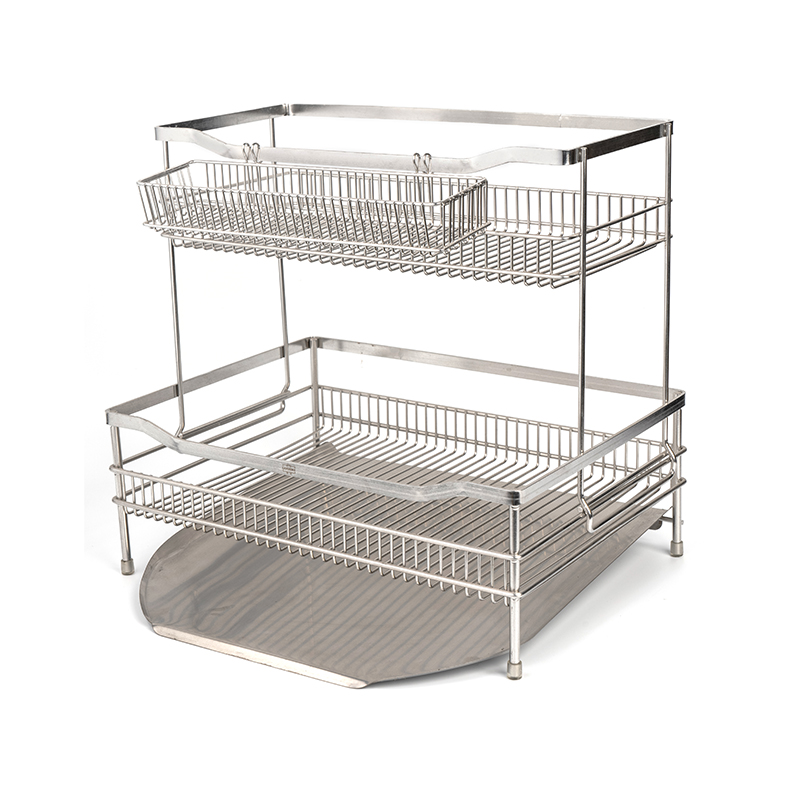 Stainless Steel Two-Tier Dish Drying Rack with DrainboardThis heavy-duty 304 stainless steel rack offers designated spaces for plates, cups, utensils, and pots while its drainboard directs water into the sink. Verify the frame thickness and steel grade before purchase, as the preceding text advises.View Product →
Sizing and Countertop Layout
Measure before you buy. The rack must sit beside the sink without blocking the faucet, and it has to clear the underside of upper cabinets.
- Counter depth: standard kitchen counters run 60 to 65 centimetres (24 to 26 inches). A rack deeper than the counter looks wrong and makes the back row hard to reach.
- Width: match the rack to your typical dish load, not to the full counter. A 40 to 50 centimetre unit covers the daily dishes of a two- to four-person household.
- Height with knives: check the tallest knife plus its handle, then confirm the unit stays below the upper cabinets.
- Faucet clearance: leave at least 10 centimetres between the spray head and the back edge of the rack.
If your counter is shallow, choose a model with a narrower knife block or one that positions the slots at the side rather than at the back. That keeps the reachable depth manageable.
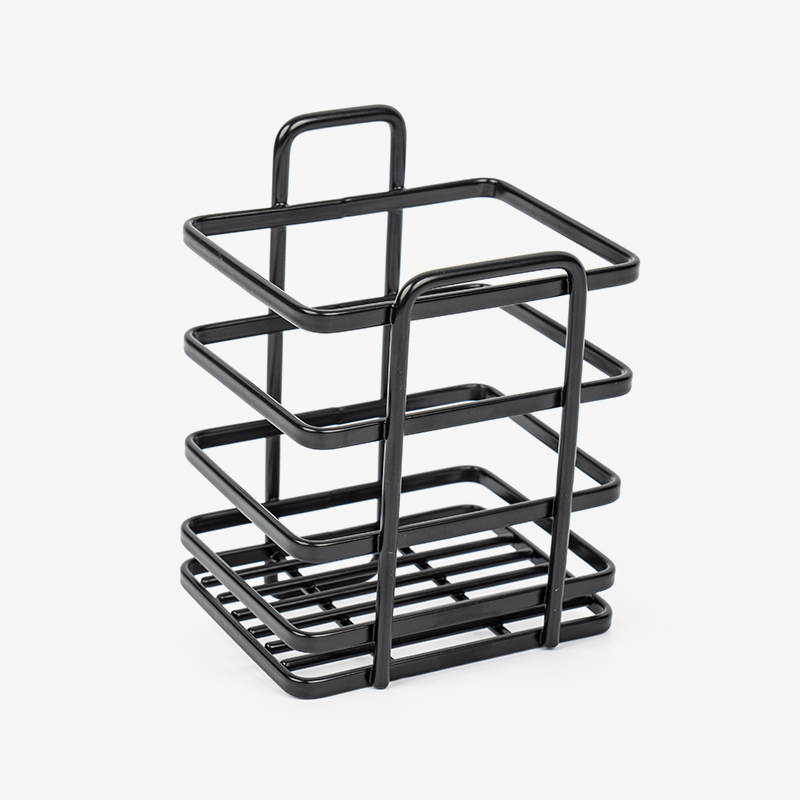
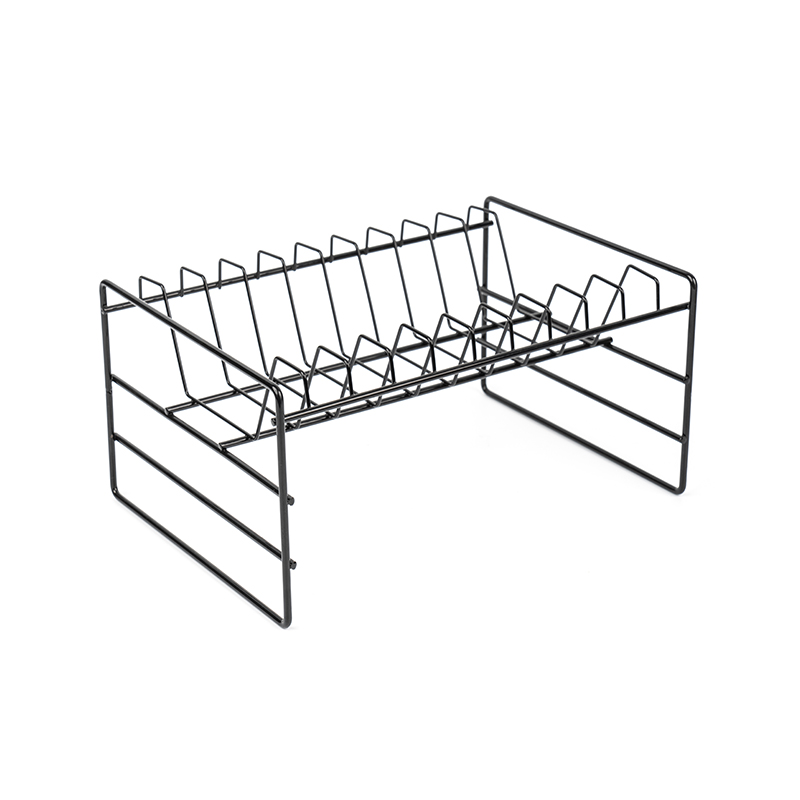 Black Multifunctional Sink Storage Rack for UtensilsThis compact iron rack with anti-corrosion coating and non-slip, scratch-resistant base fits shallow counters. Its drainage design helps prevent water from pooling under knives, protecting edges and handles during daily kitchen use.View Product →
Drainage and Water Management
Water left sitting under knives is the fastest way to dull an edge and stain a handle. A smart built-in unit is designed around drainage, not just around looks.
- The base should slope slightly toward a front channel so water does not pool where the knives stand.
- A removable drip tray makes cleaning simple; without one, you wipe the counter under the rack every day.
- The knife block itself should have drainage slots or an open bottom, so moisture does not collect inside the cavity.
- Raised feet lift the whole unit a few millimetres so air circulates under the base.
Test the slope or read reviews that mention standing water. A flat base with no channel will trap water, and that leads to rust and mildew over time.
Knife Slot Design and Blade Safety
Slots need to be deep enough for your longest blade but narrow enough to hold each knife upright. A blade should touch only the smooth slot material, never the metal base of the rack.
- Slot depth: at least one-third of the blade length should sit inside the slot.
- Slot width: 2 to 4 millimetres works for most chef's knives; thin pairing knives need their own narrow slot.
- Smooth edges: any burr in the slot opening will scratch the blade side.
- Easy cleaning: the slot insert should lift out or stay reachable with a brush. A sealed cavity becomes a hygiene problem.
If you keep a honing steel, check whether the unit has a separate slot or plan to store the rod elsewhere. Most combined units are designed for knives only, not for rods or scissors.
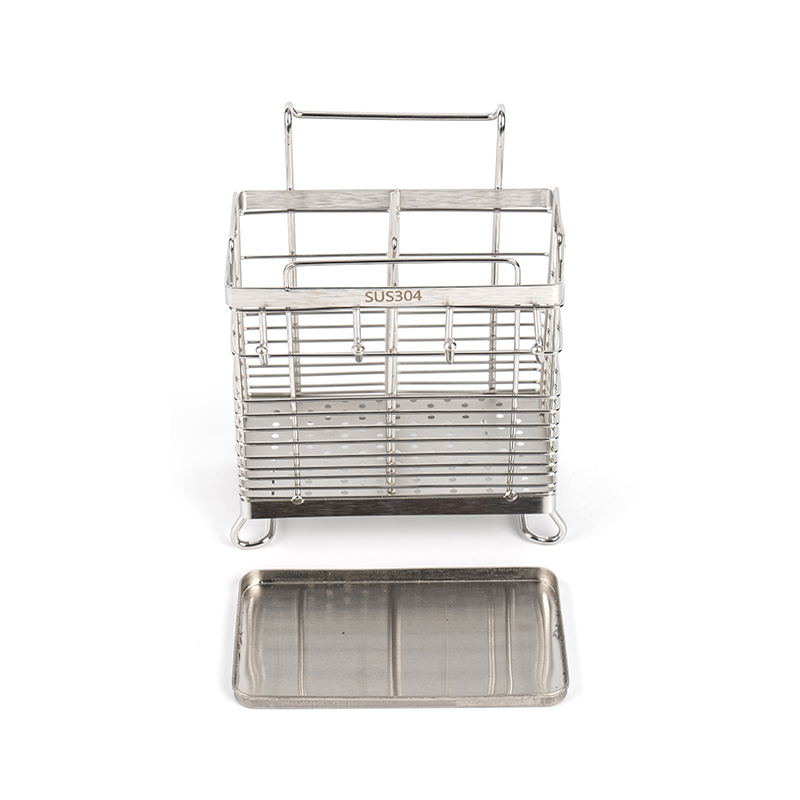 304 Stainless Steel Kitchen Utensils and Chopsticks HolderThis rust-proof stainless steel holder features two divided compartments and evenly perforated holes for quick drainage, promoting faster drying. It is dishwasher safe, making it a practical option when comparing combined storage units versus separate products.View Product →
Built-In Unit vs. Separate Rack and Knife Block
The decision is not always either/or. Use this comparison when choosing between a combined unit and two separate products.
| Consideration | Built-in combined unit | Separate rack and knife block |
|---|---|---|
| Counter space | One footprint | Two footprints |
| Daily workflow | Wash, drain, place knife in slot | Wash, drain, carry knife to block |
| Cleaning effort | One unit to wipe and maintain | Two surfaces, plus crumbs under the block |
| Layout flexibility | Fixed combined arrangement | Move the knife block anywhere |
| Kitchen style | Streamlined, commercial look | Can mix wood and metal aesthetics |
| Budget | One purchase | Two purchases, often a higher total |
If you cook in a long open kitchen where the prep zone sits far from the sink, separate units may serve you better. In a compact galley kitchen, the combined unit almost always wins.
Mistakes Buyers Make
These are the most common mistakes, and all of them are avoidable.
- Choosing 201 stainless steel to save money; it rusts at the first scratch.
- Ignoring the drip tray depth. A shallow tray overflows when you drain a heavy pot.
- Buying from a photo without checking dimensions; the knife block can hit upper cabinets.
- Overlooking slot width. Wider blades crowd together and rub against each other.
- Assuming the whole unit is dishwasher-safe. Most are not; the heat can warp the frame.
Frequently Asked Questions
Will a stainless steel knife block dull my blades?
No. A well-made stainless steel unit holds each knife by the edge in a smooth slot, with no hard scraping against metal. Dulling happens when the blade drags along the base or is pulled sideways against a sharp edge.
How many knives does a built-in knife block typically hold?
Most models hold four to eight knives. A four-slot unit covers a chef's knife, a bread knife, a pairing knife, and a utility knife, which suits most home cooks.
Can the knife slots be removed for cleaning?
It depends on the model. Look for a unit where the slot insert lifts out or is open at the back so you can rinse it. Avoid sealed cavities you cannot reach.
Is a built-in unit better than a wall-mounted magnetic strip?
It depends on your counter space and knife collection. A magnetic strip keeps blades dry and visible and saves counter space, but it only works with magnetic steel blades. A built-in block stores knives upright and works with any blade material, including ceramic or non-magnetic stainless cladding.
What is the best material for the dish rack part?
304 stainless steel, because it resists rust, does not support bacterial growth, and survives repeated contact with water and acidic food. The benefits appear in daily use, as explained in our review of 304 stainless steel cutlery holders compared with other materials.
The right built-in dish-drying rack and knife block does more than tidy the counter: it shortens every wash-up routine and keeps your best knives drier and safer. Match the unit to your sink width, your knife set, and the way you actually cook. Do that, and it will earn its place beside the tap for years.