

 Español
 عربى
عربىA hanging dish rack is a wall-mounted or ceiling-suspended storage solution that holds plates, bowls, cups, and cookware above the countertop, freeing up valuable workspace and allowing dishes to air-dry naturally. It is the right choice for kitchens where counter space is limited, airflow drying is preferred over towel-drying, or where a clean, organized aesthetic is a priority — and studies show that households using overhead dish storage reduce drying time by up to 30% compared to countertop racks in the same kitchen environment.
What Exactly Is a Hanging Dish Rack?
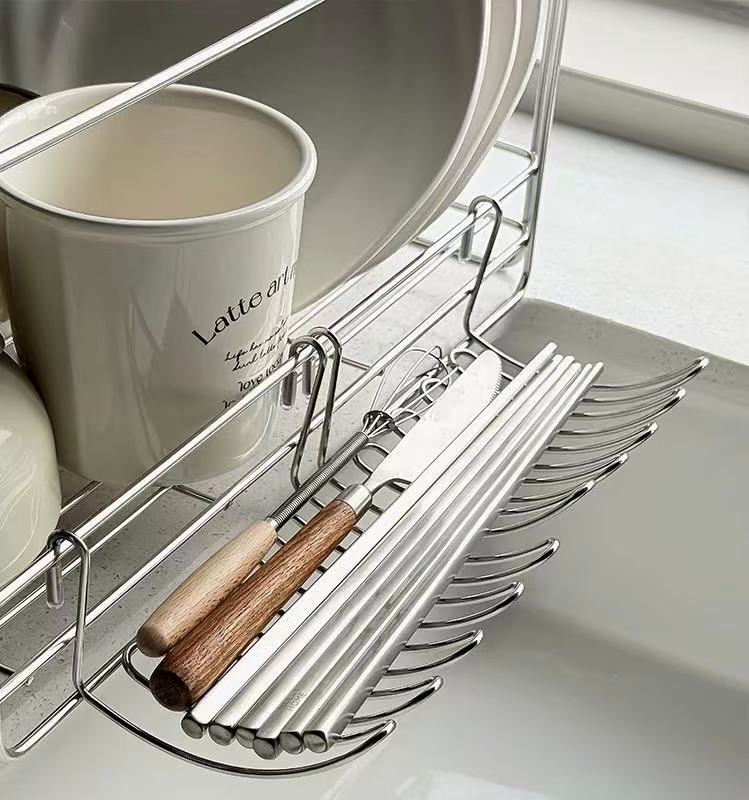
A hanging dish rack is a suspended or wall-fixed frame — typically made from stainless steel, iron, bamboo, or coated wire — designed to store and drain dishes at height rather than on a flat surface. Unlike traditional countertop drying racks that sit next to the sink, hanging versions mount directly to walls, install above the sink, or suspend from ceiling rails, turning otherwise unused vertical and overhead space into functional storage.
The concept has roots in European farmhouse kitchens, where open-rack "plate rails" were standard for centuries. Today's hanging dish racks are engineered versions of that tradition — with welded joints, rust-resistant coatings, adjustable hooks, and integrated drip trays or open-drain designs that let water fall directly into the sink below.
According to kitchen organization surveys, over 42% of small kitchen owners cite lack of counter space as their top storage frustration. A hanging dish rack directly addresses this by relocating drying and storage functions to vertical real estate.
Types of Hanging Dish Racks: Which Style Suits Your Kitchen?
There are five main categories of hanging dish racks, each suited to different kitchen layouts, dish volumes, and mounting preferences. Choosing the wrong type is the most common installation mistake.
1. Over-the-Sink Hanging Dish Rack
The over-the-sink style is the most popular type, designed to rest on or clip to the edges of the sink basin. Water drips directly into the sink, eliminating the need for a drip tray entirely. These racks typically accommodate 8–12 plates plus utensil slots and cup holders. They require no drilling and suit renters or temporary setups. Standard width ranges from 24 to 36 inches to span most domestic sinks.
2. Wall-Mounted Hanging Dish Rack
Wall-mounted racks offer the most stable, permanent solution for high-volume dish storage. Secured directly into wall studs or tile with screws and anchors, they can support 15–25 kg of dishes depending on anchor rating and wall type. Many include fold-down designs that collapse flat against the wall when not in use — ideal for small kitchens that need the rack only during active drying sessions.
3. Ceiling-Mounted Pot Rack with Dish Hooks
Ceiling-mounted racks maximize overhead space and work best in kitchens with ceilings of 8–10 feet. These grid or ladder-style frames hang from ceiling joists via threaded rods or chains, providing hooks for pots, pans, cups, and shallow bowls. They are a statement design element in open-plan and farmhouse kitchens, and can hold 30–50 kg when properly anchored into structural joists.
4. Cabinet-Door Hanging Dish Rack
Cabinet-door versions mount on the inside of cabinet doors, offering hidden storage for plates, lids, and cutting boards. These are typically wire or coated steel frames held by over-the-door hooks — no drilling required. Capacity is lower (usually 4–6 plates or lids), but they maximize dead space inside existing cabinetry without altering the kitchen's outward appearance.
5. Expandable / Adjustable Hanging Dish Rack
Adjustable racks with telescoping arms fit a range of sink widths without permanent installation. The telescoping side arms extend from roughly 18 to 28 inches, applying tension against the inner sink walls. These suit households with varying dishwashing volumes, as extra tiers or hooks can be added modularly over time.
Hanging Dish Rack Types at a Glance
| Type | Mounting Method | Drilling Required | Typical Capacity | Best For |
| Over-the-Sink | Sink edges | No | 8–12 plates | Renters, small kitchens |
| Wall-Mounted | Wall studs / anchors | Yes | 15–25 kg | Permanent setups, families |
| Ceiling-Mounted | Ceiling joists | Yes | 30–50 kg | Open-plan, farmhouse kitchens |
| Cabinet-Door | Over-door hooks | No | 4–6 plates / lids | Hidden storage, apartments |
| Adjustable/Expandable | Tension on sink walls | No | Variable (modular) | Flexible use, varying volumes |
Caption: Overview of the five main hanging dish rack types, comparing mounting method, installation requirements, load capacity, and ideal use cases.
Hanging Dish Rack Materials: What Lasts Longest in a Kitchen Environment?
Stainless steel (304 grade) is the most durable material for a hanging dish rack, offering corrosion resistance, structural rigidity, and a hygienic non-porous surface that resists bacteria. Here is how the main materials compare:
- 304 Stainless Steel: Resists rust and staining even in high-humidity environments. Rated for continuous use in splashing water zones. Lifespan exceeds 10–15 years with basic cleaning. Heavier than coated wire but significantly stronger.
- Powder-Coated Iron / Steel Wire: Lower cost and available in colors (matte black, white, bronze). Coating integrity is the key variable — quality coatings last 5–8 years; poor coatings chip and rust within 12–18 months of exposure to steam and moisture.
- Bamboo: Eco-friendly and naturally antimicrobial. Best suited for dry storage rather than active draining. Bamboo racks degrade faster in consistently wet environments (expect 2–4 years of life near a sink without regular oiling).
- Chrome-Plated Steel: Shiny finish with moderate rust resistance. Less durable than 304 stainless in humid conditions; chrome flaking is a concern after 3–5 years in high-moisture kitchens.
- Aluminum: Lightweight and rust-proof but softer than steel. Can bend under heavy loads (full casserole dishes, stoneware). Best for lightweight cup and utensil storage rather than heavy plate stacking.
Hanging Dish Rack vs. Countertop Dish Rack: A Direct Comparison
A hanging dish rack outperforms a countertop rack in space efficiency, hygiene, and air circulation, though countertop racks win on installation ease and accessibility. The choice comes down to your kitchen size, rental status, and dishwashing frequency.
| Factor | Hanging Dish Rack | Countertop Dish Rack |
| Counter Space Used | Zero | Significant (avg. 1–2 sq ft) |
| Air Drying Efficiency | High (360° airflow) | Moderate (bottom pooling risk) |
| Installation Effort | Low to High (by type) | None |
| Mold / Mildew Risk | Low (drains into sink) | Higher (tray water sits) |
| Max Load Capacity | Up to 50 kg (ceiling-mount) | 5–10 kg typical |
| Rental-Friendly | Yes (over-sink / expandable) | Yes |
| Visual Tidiness | High (off counter) | Low (visible clutter risk) |
| Average Cost Range | $25–$150+ | $15–$60 |
Caption: Side-by-side comparison of hanging dish racks versus countertop dish racks across eight key performance and usability factors.
How to Choose the Right Hanging Dish Rack: 6 Key Factors
The single most important factor when choosing a hanging dish rack is load capacity relative to your typical dishwashing volume — undersizing the rack leads to overcrowding, poor drying, and potential structural failure. Beyond capacity, these five additional factors guide the best selection:
Factor 1 – Sink Width and Clearance
Measure your sink's inner width and the clear height above it before purchasing any over-the-sink hanging dish rack. Most over-sink racks need at least 12 inches of vertical clearance above the sink basin. For wall-mounted racks, ensure the bottom edge sits at least 18 inches above the countertop to allow comfortable dish loading and unloading without bumping your head.
Factor 2 – Wall or Ceiling Material
Anchor selection depends entirely on the substrate: drywall, tile, plaster, or concrete each requires a different fastener type. For drywall without stud access, toggle bolts rated at minimum 50 lbs each are required for wall-mounted racks. Tile installation requires carbide-tipped drill bits and tile-rated anchors to prevent cracking. Always locate ceiling joists with a stud finder before installing ceiling-mount racks — never anchor into drywall alone for overhead loads.
Factor 3 – Dish Type and Size
Large-diameter plates (11–12 inches) and deep bowls require rack slots spaced at least 1.5 inches apart to allow proper drainage and prevent chipping. Check that the rack's slot width accommodates your thickest plate rim. For households with significant stemware or wine glasses, look for racks with dedicated stemware hangers rather than generic wire slots.
Factor 4 – Drainage Design
Racks that drain directly into the sink are more hygienic than those with drip trays. If a drip tray is included, choose one with a drain spout (not a flat tray) so water doesn't pool and breed bacteria. Over-the-sink hanging dish racks eliminate this concern entirely, making them the most hygienic option for active drying use.
Factor 5 – Weight Rating vs. Your Load
Always apply a safety margin of at least 1.5× your expected maximum load when selecting a rack's weight rating. A full set of 8 ceramic dinner plates averages 6–8 kg; add a cast-iron skillet at 3–4 kg and a full mug set at 2–3 kg, and a typical family's full load reaches 12–15 kg. A rack rated at 20 kg provides appropriate safety margin.
Factor 6 – Finish Compatibility with Kitchen Decor
A hanging dish rack is highly visible, so finish matching matters more than with hidden storage. Matte black racks complement industrial and contemporary kitchens; brushed stainless suits modern and minimalist designs; oil-rubbed bronze or gold finishes work with traditional and farmhouse aesthetics. Bamboo racks provide warmth in Japandi or natural-material kitchen styles.
Installation Guide: How to Install a Wall-Mounted Hanging Dish Rack Safely
Correct anchor placement is the most critical step in wall-mounted hanging dish rack installation — an improperly anchored rack loaded with heavy stoneware poses a serious safety risk. Follow these steps for a secure installation:
- Locate wall studs using a stud finder. Mark stud centers with a pencil. Whenever possible, anchor into studs for maximum load capacity (studs typically support 100+ lbs per anchor point).
- Determine mounting height: Position the bottom of the rack at least 18 inches above the countertop. Hold the rack against the wall and mark the bracket hole positions with a level to ensure horizontal alignment.
- Drill pilot holes slightly smaller than your anchor or screw diameter. For tile surfaces, use a carbide bit at low speed without hammer-drill mode to prevent cracking.
- Insert wall anchors if not drilling into studs. For racks holding 10+ kg, use hollow-wall anchors rated at a minimum of 50 lbs each.
- Mount the brackets and hand-tighten screws first. Check level again before fully tightening. Load-test with hands before placing any dishes — apply approximately 1.5× the expected dish weight as a pull-down force.
- Load dishes gradually in the first week to confirm anchor integrity before committing to full capacity.
Maintenance Tips to Keep Your Hanging Dish Rack Hygienic and Long-Lasting
Weekly cleaning with warm soapy water and monthly deep-cleaning with a diluted white vinegar solution will extend any hanging dish rack's lifespan by years. Neglected racks accumulate mineral deposits, soap residue, and mold — especially in the grooves and joints where water sits.
- Stainless steel racks: Wipe weekly with a damp cloth and mild dish soap. For water spots, buff with a cloth dampened in white vinegar. Avoid steel wool, which scratches and creates rust-initiation sites.
- Powder-coated iron racks: Inspect the coating quarterly for chips or rust spots. Touch up with rust-inhibiting paint immediately if bare metal is exposed. Do not submerge in water — wipe-clean only.
- Bamboo racks: Apply food-safe mineral oil every 3–4 months to prevent cracking and moisture absorption. Keep away from prolonged water exposure; dry immediately after any splashing.
- All rack types: Check mounting hardware every 6 months. Vibration from daily use can loosen screws gradually; tighten before they work fully free.
Frequently Asked Questions About Hanging Dish Racks
Q1: Can a hanging dish rack be installed in a rental apartment without drilling?
Yes. Over-the-sink hanging dish racks and adjustable tension racks require zero drilling and leave no wall damage. Over-door cabinet racks also install without tools. These three types are specifically designed for rental use and can be fully removed in minutes when moving out.
Q2: How much weight can a wall-mounted hanging dish rack safely hold?
This depends on the mounting anchors more than the rack itself. A rack anchored into two wall studs can safely hold 40–60 lbs (18–27 kg) in most residential constructions. Anchored only into drywall with quality toggle bolts, the practical safe limit is 20–30 lbs (9–13 kg). Always check the manufacturer's rated load AND the anchor rating, and apply a 1.5× safety margin.
Q3: Is a hanging dish rack more hygienic than a countertop rack?
Generally yes, particularly for over-the-sink models. Water drains directly into the sink rather than pooling in a tray, which significantly reduces the mold and mildew risk that makes countertop drip trays a common hygiene problem. Research on kitchen surface contamination consistently identifies standing water in dish rack trays as a mold growth site when trays are not emptied daily.
Q4: What is the best material for a hanging dish rack near a sink?
304-grade stainless steel is the best material for any hanging dish rack placed in a high-moisture environment near a sink. It is fully rust-proof, non-porous, easy to sanitize, and structurally strong enough for heavy stoneware. If budget is a constraint, quality powder-coated steel wire with intact coating is acceptable, but requires more frequent inspection and touch-up to prevent rust.
Q5: Can I hang a cast-iron skillet on a hanging dish rack?
Yes, provided the rack is rated for the weight. A standard 10-inch cast-iron skillet weighs approximately 5–6 lbs (2.3–2.7 kg); a 12-inch version, 7–9 lbs (3.2–4 kg). Ceiling-mounted racks with individual S-hooks are well-suited for heavy cookware. For wall-mounted racks, always verify the per-hook load rating, not just the total rack rating, as concentrated point loads on individual hooks stress weld joints differently than distributed plate loads.
Q6: How do I prevent a hanging dish rack from rusting?
Choose 304 stainless steel or quality powder-coated steel with intact coating. Wipe the rack dry weekly — especially at joints and where metal meets metal — to prevent mineral deposit buildup that traps moisture against the surface. For powder-coated racks, inspect monthly and apply touch-up paint at any chipped area immediately. Avoid placing the rack directly against a wall with poor ventilation, as condensation accelerates corrosion.
Final Verdict: Is a Hanging Dish Rack Worth It?
For most kitchens — especially those under 150 square feet — a hanging dish rack delivers a measurable improvement in usable workspace, drying efficiency, and kitchen hygiene compared to any countertop alternative. The upfront investment of $25–$150 pays off rapidly in recovered counter space and reduced mold risk from stagnant drip trays.
For renters or temporary setups, an over-the-sink or expandable hanging dish rack is an instant, no-damage upgrade. For homeowners willing to commit to a permanent installation, a wall-mounted stainless steel rack represents the best long-term value — combining durability, capacity, and daily-use convenience that a countertop rack simply cannot replicate.
The key to a successful purchase is sizing correctly: measure your sink dimensions and ceiling clearance first, calculate your actual dish load with a 1.5× safety margin, match material to your kitchen humidity level, and choose a finish that suits your existing hardware. With those four decisions made deliberately, a hanging dish rack becomes one of the most impactful small upgrades available to any kitchen.