

 Español
 عربى
عربىContent
- 1 What Does a Dish Drying Rack Actually Do?
- 2 Types of Dish Drying Racks: A Complete Overview
- 3 Dish Drying Rack Types Compared: Features, Pros, and Cons
- 4 Material Comparison: What Your Dish Drying Rack Is Made Of Matters
- 5 Key Features to Look for When Buying a Dish Drying Rack
- 6 How to Clean and Maintain a Dish Drying Rack
- 7 How to Choose the Right Dish Drying Rack for Your Kitchen
- 8 Frequently Asked Questions About Dish Drying Racks
- 9 Conclusion: Choosing the Right Dish Drying Rack Improves Every Day
A dish drying rack is a structured holder — made from metal, plastic, bamboo, or silicone — that holds freshly washed dishes, glasses, and utensils upright or at an angle so water drains away and air circulates freely, allowing dishes to dry without hand-drying or towels. The right rack can cut kitchen cleanup time by up to 40%, reduce bacteria from damp towel contact, and keep your counter organized.
This guide explains exactly what a dish drying rack does, covers every major type, compares key features side by side, and answers the most common questions buyers ask before choosing one.
What Does a Dish Drying Rack Actually Do?
A dish drying rack does three things simultaneously: it holds dishes securely so they don't topple, promotes airflow around all surfaces, and channels draining water away from your counter. Most racks achieve this through a combination of vertical plate slots, a lower tier for bowls and pots, side hooks or compartments for utensils, and an angled drainboard or built-in tray that directs water into the sink.
Without a proper dish rack for drying, dishes stacked flat or leaned against each other trap water between surfaces — creating standing moisture that fosters bacteria growth and water spots. Studies on kitchen hygiene consistently find that air-drying on an elevated rack produces lower bacterial counts than towel-drying, because dish towels harbor bacteria that transfer back to clean surfaces.
A well-designed rack also functions as temporary storage, reducing the urgency of putting dishes away immediately after drying — a practical benefit in smaller households.
Types of Dish Drying Racks: A Complete Overview
There are six main categories of dish drying racks, each suited to different kitchen sizes, habits, and aesthetic preferences. Understanding each type is essential before making a purchase.
1. Countertop Dish Drying Rack
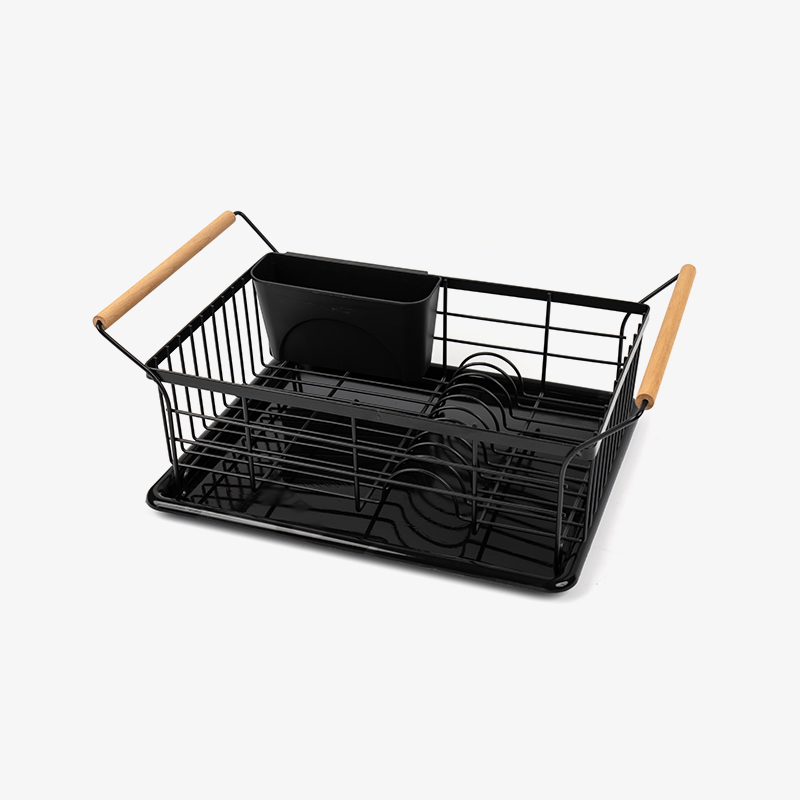
The countertop rack is the most common type and offers the best capacity-to-cost ratio. It sits beside the sink, typically measuring 40–55 cm wide, and holds 8–12 plates in vertical slots alongside a separate utensil caddy and cup pegs. Most feature a removable drip tray. This type suits households of 2–4 people and is available in stainless steel, coated steel, and plastic.
2. Over-the-Sink Dish Drying Rack
An over-the-sink dish drying rack spans the width of the sink basin, so all drips fall directly into the drain with no drip tray needed. These are ideal for small kitchens where counter space is limited. Adjustable models fit sinks ranging from 28 cm to 90 cm wide. The main trade-off is that the sink remains partially blocked while the rack is in use.
3. Two-Tier (Double-Layer) Dish Drying Rack
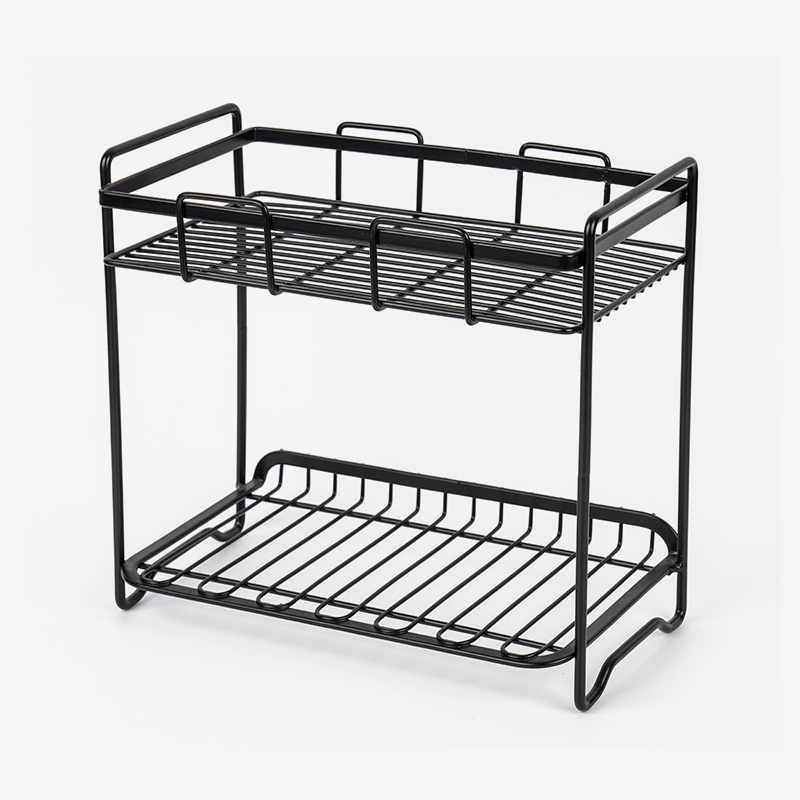
A two-tier dish drying rack doubles vertical capacity without expanding the counter footprint. The upper tier typically holds cups, bowls, and lightweight items; the lower tier handles plates and heavy cookware. Best for households of 4 or more, or for those who cook frequently. Ensure the upper tier drains onto the lower tier and not directly onto the counter.
4. Foldable / Collapsible Dish Drying Rack
Foldable racks collapse flat to around 3–5 cm in thickness for storage, making them the top choice for tiny kitchens, RVs, or rental properties. Most are made from silicone-coated steel or BPA-free plastic. When folded, they fit inside a cabinet drawer. Capacity is lower — typically 6–8 plates — but the space savings are significant.
5. In-Cabinet or Pull-Out Dish Drying Rack
Mounted inside an upper cabinet directly above the sink, pull-out racks are built into the kitchen cabinetry. Dishes are loaded wet, the rack slides in, and drips fall through a perforated cabinet floor into the sink below. This solution is popular in Scandinavian kitchen design and keeps counters completely clear. Installation requires compatible cabinetry and is typically part of a kitchen renovation.
6. Bamboo Dish Drying Rack
Bamboo racks have grown in popularity as an eco-conscious alternative to metal and plastic. Bamboo is naturally antimicrobial, renewable, and aesthetically warm. However, bamboo requires more maintenance — it must be dried thoroughly after each use and treated with food-safe oil every few months to prevent cracking and mold. Average lifespan is 2–3 years versus 5–10 years for stainless steel.
Dish Drying Rack Types Compared: Features, Pros, and Cons
The table below compares all six types across the factors that matter most when choosing a dish rack for drying.
| Type | Counter Space Used | Capacity | Best For | Main Drawback | Typical Price Range |
| Countertop | Medium | 8–12 plates | Most households | Takes counter space | $15–$60 |
| Over-the-Sink | Zero | 6–10 plates | Small kitchens | Blocks sink access | $25–$80 |
| Two-Tier | Medium | 16–24 plates | Large families | Heavy when full | $30–$90 |
| Foldable | Minimal (storable) | 4–8 plates | Tiny kitchens, RVs | Low capacity | $12–$40 |
| In-Cabinet | Zero | 10–20 plates | Renovated kitchens | Requires installation | $80–$250+ |
| Bamboo | Medium | 6–10 plates | Eco-conscious users | Requires maintenance | $20–$55 |
Table 1: Side-by-side comparison of six dish drying rack types by counter space, capacity, ideal use case, main limitation, and typical retail price.
Material Comparison: What Your Dish Drying Rack Is Made Of Matters
The material of a dish drying rack determines its durability, hygiene, weight, and aesthetic. Most racks use one of four core materials.
| Material | Rust Resistance | Weight | Lifespan | Maintenance | Eco Impact |
| Stainless Steel | Excellent | Heavy | 7–15 years | Low | Recyclable |
| Coated Steel | Moderate (chips over time) | Medium | 3–6 years | Low–Medium | Mixed |
| Plastic / ABS | N/A (no rust) | Light | 2–5 years | Low | Poor |
| Bamboo | N/A (mold risk) | Light–Medium | 2–4 years | High (oiling required) | Excellent |
Table 2: Dish drying rack materials compared by rust resistance, weight, expected lifespan, maintenance requirements, and environmental impact.
Key Features to Look for When Buying a Dish Drying Rack
Not all dish racks are equal — these six features separate a functional rack from one that frustrates you every day.
Drainage System
A good dish drying rack with drainboard channels water to a specific exit point — either directly into the sink via a spout, or into a removable tray. Trays that don't angle properly pool water and become breeding grounds for bacteria and mold within 24–48 hours. Look for trays with a visible slope of at least 3–5 degrees and a drain spout long enough to reach over the sink edge.
Plate Slot Spacing
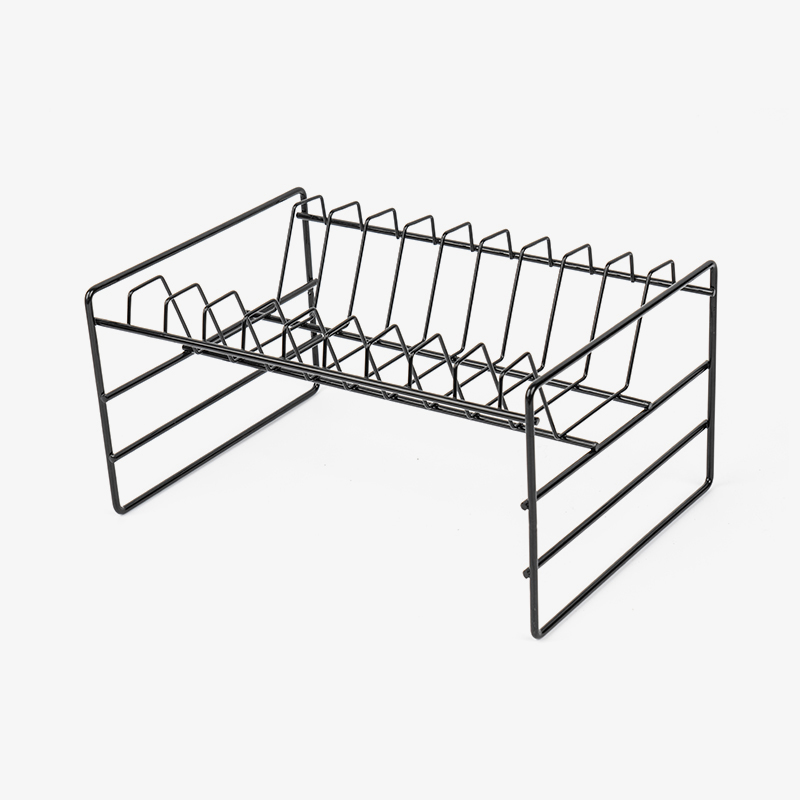
Plate slots should be spaced 2–3 cm apart to allow airflow between dishes. Slots too narrow trap moisture; slots too wide let plates fall flat. The best racks have adjustable or removable dividers to accommodate plates from 15 cm (side plates) to 30 cm (dinner plates) and large items like cutting boards.
Utensil Holder Design
Most racks include a separate caddy for cutlery. The best designs have drainage holes at the base of the caddy so water doesn't collect at the bottom — a common source of rust marks and odor. Rotating or detachable caddies offer more flexibility for different counter layouts.
Wine Glass and Cup Pegs
For households with stemware, cup pegs or wine glass holders are essential. These keep glasses inverted at an angle so the inside air-dries completely. Without them, moisture collects at the bottom of upturned cups, leading to water spots and potential mold in tall, narrow glasses.
Non-Slip Feet
Rubber or silicone feet protect your countertop from scratches and prevent the rack from shifting when loading heavy items. Raised feet also allow airflow underneath the rack, reducing moisture buildup on the counter surface below.
Dishwasher-Safe Parts
Removable drip trays, caddies, and cup pegs that are dishwasher-safe make cleaning far easier. A rack that can't be fully disassembled and cleaned typically accumulates limescale, mold, and food residue within weeks — especially in hard-water areas.
How to Clean and Maintain a Dish Drying Rack
A clean dish drying rack is essential — a dirty rack contaminates the clean dishes placed on it, defeating the purpose entirely.
- Daily: Empty the drip tray and rinse it with hot water. Never leave standing water in the tray for more than 12 hours.
- Weekly: Wipe down all rack surfaces with a cloth dampened in white vinegar diluted 1:1 with water. This dissolves limescale and disinfects without harsh chemicals.
- Monthly: Soak removable parts in a solution of 1 tablespoon baking soda per litre of hot water for 20 minutes, then scrub with a bottle brush. Rinse and air-dry completely before reassembling.
- For bamboo racks: Apply a thin coat of food-safe mineral oil every 2–3 months and let it absorb overnight before use. Avoid soaking bamboo in water.
- For rust spots on coated steel: Sand lightly with fine-grit sandpaper, apply a small amount of food-safe rust inhibitor, and consider replacing if rust is widespread.
How to Choose the Right Dish Drying Rack for Your Kitchen
The best dish drying rack for your kitchen depends on three primary factors: available space, household size, and washing frequency.
- Counter space under 40 cm wide: Choose an over-the-sink or foldable rack.
- Counter space 40–60 cm wide: A standard countertop rack with a drainboard is the most practical.
- Family of 4+: A two-tier rack or in-cabinet system handles the volume without constant emptying.
- Hand-wash only (no dishwasher): Invest in a rack with a proper drainage spout — you'll use it multiple times daily.
- Environmental priority: Bamboo with good ventilation and regular oiling is the most sustainable option.
- Longevity priority: 304-grade stainless steel racks (marked "18/8") offer the best resistance to corrosion and deformation over time.
Frequently Asked Questions About Dish Drying Racks
Q: Is it more hygienic to air-dry dishes on a rack or hand-dry them with a towel?
Air-drying on a clean dish rack is more hygienic. Kitchen towels accumulate bacteria rapidly — research from food safety institutions shows that 89% of dish cloths used for two weeks or more carry coliform bacteria. An elevated rack with good airflow allows dishes to dry without any secondary contact. The caveat is that the rack itself must be clean and the drip tray emptied regularly.
Q: How long does it take for dishes to air-dry on a rack?
In normal indoor conditions (20–22°C, 40–60% humidity), flat items like plates and cutting boards dry in 15–30 minutes. Cups and glasses with enclosed bases take 30–60 minutes. Bowls placed right-side up can retain water for several hours. Always place cups and bowls inverted or at an angle on the rack for the fastest drying.
Q: Can I leave dishes on the drying rack permanently as storage?
You can, but it's not ideal. Dishes left on a rack long-term accumulate dust, and the rack drip tray may hold residual moisture that encourages bacteria. Using the rack as short-term drying storage (under 24 hours) and then putting dishes away in cabinets is the better practice for kitchen hygiene.
Q: What size dish drying rack do I need?
For 1–2 people: a rack that holds 6–8 plates is sufficient. For 3–4 people: 10–12 plate capacity is practical. For 5+ people or frequent cooking: look for 16+ plate capacity with a two-tier design. Always measure your available counter or sink space before purchasing — a rack that doesn't fit its environment creates more problems than it solves.
Q: Why does my dish rack smell bad?
A bad-smelling rack is almost always caused by standing water in the drip tray, food particles trapped in the wire grid, or mold growth — typically in areas with high humidity. Empty and rinse the drip tray daily, disassemble the rack monthly for deep cleaning with a vinegar solution, and ensure the rack is placed in a location with good air circulation. If the smell persists after deep cleaning, the rack likely needs to be replaced.
Q: Do I need a dish drying rack if I have a dishwasher?
Yes — for most households, a small rack remains useful even with a dishwasher. Large pots, non-dishwasher-safe items (cast iron, wooden utensils, sharp knives), baby bottles, and delicate glassware still require hand-washing and a place to drip-dry. A compact or foldable rack handles this without taking up significant counter space.
Conclusion: Choosing the Right Dish Drying Rack Improves Every Day
A dish drying rack is one of the most-used items in any kitchen — and one of the most overlooked. The right rack fits your space, handles your volume, drains efficiently, and stays clean with minimal effort. The wrong one creates clutter, moisture problems, and frustration after every meal.
Match the rack type to your kitchen size and household needs, choose 304 stainless steel for longevity or bamboo for sustainability, and prioritize drainage design above aesthetics. A well-chosen dish rack pays for itself in time saved and cleaner dishes from day one.