

 Español
 عربى
Three brackets, one tube diameter and a coating spec decide whether a bathroom storage rack still looks new after two humid winters — or starts to pull away from the tile by spring.
The short answer: inside the splash zone, specify 304 stainless steel; keep the unsupported span at 600 mm or less; fix the bracket into the wall substrate rather than into the tile alone; and plan on 5 kg of wet load per shelf. Everything else — tier count, colour, hook style — can be adjusted later without touching the structure.
This guide is written for the people who specify, buy or manufacture these racks: brand product managers, sourcing teams and buyers comparing quotes from different factories.
Which material keeps a bathroom storage rack rust-free?
304 stainless steel is the right default for anything that gets sprayed, and powder-coated carbon steel is acceptable only where the coating is verified and the rack stays mostly dry.
The 18% chromium and 8% nickel in 304 form a passive oxide layer that re-forms after a scratch. A bathroom tests that layer constantly: chlorinated water, soap residue, acidic cleaners and long hours at 80% humidity. Grades that replace nickel with manganese look identical on a showroom shelf and pit within a year next to a shower.
Carbon steel is not automatically the wrong choice. It costs less and takes the matte black finish many buyers want. The condition is pretreatment: degreasing, phosphating, then a powder coat of roughly 60 to 80 micrometres, with coverage checked at welds, cut edges and screw holes — the three places rust always starts.
| Material | Best position | Typical finish | What to verify |
|---|---|---|---|
| 304 stainless steel | Shower, basin, wet zone | Brushed or polished, no coating required | Tube wall 0.8–1.2 mm, dressed welds, grade certificate |
| 201 stainless steel | Dry vanity area only | Polished | Chloride pitting risk, actual nickel content |
| Powder-coated carbon steel | Toilet side, over-door, dry corners | Matte black, white, RAL colours | Salt-spray hours, edge and hole coverage |
| Aluminium | Light rails, decorative pieces | Anodized | Thread strength, rigidity under load |
Which rack type fits which part of the bathroom?
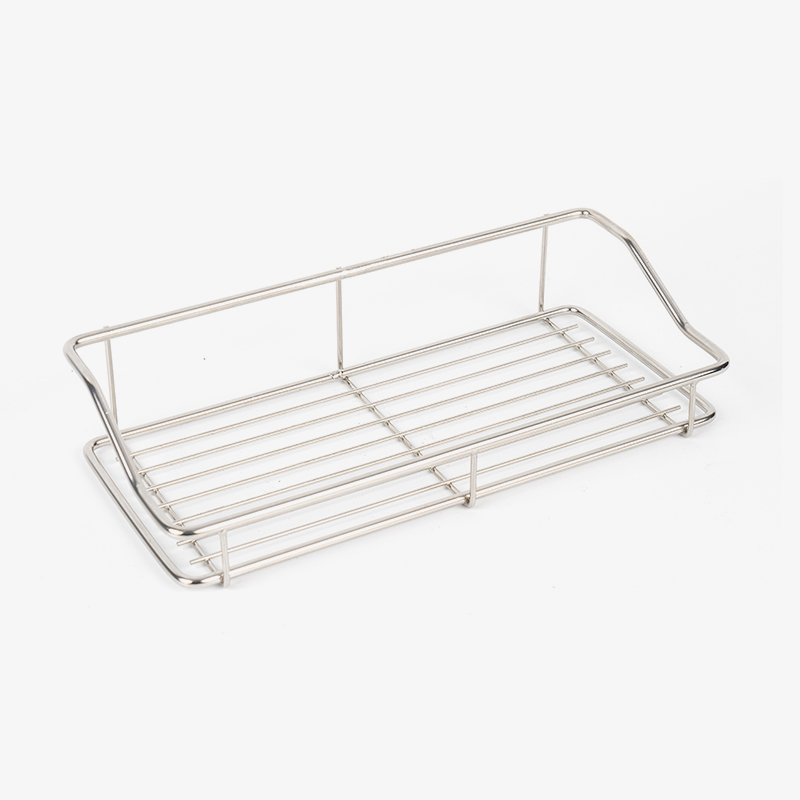
Choose by the wall space you actually have, not by the product photo: a corner shelf for the 90 degree tile corner, a hanging unit where drilling is not allowed, and a tiered floor organizer where the wall is already occupied by a mirror or cabinet.
Corner shelves
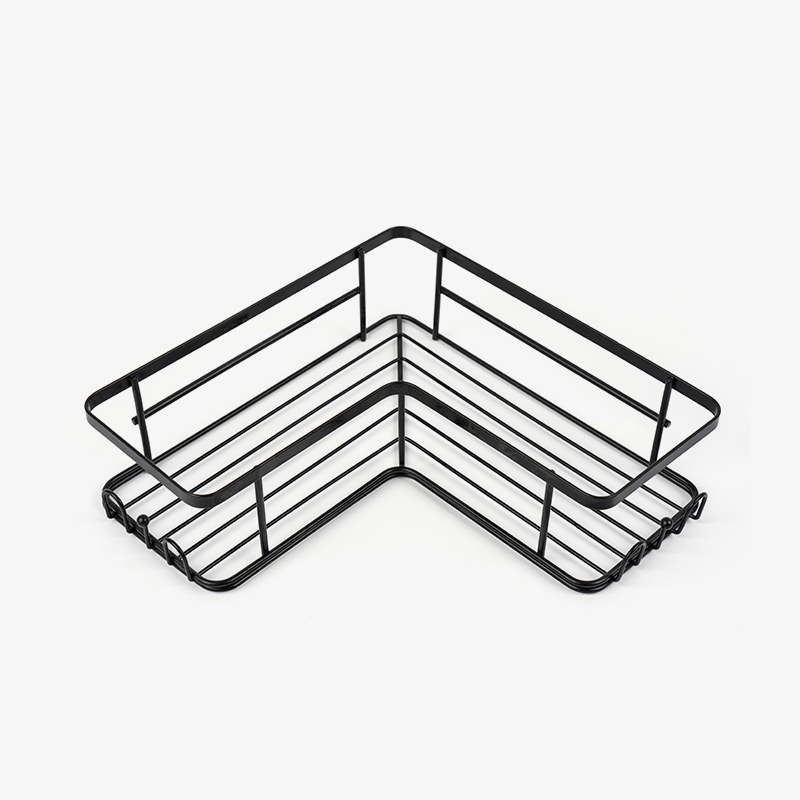
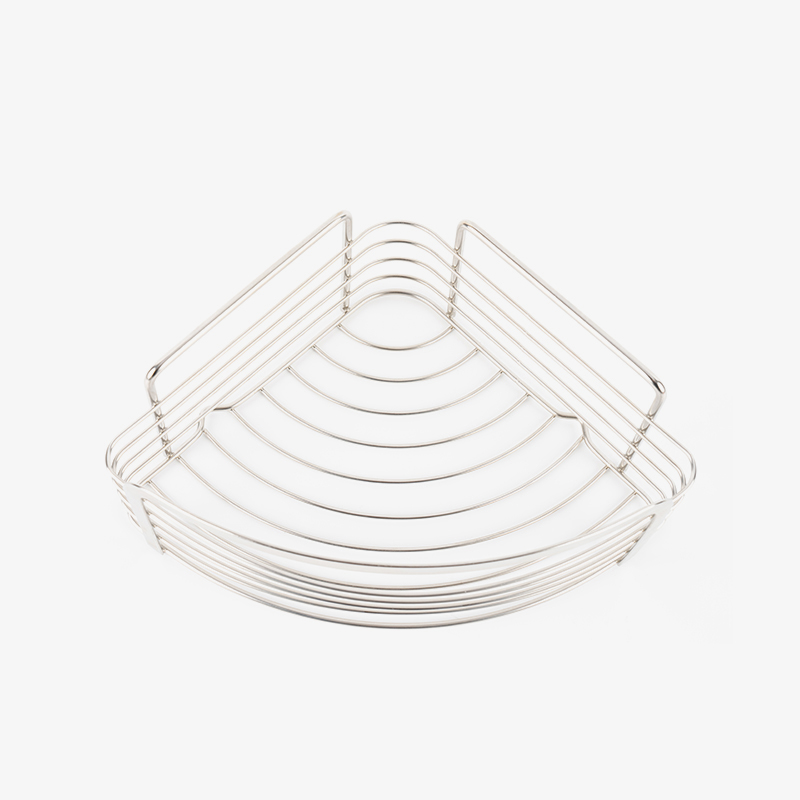
A quarter-round or fan-shaped shelf converts a dead 90 degree corner into usable space with a single bracket pair. Look for a radius of 200 to 250 mm — smaller and standard shampoo bottles overhang, larger and it collides with a basin tap or shower valve. Drainage slots matter more than they look: a flat shelf with no relief holds a permanent ring of water under every bottle.
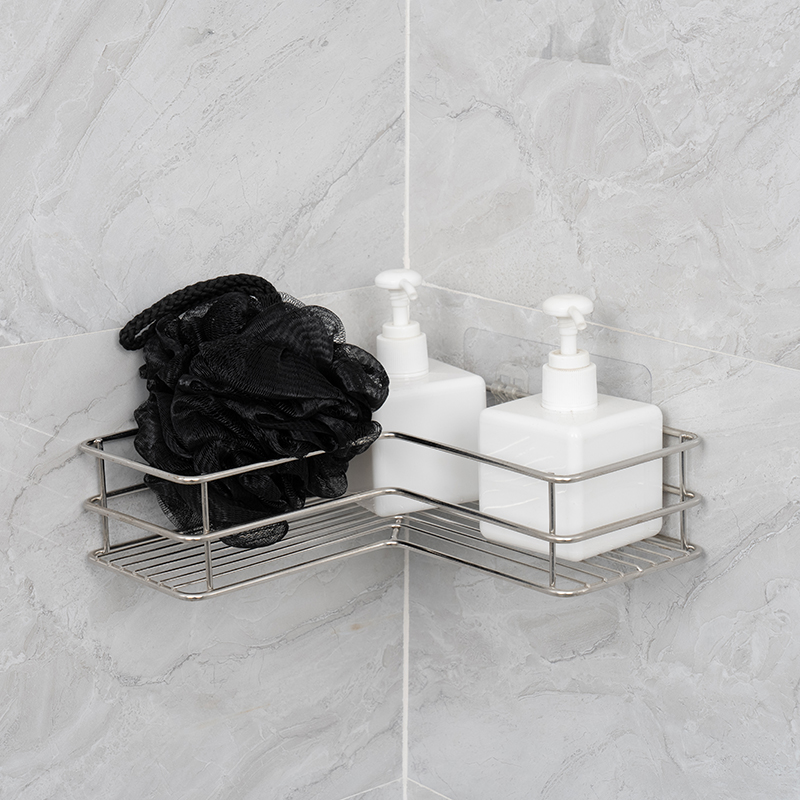 SUS304 Stainless Steel Adhesive Corner Shower CaddyFor a corner shelf with drainage slots, this adhesive SUS304 caddy offers open-grid ventilation and up to 30 lbs load.View Product →
Wall-mounted shelves and rails
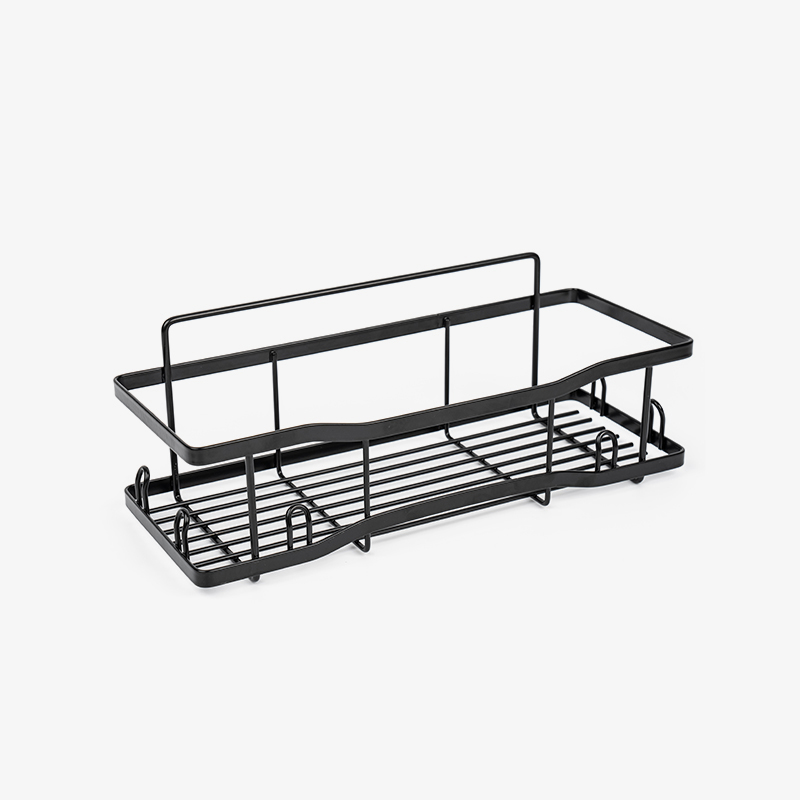
Two or three tiers on brackets give the highest capacity per square metre of floor. The trade-off is drilling, and the shelf depth that makes them useful — 200 to 250 mm — is also the depth that collects water if the front edge has no lip.
Hanging racks and over-door units
These carry light loads only: 2 to 4 kg for a rail hook design, less once towels are wet. Check the door gap before committing to an over-door model; 35 to 40 mm covers most interior doors, but a thick fire door will not close with the hooks in place.
Freestanding tiered organizers
A three-tier floor unit beside the vanity holds towels and bottles without a single hole in the wall, at the cost of roughly 300 by 400 mm of floor space. It is the practical answer for rented flats and for walls finished in large-format tile where drilling is a risk.
What dimensions prevent a bathroom storage rack from sagging?
Keep the unsupported span at 600 mm or less, keep shelf depth between 200 and 250 mm, and design for 5 kg of wet load per shelf. Those three numbers prevent most field failures.
Wet load adds up faster than buyers expect. A single litre bottle of shampoo weighs about 1.1 kg, a soaked bath towel 1.5 to 2 kg, and a family shelf often carries four bottles plus two towels on one span.
| Parameter | Practical specification | What goes wrong outside it |
|---|---|---|
| Unsupported span | 600 mm or less between brackets | Visible deflection, bottles slide toward the centre |
| Shelf depth | 200–250 mm | Too deep crowds the basin, too shallow lets bottles overhang |
| Corner shelf radius | 200–250 mm | Interference with taps, shower valves or mirror edges |
| Static load per shelf | 5 kg standard, 10 kg heavy duty | Bracket pull-out from plasterboard or tile |
| Fixing per bracket | 2 screws, M5 stainless, rated plugs | Plastic plugs alone in tile crack under load |
| Clearance under a rail | 250–300 mm | Tall bottles do not fit, so the rail is used for cloth only |
Measure twice before ordering: from the corner to the shower screen, from the tile joint to the nearest fixing point, and from the floor to the cistern lid if the rack sits above the toilet. Bracket holes that land on a grout line are the most common installation complaint, and a 10 mm shift in shelf width usually solves it.
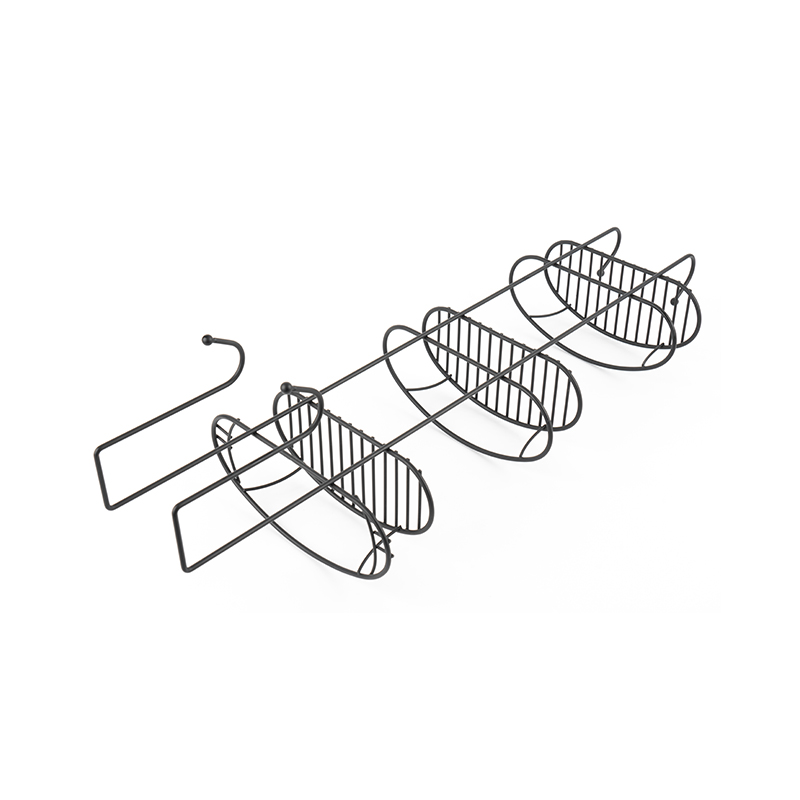 3-Tier Hanging Basket Set for Kitchen and Bathroom StorageFor no-drill storage where fixing points are awkward, this three-tier hanging basket uses hooks and adjustable chains, with a breathable mesh design.View Product →
Which details separate a good sample from a good production run?
Salt-spray performance, weld dressing and hardware grade decide it; colour and shape rarely do.
A sample is hand-finished by the most experienced operator on the line. The tenth shipment is not. When you write a purchase order, convert every visual impression into a measurable requirement:
- Salt spray: 48 hours is reasonable for a dry toilet-side rack, 96 to 200 hours for anything in the shower.
- Coating thickness: 60 to 80 micrometres of powder, measured on flat faces and again at weld joints.
- Edge finishing: burrs removed to a radius that cannot cut a towel, typically under 0.5 mm.
- Fasteners: A2 or A4 stainless screws. Plated screws rust first and stain the tile below.
- Drainage: at least two relief openings per flat tray surface, sized so they do not clog with soap residue.
- Protective pads: EVA or silicone feet that survive 60 degree washdown without hardening.
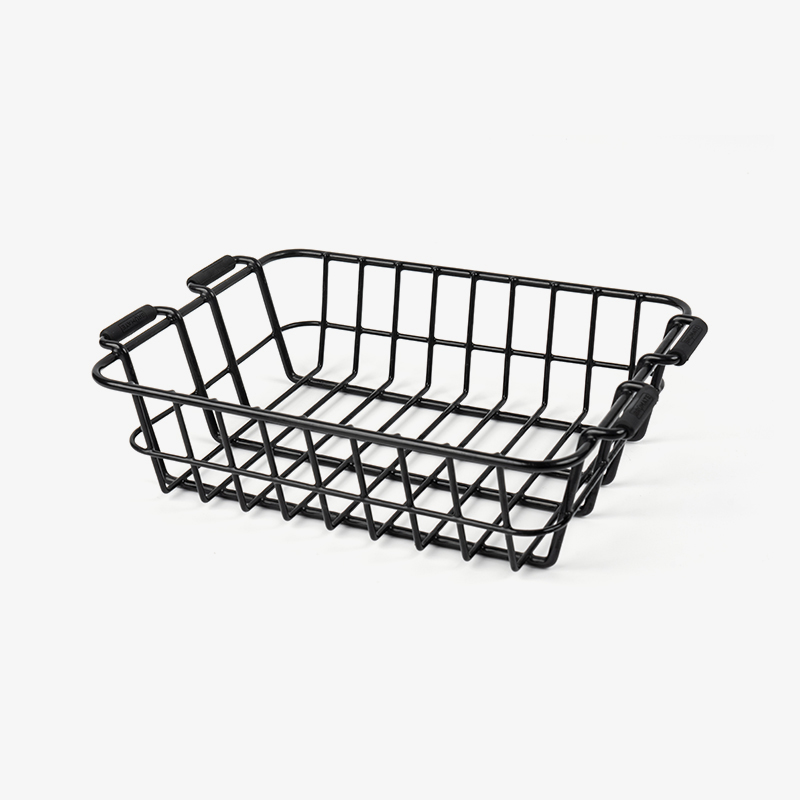
Carbon steel hanging units live or die on exactly this list. A coated wire rack carried over a shower door looks robust, but every hook end is a bare cut edge waiting for moisture unless the coating line controls it.
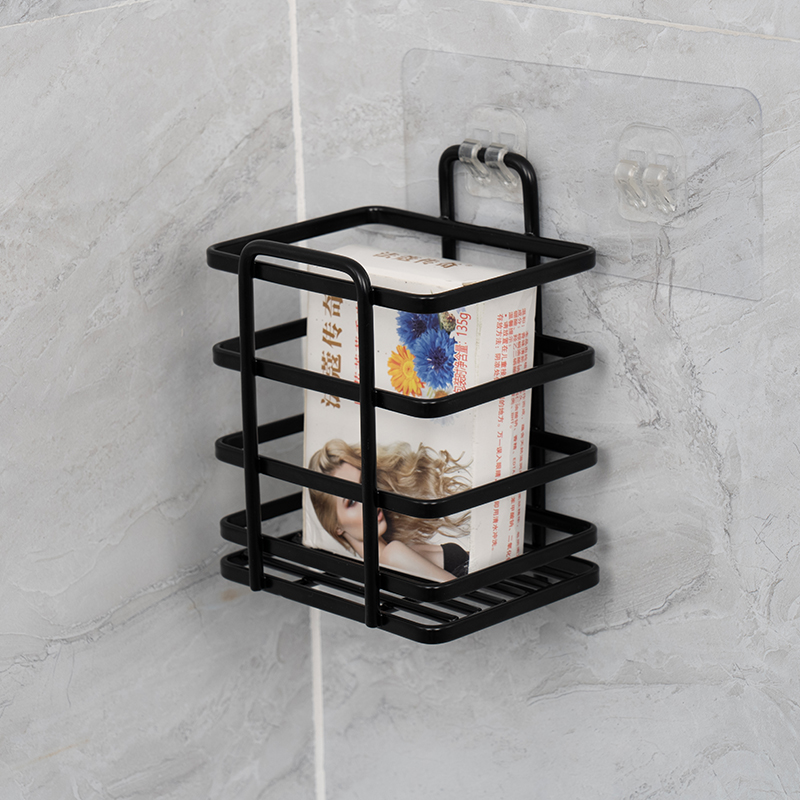 Carbon Steel Bathroom Hanging RackCompact carbon steel hanging rack with a surface treatment for humid bathrooms; a space-saving option for daily organization, with coating edges worth checking.View Product →
How should a bathroom storage rack be fixed to tile?
Drill and plug into the substrate, and treat adhesive as a supplement for light loads rather than a replacement for mechanical fixing above roughly 3 kg.
Glazed tile, plasterboard and concrete behave differently under the same bracket. Tile alone has almost no pull-out strength, so the plug must reach the block or stud behind it. On plasterboard, use a cavity anchor rated for the load and spread the fixing across two points per bracket rather than one.
Practical points that reduce callbacks: drill on low speed without hammer mode, keep holes at least 20 mm from a tile edge, apply neutral-cure silicone around the screw head on wet-zone racks, and let any adhesive version cure for the full 24 to 72 hours at above 5 degrees Celsius before loading. Adhesive pads also fail on textured tile and across grout lines, which is where most no-drill complaints originate.
What belongs in a bathroom storage rack specification for OEM production?
A written specification with grade, thickness, finish, load and packaging test values is what keeps the tenth shipment identical to the first sample.
- Material grade and wall thickness, stated per part rather than per product.
- Finish type, colour reference and minimum coating thickness.
- Salt-spray target and the test standard used to prove it.
- Load test: static load, duration and allowed permanent deformation.
- Packaging: drop test height, carton grade and label placement.
- Approval samples: one signed golden sample retained by both sides.
Most factories that serve brand programmes can quote against that list directly, and the ones that cannot usually outsource the coating or the welding — which is where consistency disappears. A vertically integrated plant handles stamping, laser cutting, welding, bending and coating under one roof, so a change in coating thickness is caught in the same building as the tube bending. Reviewing a supplier's strict quality control process before the first tooling payment is cheaper than discovering the gap in a container of rusty brackets.
For buyers compiling a range, it helps to compare the bathroom and kitchen rack range as a set rather than as single items: shared tube diameters and bracket tooling reduce unit cost and make spare-part supply realistic.
Frequently asked questions
Is 304 stainless steel really rust-proof in a shower?
It resists rust rather than ignoring it. Chlorine and acidic cleaners still attack the surface if they sit, so rinse and dry periodically. Tea staining — a brown surface film rather than structural corrosion — is normal in coastal or heavily chlorinated water and wipes off with a stainless cleaner.
How much weight can a wall-mounted bathroom rack hold?
Typically 5 kg per shelf for a two-bracket design into a solid substrate, and 10 kg for a heavy-duty version with a rear rail. The bracket is rarely the weak point; the plug and the tile are.
Do no-drill adhesive racks stay up on tile?
They hold 3 to 5 kg on smooth, non-porous tile that has been degreased and dried, and they fail on textured surfaces, damp grout and cold walls. Treat them as a light-load solution and keep them out of the direct shower spray.
How many tiers does a small bathroom need?
Two tiers cover a single occupant; three tiers or a corner shelf plus a hanging basket suits two to three people sharing one shower. Anything beyond that usually duplicates storage rather than adding it.
Can hooks or drawers be added to a rack later?
Usually yes, if the rack was designed with a compatible rail or pre-punched holes. Ask for the accessory interface in the drawing stage; retrofitting a hook onto a plain round tube means a clamp-on part, and clamp-on parts loosen.
A bathroom storage rack is a small purchase with an unusually high failure rate, and almost every failure traces back to one of four decisions: the steel grade, the span between brackets, the fixing depth into the wall, or the coating coverage at a weld. Get those four right and the tier count becomes a styling question. Get them wrong and no finish will save the product after the first humid season.