

 Español
 عربى
Content
An ERW mill is a continuous line that forms steel strip into a tube and welds the longitudinal seam using electric resistance heating, normally in the high-frequency range, with no filler wire. When buyers ask which ERW mill to install, the useful answer comes down to three numbers before any brochure page matters: the smallest tube you will run, the largest tube and heaviest wall you will run, and how many size changes you face per week. Motor power, forming stand count, saw type and testing equipment all follow from those three.
Get the envelope wrong in either direction and the cost is permanent. A mill built around 16–76 mm tube cannot be pushed into 219 mm work by adding stands, and a 1200 kW line engineered for 508 mm pipe runs an uneconomical strip path on 25 mm precision tube. The rest of this guide covers how the line works, which specifications genuinely constrain output, and where a welded tube line quietly loses money.
How an ERW mill turns coil into welded tube
Every station on an ERW mill exists to keep two things stable: strip alignment through the forming passes, and heat input at the seam. Break either one and the defect appears metres downstream at the saw, long after the cause.
The strip path runs in a fixed order, and each stage protects the next:
- Uncoiler pays off the coil and holds consistent back tension, so the strip edge entering the first pass does not wander.
- Shear and butt welder joins coil ends square and flush; a poor butt weld becomes an edge crack three stands later.
- Accumulator or looper stores strip so the line keeps running while a new coil is loaded and welded.
- Forming section rolls the flat strip into an open tube billet through a sequence of driven stands.
- High-frequency welder heats the two edges, usually via a contact or induction coil, and squeezes them together through weld rolls.
- Scarfing tools remove the outer and inner weld bead; on thinner walls the inner scarfing tool and impeder must be sized precisely.
- Cooling and sizing bring the tube back to final diameter and roundness over the last stands before straightening.
- Flying saw or cold cutting saw cuts to length on the run, then the runout table and stacker take over.
Optional stations sit between sizing and cutting: an eddy current unit for seam and wall inspection, a zinc spraying unit for external corrosion protection, and a tube stacking and strapping machine for packed bundles. Each optional station adds cost, and each is only worth adding when your customers actually ask for the result.
Specifications that decide what the mill can produce
Line speed is a consequence of wall thickness and weld power, not an independent figure you can shop for in isolation. A mill quoted at high speed on thin wall will slow by half or more when you move to the top of its thickness range.
| Parameter | Typical range | What it decides |
|---|---|---|
| Tube outside diameter | 16 mm to 508 mm across the range | Forming stand count, roll diameter, drive power, floor length |
| Wall thickness | About 1.0 mm to 16 mm round tube | Welder power, edge preparation, achievable line speed |
| Square and rectangular tube | 60×60×3.0 mm up to 500×500×20.0 mm | Whether you need a direct-to-square line or a conversion roll set |
| HF welder power | Roughly 60 kW to 1200 kW | Speed at the heaviest wall you plan to run, not the lightest |
| Roll strategy | Round-sharing or square-sharing rolls | Tooling cost versus changeover time |
| Cutting method | Cold saw, hot friction saw, milling flying saw | Cut face squareness and burr height on heavy wall |
Read the envelope as a rectangle, not as two independent maximums. A mill rated to 219 mm at 8 mm wall is a different machine from one rated to 219 mm at 4 mm wall, even though the headline diameter looks identical on a quotation sheet.
Shared rolls shift cost from tooling to changeover time, and that trade should be calculated before the purchase order, not after the first size change.
A round-sharing design uses one roll set across a band of diameters, so a plant running 25, 32, 38 and 50 mm tube does not need four sets. A square-sharing design does the same job for rectangular sizes. The savings on tooling are real and usually substantial, but each size change now involves resetting stands and re-tuning the weld, which takes time and a skilled operator.
- Shared rolls win where the order book is broad but batch sizes are small and frequent.
- Dedicated rolls win where one or two sizes run for weeks and changeover stops the line.
- Either way, keep a spare roll set for your highest-volume size; regrinding cycles take a mill offline faster than most schedules allow.
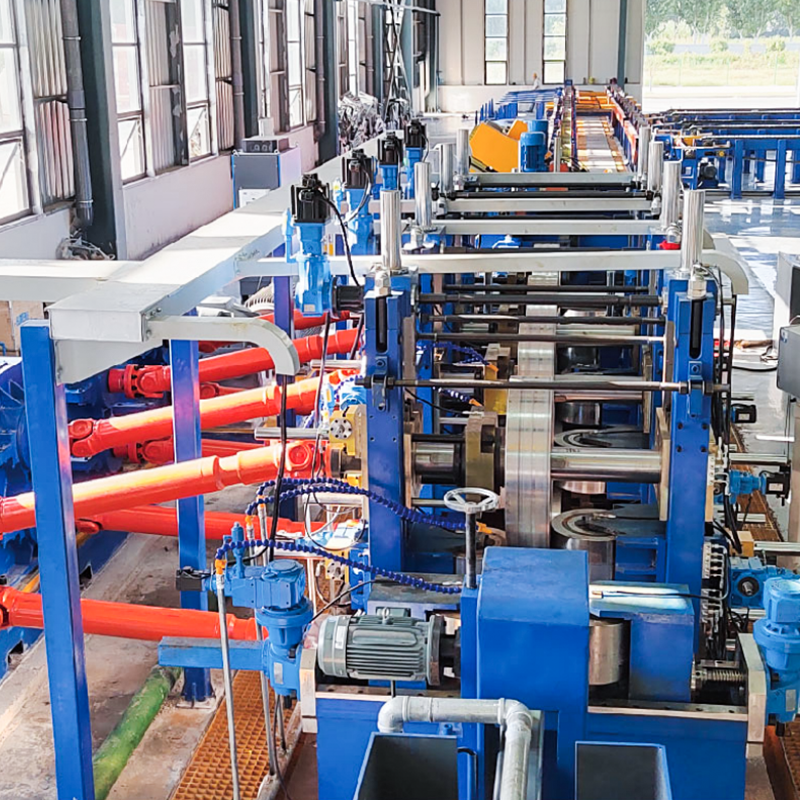 200×200 ERW Square and Rectangular Tube Mill LineDirect-to-square HF ERW line with segmented roll-sharing, covering □80×80–200×200 and 3.0–10.0 mm wall, with one roll set for listed specifications.View Product →
A practical example: a 200×200×10.0 mm square tube line with square-sharing rolls lets a structural tube producer cover a spread of wall thicknesses and adjacent sizes from one tooling investment, provided the changeover crew is trained and the strip width plan is written down.
Where an ERW mill actually loses money
Most scrap on a welded tube line starts in strip edge condition and weld heat control, not at the saw. Watch these five points and the yield curve moves.
- Strip camber and edge quality. A burred or wavy edge will not weld cleanly at any power setting; edge trimming ahead of forming is cheaper than sorting scrap.
- Impedider position. A worn or misaligned impedider concentrates heat on the inside bead and produces weld penetration variation that only shows at flattening tests.
- Power versus speed. Running the welder above the speed it was set for produces cold welds that pass a visual check and fail a bend test.
- Scarfing tool wear. A dull inner tool leaves a bead ridge that interferes with sizing and shows up as an ovality complaint.
- Sizing stand wear. Roll wear changes the final diameter gradually, so tolerances drift rather than fail — the most expensive kind of defect because it ships.
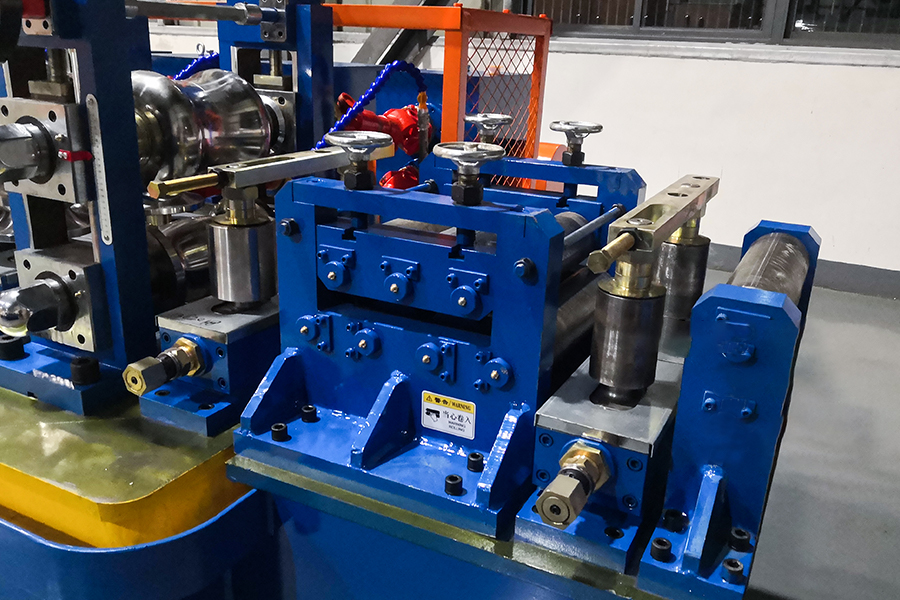 HG76 ERW Tube Mill Line for Round and Square TubingHigh-frequency ERW line for Φ25–Φ90 mm round and 20×20–70×70 mm square tube, with 1.5–4.0 mm wall and 300 kW welding power.View Product →
Precision work such as 76×4.0 mm tube rewards a mill designed around tight diameter tolerance from the start: fewer sizing stands compensating for forming errors, and a welder with headroom to hold speed at the top of the wall range.
Matching the mill to your order book
Buy for the middle of your order book and protect the edges with tooling, rather than buying one oversized machine to cover every enquiry.
- Map the envelope. List the ten sizes that make up most of your revenue and the two extremes you occasionally quote.
- Check strip supply. Coil width, coil inner diameter and coil weight must match the uncoiler and the accumulator you are specifying.
- Confirm electrical capacity. A 800 kW or 1200 kW welder needs the transformer, cabling and cooling to support it; this is a civil works decision as much as a machine decision.
- Decide changeover tolerance. If you change size twice a day, shared rolls and quick-release stands pay back quickly.
- Agree the acceptance test. Specify diameter, wall, ovality, straightness and weld bend results at the factory, on your material, before shipment.
- Plan spares and training. Rolls, scarfing tools, impeders and saw blades are consumables; a mill without a spares list and an operator training plan is a mill that stops.
For producers moving into structural sections, a direct-to-square welded pipe production line removes the round-to-square conversion step entirely and simplifies the roll inventory, at the cost of a line that is dedicated to square and rectangular output.
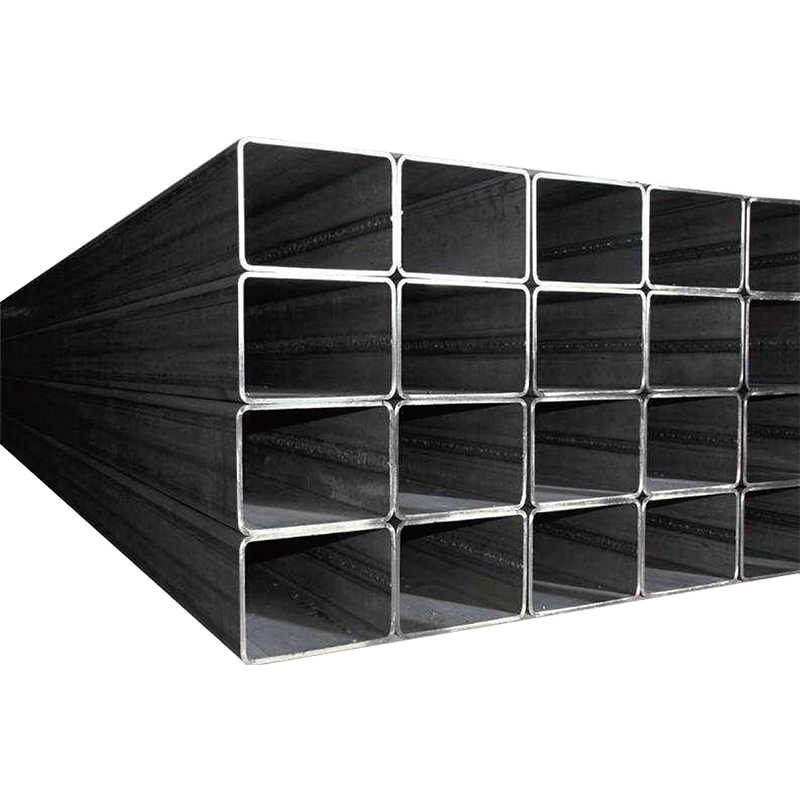 HG273 HF Pipe Mill Line for Large Round and Square TubeHigh-frequency welded pipe line for Φ114–Φ273 mm round tube and □90×90–200×200 mm square/rectangular tube, with 4.0–12.0 mm wall and 800 kW welder.View Product →
Above roughly 200 mm, welder power becomes the binding constraint: a 273×12.0 mm line with an 800 kW welder and round-sharing rolls is a common configuration for heavy wall pipe where speed at the top of the range matters more than speed on thin wall.
Frequently asked questions
What does ERW stand for, and is the weld as strong as seamless?
ERW means electric resistance welding. The seam is forged from the strip itself at welding temperature, so the weld zone is fully metallic with no filler; a properly welded and scarfed seam meets the same pressure and bend requirements as seamless tube in most structural and fluid service standards.
Is an ERW mill the same as a tube mill?
In practice, yes. Tube mill is the general term for a strip-fed forming and welding line, and ERW mill specifies the welding method. High-frequency ERW is the dominant technology for steel tube from about 16 mm to over 500 mm.
Can one ERW mill run both round and square tube?
It can, through a conversion roll set, but the changeover is slow and the tooling inventory doubles. Producers with a mixed book usually keep a dedicated round line and a direct-to-square line rather than converting one machine repeatedly.
How much floor space does a line need?
Allow roughly 60 to 120 metres of length depending on diameter range, accumulator type and whether you include a stacker. A ground-type horizontal spiral accumulator takes significantly more floor than a vertical cage type for the same strip storage.
Specifying an ERW mill is mostly an exercise in honest arithmetic: the sizes you really run, the wall thickness you really weld, and the changeover time you can really afford. Mills that are oversized for their work book lose money on power and strip width; mills that are undersized lose money on speed and scrap. The manufactures that get it right usually specify from their order history rather than from a competitor's specification sheet.
If you want to see how the welding side is controlled in practice, this overview of high-frequency welding in ERW tube production walks through the variables that decide seam quality, and factory visits remain the most reliable way to judge build quality before committing to a line.