

 Español
 عربى
A 5-by-7-foot bathroom with one vanity drawer, a narrow windowsill, and a shower caddy can still work hard. The practical answer is to treat bathroom organizer ideas as a storage system, not a shopping list: put daily items within arm’s reach, keep shower products in a draining zone, and move backup stock away from steam. That three-zone approach often creates more usable space than another countertop tray.
Bathroom organizer ideas are the layout choices and products — corner shelves, wall racks, over-door hooks, under-sink baskets, and portable carts — that give each item a fixed home. Start with measurements and routines, then choose materials that tolerate moisture. A rack that blocks the mirror or rusts at the screw holes is a future frustration, not a solution.
Start With Zones, Not Products
The most effective bathroom organizer ideas divide the room into four zones before any product is chosen: daily wash, shower, toilet, and backup stock. This prevents buying three small racks that all compete for the same counter space.
- Daily wash: toothbrush, soap, skincare, and one hand towel within reach of the sink.
- Shower: shampoo, body wash, razor, and a squeegee in a draining holder.
- Toilet: toilet paper and cleaning tabs in a closed or lift-out container.
- Backup stock: refills, guest towels, and seasonal items on a high shelf or in labeled bins.
If a bathroom feels cluttered, the problem is usually misplaced daily items, not a lack of bins. Move the “maybe I’ll use it” items out of the sink zone first; the room will function better before you spend money.
Use Vertical and Corner Space First
Vertical and corner storage gives the highest return in small bathrooms because it uses space that is already there but rarely occupied. The wall above the toilet, the corner beside the mirror, and the narrow strip beside the vanity usually beat another countertop tray.
Measure the wall width, the clearance from mirror or cabinet doors, and the depth you can accept without hitting a shoulder or towel bar. A corner rack that projects 12 inches into a 30-inch walkway will feel wrong every day; a slim wall shelf at 4 to 6 inches deep often holds more usable items.
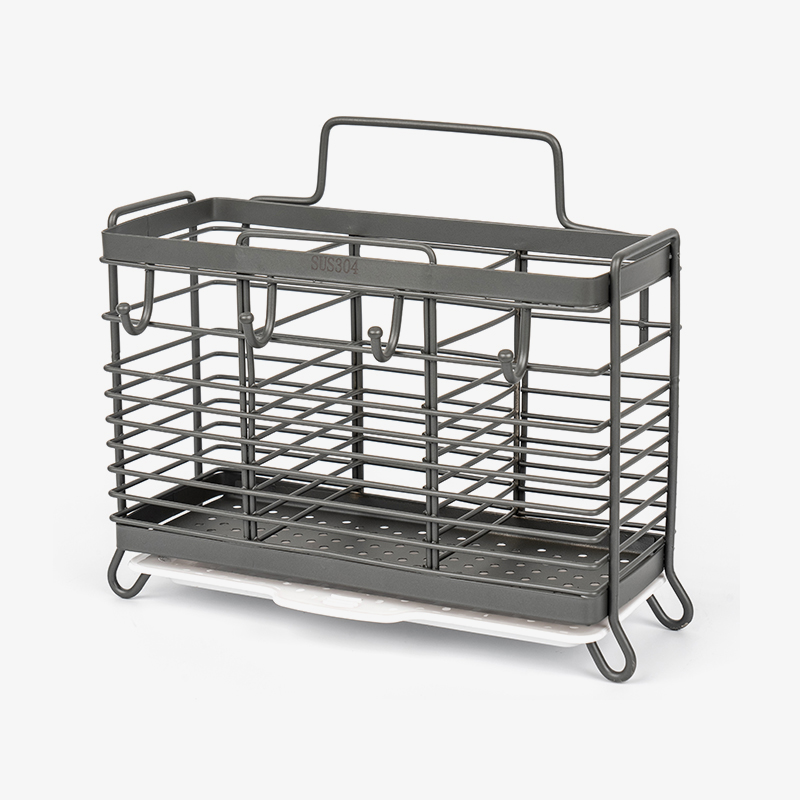
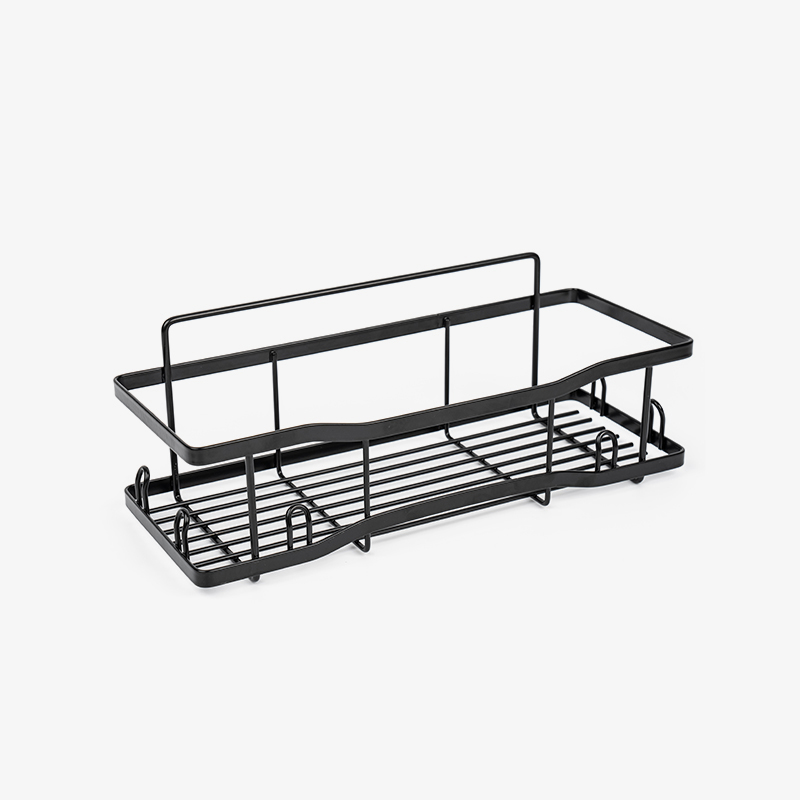
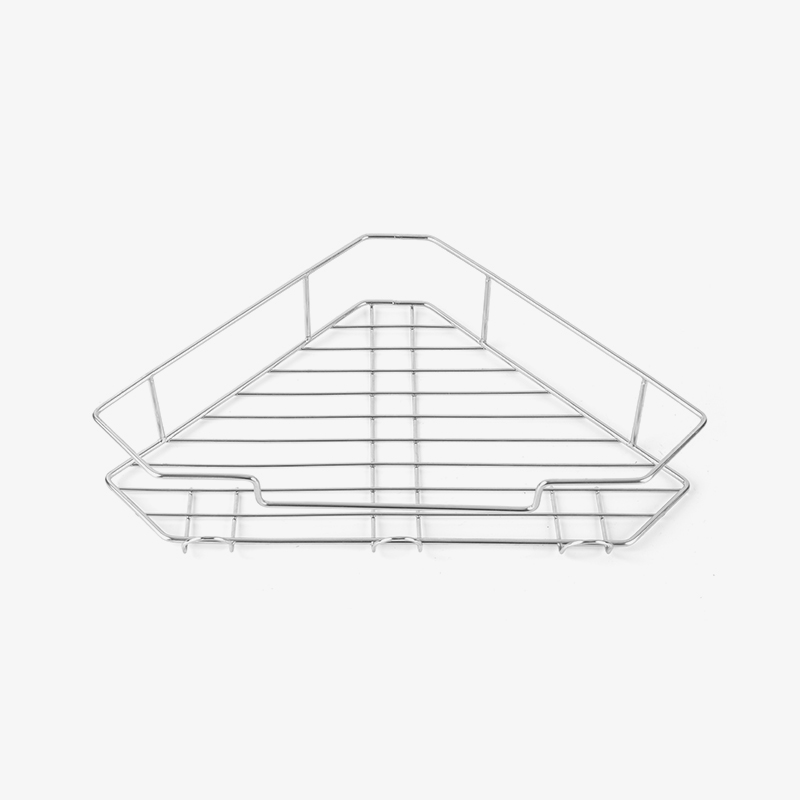
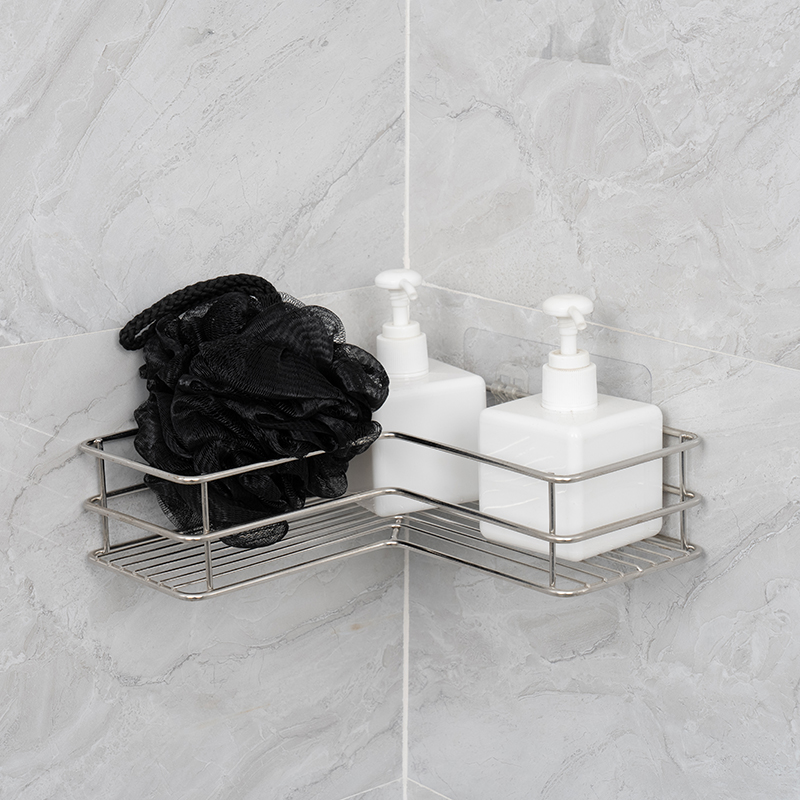 SUS304 Stainless Steel Corner Shower Caddy with AdhesiveAdhesive-mounted SUS304 corner caddy with open-grid drainage and 30 lb capacity; a space-saving option after checking wall width and clearance.View Product →
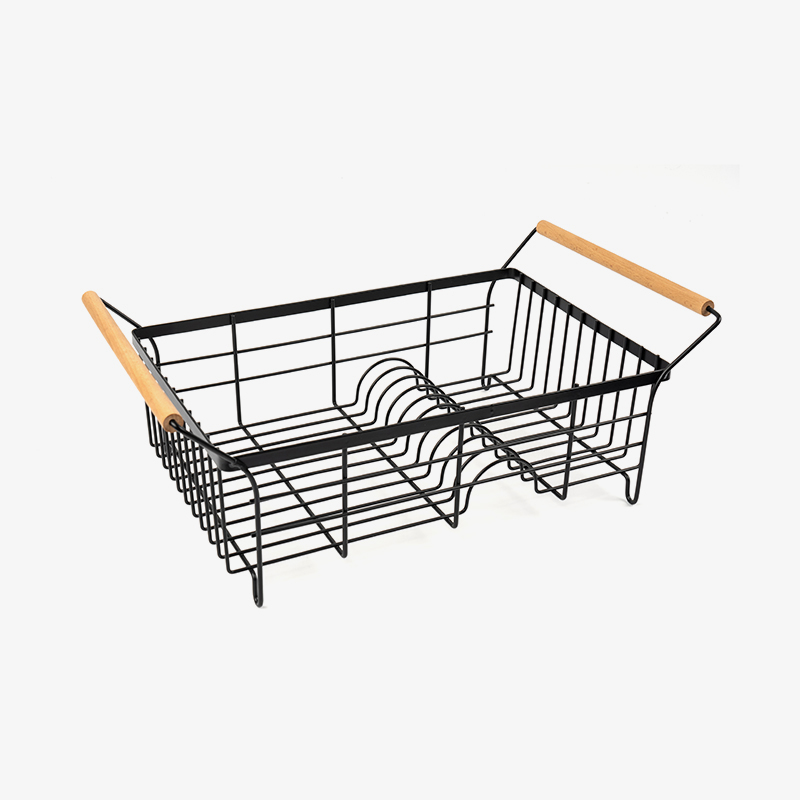
For a broader view of matching racks, hooks, and shelves, browse our bathroom and kitchen rack collection. Coordinated finishes usually mean similar fittings, load ratings, and care instructions, which makes installation and maintenance simpler.
| Organizer type | Best spot | Space saved | Watch-out |
|---|---|---|---|
| Corner shelf | Shower or sink corner | Frees countertop | Check door swing and depth |
| Wall-mounted rack | Above toilet or beside mirror | Uses empty wall | Use proper anchors for tile or plaster |
| Over-door rack | Entry or linen closet door | Adds back-of-door storage | Door must still close; hinge clearance matters |
| Under-sink basket | Cabinet base | Contains bottles and refills | Avoid blocking pipes and shut-off valves |
| Portable cart | Beside vanity or dry corner | Moves where needed | Wheels can mark damp floors |
Choose Materials That Survive Steam and Splash
For a bathroom, 304 stainless steel is the safest default for racks and caddies that see daily water, while powder-coated carbon steel and black iron can work in dry or lightly splashed areas. Material matters most at cut edges, screw holes, and welded joints, because that is where moisture starts corrosion.
“Stainless” is not a single grade. Ask for 304 stainless steel or a clearly specified coated finish, and check that welds are smooth and drain holes are open. Carbon steel with a good powder coating suits black iron-style bathroom racks, but chips near fittings should be touched up promptly.
 Ceramic Self-Draining Soap Dish with Stainless Steel StandLeaf-shaped ceramic dish with a self-draining system and corrosion-proof 304 stainless stand; helps soaps dry and suits sinks, showers, or tubs.View Product →
Finish also affects cleaning. Polished stainless shows water spots; brushed stainless hides them better. Black powder coating hides fingerprints but can show soap residue, so choose based on how often you wipe the surface and how much daylight the room receives.
Plan Around Real Routines, Not Showrooms
A bathroom organizer plan works when it matches the busiest five minutes of the day, not the calmest hour of a showroom visit. If two people leave for work at the same time, the sink zone needs two separated toothbrush spots and one shared tray that does not slide.
Use a daily reach test: stand at the sink and reach for each item without stepping sideways. Daily items belong in that space, weekly items belong on a shelf or in a cabinet, and monthly items belong in labeled backup storage. This rule often removes more clutter than another set of decorative bins.
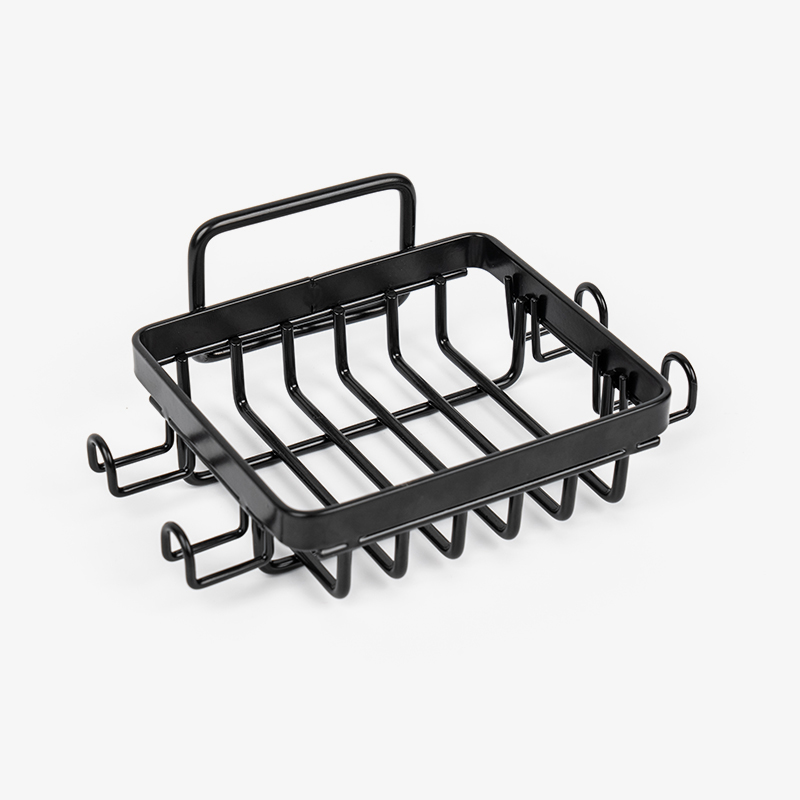
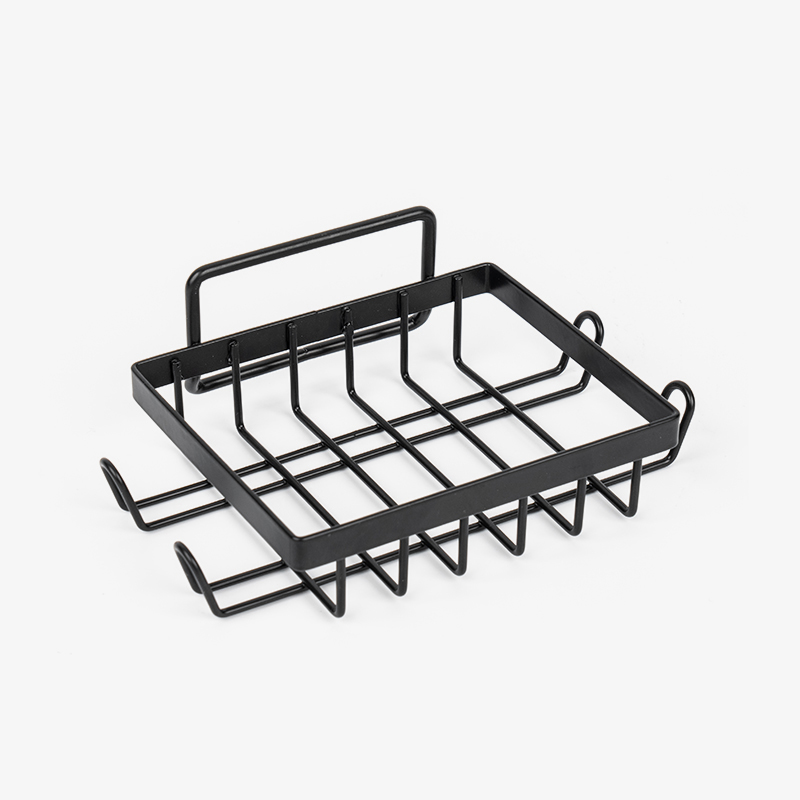
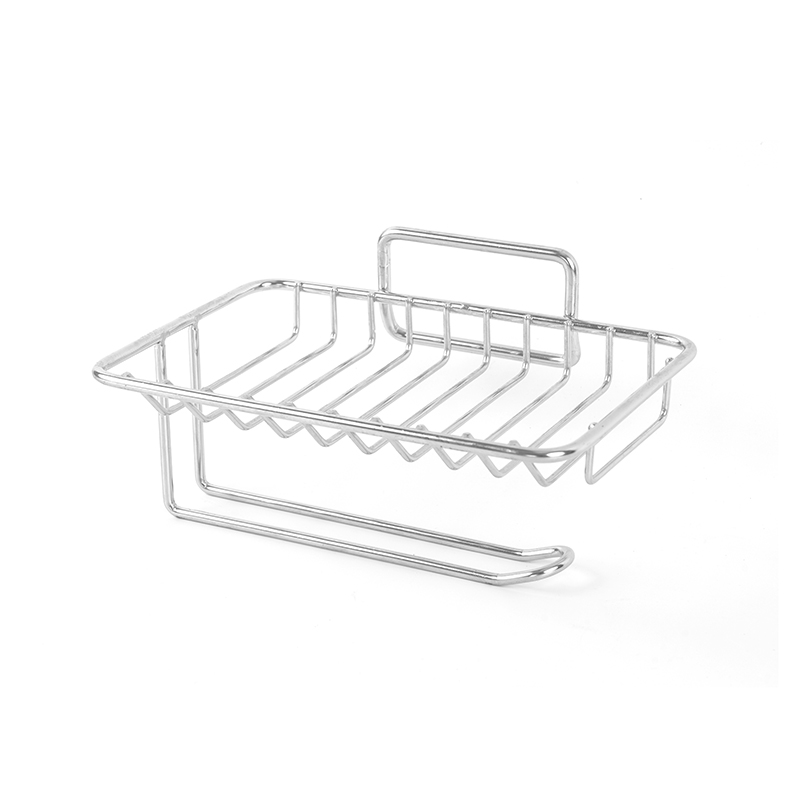
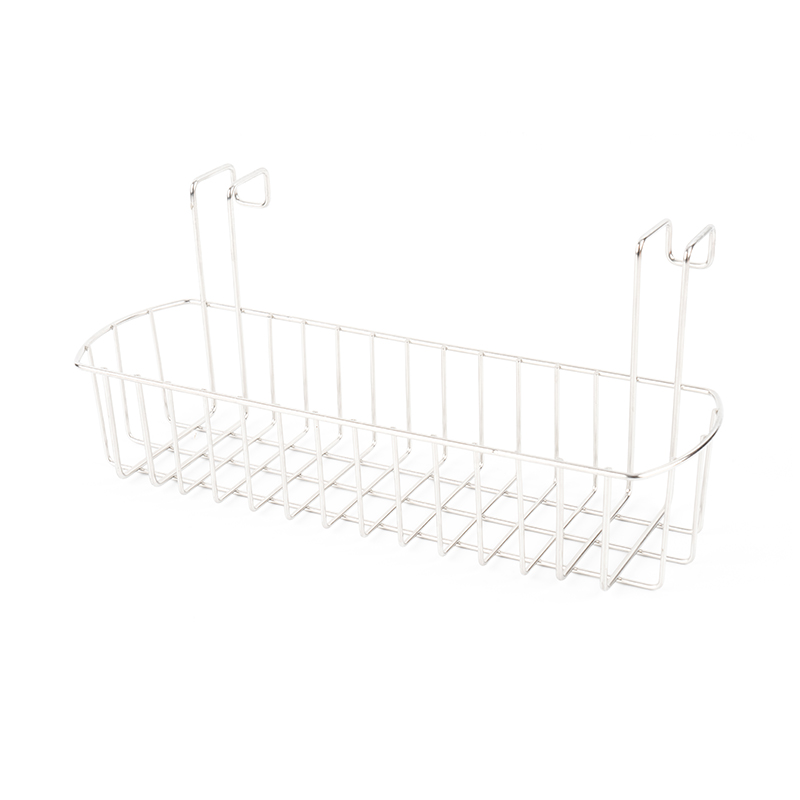 Bathroom Hanging Basket for Rod StorageHangs on a bathroom rod to store small items, use vertical space, and reduce countertop clutter while keeping daily essentials tidy.View Product →
Hanging baskets are useful for hair tools, brushes, or shower items because they keep small objects off the floor and out of standing water. Open wire designs drain faster than solid-bottom bins, but they also show contents, so keep each basket to one category.
Small Bathroom Organizer Ideas That Add Storage
The best small-bathroom organizer ideas add storage without moving plumbing or drilling a new cabinet: a slim over-toilet shelf, a shower tension rod, an over-door hook rack, and a narrow rolling cart that fits beside the vanity. Each should solve a specific overflow, not simply add more surfaces to dust.
- Over-toilet shelf: good for towels and toilet paper if the lowest shelf stays at least 12 inches above the tank lid.
- Shower tension rod: useful for a light caddy or squeegee. Do not hang heavy glass bottles from it.
- Over-door rack: works for towels, robes, and cleaning cloths. Check door thickness and hinge clearance.
- Narrow rolling cart: adds three tiers in a dry corner for skincare, hair products, and spare towels.
Adhesive-mounted organizers can work for light items on smooth tile, but they are not a substitute for mechanical anchors under load. Follow the cure time exactly, and avoid mounting over grout lines or textured surfaces.
In a shared bathroom, the fastest way to reduce friction is to assign one shelf, hook, or basket per person and label it at eye level. Shared storage works when boundaries are visible; it fails when everyone’s items are mixed in one deep drawer.
A practical setup uses a wall rack with one basket per person for daily toiletries, a shared towel rail with numbered hooks, and a locked or high cabinet for cleaning products. Keep one empty tray in the sink zone for guests or temporary items; that empty space is what absorbs the morning rush.
Buying Checklist for Metal Bathroom Organizers
Before buying a metal bathroom organizer, check grade, coating, load path, and installation hardware — in that order. A low price often hides thin gauge steel, missing anchors, or a finish that will fail at the first scratch.
- Material grade: 304 stainless steel for wet zones; powder-coated carbon steel or black iron for dry or lightly splashed areas.
- Load path: confirm whether the rating is per shelf, per hook, or for the whole unit.
- Finish at edges: rough welds and cut edges trap water and soap residue.
- Drainage: shower caddies and soap racks need open slots or holes.
- Hardware: tile, plaster, and drywall need different anchors. A pack with only short screws is a warning sign.
If you are sourcing a private-label range, ask for material certificates, salt-spray test results, and packaging drop-test reports. A documented strict quality-control process is more useful than a catalog photo because it shows how a manufacturer catches coating gaps, sharp edges, and missing hardware before shipment.
Frequently Asked Questions
What is the best bathroom organizer idea for a very small bathroom?
A slim wall-mounted shelf or corner rack above the toilet is usually the best first move because it adds storage without reducing floor space. Add an over-door hook rack second if door clearance allows.
Is stainless steel always better for bathroom organizers?
No. 304 stainless steel is the most reliable choice for wet, steamy zones, but a well-coated carbon steel rack can work in a dry corner and may suit a black iron look. Inspect cut edges, welds, and screw holes first.
How do I stop a shower caddy from rusting?
Choose a draining design, rinse it weekly, and dry bottles before placing them back. Rust usually starts where water sits against a fitting or where the coating has chipped.
Can I use adhesive hooks for bathroom organizers?
Adhesive hooks are fine for light items such as a loofah or hand towel on smooth, clean tile, but use mechanical anchors for shelves, baskets, and anything holding bottles. Follow the cure time and avoid grout lines.
The most useful bathroom organizer ideas are boring in the best way: daily items within reach, water kept away from stored goods, and vertical space used without blocking movement. Start with zones, measure clearance, match material to moisture, and add products only where a routine already exists.
That approach makes a small bathroom calmer and a shared bathroom easier to manage. If a rack does not solve a defined problem, it is not storage — it is another thing to clean around.