

 Español
 عربى
عربىContent
- 1 Why Cleaning Your Dish Drying Rack Matters
- 2 How Often Should You Clean a Dish Drying Rack?
- 3 What You Need to Clean a Dish Drying Rack
- 4 Step-by-Step: How to Clean a Dish Drying Rack
- 5 How to Clean Different Types of Dish Drying Racks
- 6 Natural vs. Chemical Cleaning Solutions: Which is Better?
- 7 How to Remove Mold from a Dish Drying Rack
- 8 How to Remove Rust from a Dish Drying Rack
- 9 Can You Put a Dish Drying Rack in the Dishwasher?
- 10 Tips to Keep Your Dish Drying Rack Cleaner for Longer
- 11 Frequently Asked Questions (FAQ)
- 11.1 Q: How do I clean the black stuff off my dish drying rack?
- 11.2 Q: What is the white buildup on my dish rack?
- 11.3 Q: How do I get rid of the smell from my dish rack?
- 11.4 Q: How long does a dish drying rack last?
- 11.5 Q: Is it safe to use bleach to clean a dish drying rack?
- 11.6 Q: When should I replace my dish drying rack instead of cleaning it?
- 12 Conclusion
To clean a dish drying rack, soak it in a mixture of hot water and white vinegar or dish soap for 15–30 minutes, scrub all surfaces with a brush, rinse thoroughly, and allow it to air dry completely. Regular cleaning every 1–2 weeks prevents mold, mildew, rust, and soap scum buildup that can transfer to your clean dishes.
A dish drying rack sits in one of the wettest, most bacteria-prone areas of your kitchen. Studies suggest that kitchen drying racks can harbor over 1 million bacteria per square centimeter if not cleaned regularly. This guide covers everything you need to know — from daily habits to deep-cleaning methods — to keep your rack spotless and hygienic.
Why Cleaning Your Dish Drying Rack Matters
Neglecting your dish drying rack creates a cycle of re-contamination: every dish you place on a dirty rack picks up bacteria, mold spores, and residue. Here is what accumulates on an uncleaned rack over time:
- Soap scum: Leftover detergent mixes with mineral deposits in tap water, forming a filmy residue within days.
- Hard water mineral deposits: Calcium and magnesium in tap water leave chalky white or gray stains on metal and plastic racks.
- Mold and mildew: Trapped moisture in corners, joints, and rubber feet creates ideal conditions for fungal growth within 24–48 hours.
- Rust: Metal racks — especially lower-quality ones — begin to oxidize when the protective coating chips or wears away.
- Food debris: Small food particles fall from dishes and collect in the drip tray, fueling bacterial growth.
According to the National Sanitation Foundation (NSF), kitchen items like dish racks rank among the top 10 germiest household objects, yet they are consistently overlooked in weekly cleaning routines.
How Often Should You Clean a Dish Drying Rack?
You should deep clean your dish drying rack at least once every one to two weeks, with lighter maintenance performed daily. The frequency depends on your household size, water hardness, and how often the rack stays damp.
| Cleaning Frequency | Task | Purpose |
| Daily | Empty and wipe the drip tray | Prevent standing water and mold |
| Every 3–4 days | Rinse with hot water and wipe down | Remove loose residue and soap film |
| Weekly | Soak and scrub all components | Remove buildup and bacteria |
| Monthly | Disinfect and inspect for rust or mold | Deep hygiene and early damage detection |
Recommended cleaning schedule for a standard household dish drying rack.
What You Need to Clean a Dish Drying Rack
You only need a few inexpensive supplies to clean a dish drying rack effectively — most of which you likely already have at home.
- White distilled vinegar – dissolves mineral deposits and kills up to 82% of mold species
- Baking soda – gentle abrasive for scrubbing without scratching
- Dish soap – cuts through grease and soap scum
- Old toothbrush or bottle brush – reaches tight joints and corners
- Non-scratch scrubbing pad – removes stubborn stains without damaging the surface
- Large basin or sink – for soaking disassembled components
- Microfiber cloth or clean towel – for drying after rinsing
- Optional: bleach solution or hydrogen peroxide – for severe mold or mildew
Step-by-Step: How to Clean a Dish Drying Rack
Follow these steps in order for the most thorough clean. The entire process takes about 30–45 minutes, including soaking time.
Step 1: Disassemble the Rack
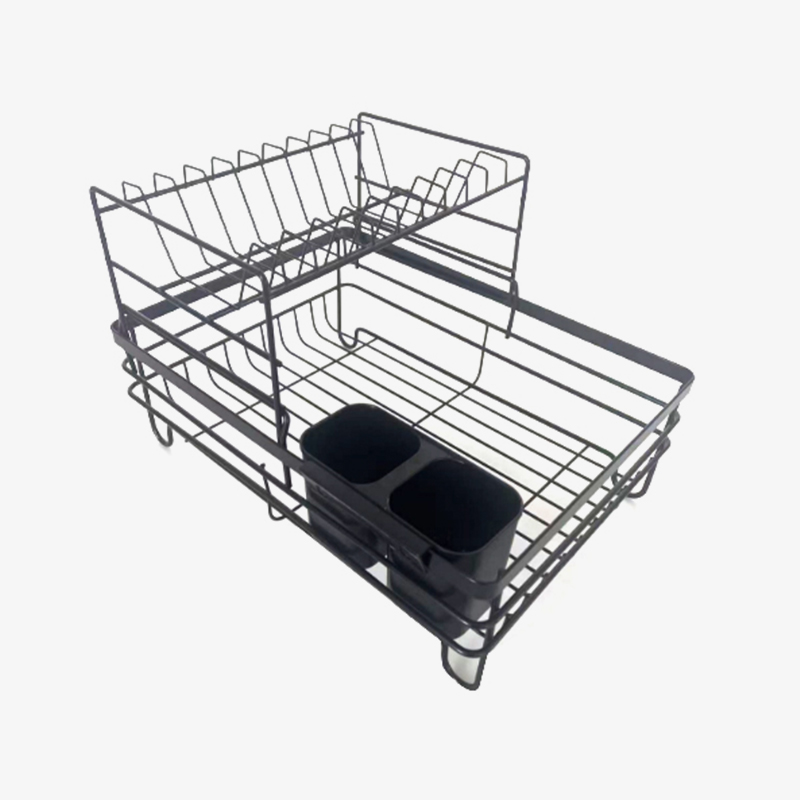
Always start by taking the rack apart completely. Remove the drip tray, utensil holder, cup holders, and any removable rubber or silicone components. Disassembly exposes the hidden joints and crevices where mold and buildup concentrate, making cleaning far more effective than wiping the rack while assembled.
Step 2: Rinse Off Loose Debris
Hold each component under hot running water and rinse away any loose food particles, hair, or residue. This pre-rinse prevents debris from clouding your soaking solution and makes scrubbing easier. Use your fingers or a soft brush to dislodge particles from between the wire bars.
Step 3: Prepare Your Soaking Solution
Fill your sink or a large basin with the hottest water your hands can tolerate, then choose one of the following solutions based on what your rack needs:
- For general cleaning: Add 2–3 tablespoons of dish soap to the water.
- For hard water deposits and mineral buildup: Mix 1 cup of white vinegar per gallon of water.
- For mold or mildew: Use 1 tablespoon of bleach per gallon of water, or substitute with undiluted white vinegar for a natural option.
- For a thorough all-in-one clean: Combine dish soap and ½ cup of baking soda in hot water, then add vinegar separately after soaking.
Step 4: Soak All Components for 15–30 Minutes
Submerge all disassembled parts in the soaking solution and let them sit for at least 15 minutes, or up to 30 minutes for heavy buildup. Soaking loosens mineral deposits, soap scum, and biological residue, drastically reducing the scrubbing effort needed in the next step. Do not soak wooden components — moisture causes wood to warp and crack.
Step 5: Scrub All Surfaces Thoroughly
After soaking, scrub every surface with a non-scratch pad or brush. Pay particular attention to these areas:
- Wire intersections and joints – use an old toothbrush to get into these tight spots
- Rubber feet and stoppers – mold hides underneath and inside these pieces
- Drip tray corners – standing water and debris collect here most heavily
- Utensil holder holes – food debris and water accumulate inside each individual hole
- Underside of the rack frame – often overlooked but prone to rust and buildup
For stubborn mineral stains, apply undiluted white vinegar directly and let it sit for 5 minutes before scrubbing. For persistent rust spots on metal racks, make a thick paste from baking soda and water, apply it to the rust, leave it for 10 minutes, then scrub with a firm brush.
Step 6: Rinse Completely with Hot Water
Rinse every component thoroughly under hot running water until no soap, vinegar, or cleaning residue remains. Incomplete rinsing can leave a soapy taste or film that transfers to your dishes. Check wire joints carefully — soap tends to cling in these areas.
Step 7: Dry Completely Before Reassembly
Wipe each component with a clean microfiber cloth and then allow all pieces to air dry completely — ideally for 1–2 hours — before reassembling. Reassembling a wet rack immediately traps moisture in joints and feet, which quickly leads to mold regrowth. Stand components upright or lay them on a dry towel in a ventilated area.
How to Clean Different Types of Dish Drying Racks
Cleaning method varies by material. Using the wrong approach can damage the rack or leave it worse than before.
| Rack Type | Best Cleaning Agent | Avoid | Dishwasher Safe? |
| Stainless steel | Vinegar + dish soap | Bleach (causes pitting), steel wool | Usually yes – check manufacturer |
| Plastic / resin | Dish soap + baking soda paste | Abrasive scrubbers (scratch surface) | Often yes – top rack only |
| Coated wire (rubber/vinyl) | Vinegar soak, soft brush | Bleach, harsh scrubbers (degrades coating) | No – heat damages coating |
| Bamboo / wood | Damp cloth with mild soap | Soaking, bleach, dishwasher | No – warps and cracks |
| Chrome-plated | Diluted vinegar, gentle cloth | Abrasives, ammonia-based cleaners | No – accelerates rust and pitting |
Comparison of cleaning methods and compatibility by dish rack material type.
Natural vs. Chemical Cleaning Solutions: Which is Better?
For most everyday cleaning situations, natural solutions like vinegar and baking soda perform just as well as commercial cleaners, without the chemical residue risk or environmental impact.
| Solution | Best For | Safety for Rack | Cost |
| White vinegar | Mineral deposits, mold | High (avoid on natural stone) | Very low |
| Baking soda | Stains, odors, gentle scrubbing | Very high | Very low |
| Dish soap | Grease, general grime | Very high | Low |
| Bleach solution | Severe mold, disinfection | Low (degrades coatings, pits metal) | Low |
| Hydrogen peroxide | Mold, bacteria | Moderate – test first | Low |
Comparison of common cleaning solutions for dish drying racks, ranked by use case and effectiveness.
How to Remove Mold from a Dish Drying Rack
Mold on a dish rack must be treated immediately with a disinfecting agent — standard soap and water alone will not eliminate active mold colonies. Here is how to address it:
- Disassemble the rack and take it outside or to a well-ventilated area.
- Spray all affected areas with undiluted white vinegar or a 3% hydrogen peroxide solution.
- Let the solution sit for 10–15 minutes to penetrate and kill the mold.
- Scrub thoroughly with a stiff toothbrush, paying attention to every groove and joint.
- Rinse with very hot water and inspect carefully — repeat if any black or green residue remains.
- Dry completely in direct sunlight if possible — UV light kills residual mold spores naturally.
If mold has penetrated into the interior of rubber feet or silicone sleeves and cannot be scrubbed out, replace those components. Replacement feet and accessories are widely available and inexpensive — typically under $5.
How to Remove Rust from a Dish Drying Rack
Surface rust on a dish drying rack can be treated effectively at home using a baking soda paste or white vinegar soak. Act quickly — rust spreads and weakens the metal over time.
- Baking soda paste method: Mix baking soda with just enough water to form a thick paste. Apply to rusted spots, leave for 15–20 minutes, then scrub firmly with a metal brush or coarse scrubbing pad. Rinse and dry thoroughly.
- Vinegar soak method: Submerge the rusted component in undiluted white vinegar for 30 minutes to 2 hours. The acetic acid dissolves iron oxide. Scrub, rinse, and dry immediately to prevent re-rusting.
- Lemon and salt method: Sprinkle coarse salt on rusted areas, then squeeze lemon juice over the top. Let it sit for 2–3 hours before scrubbing. This combination is effective for light surface rust.
After removing rust, dry the metal completely and consider applying a very thin coat of food-safe mineral oil to the surface to slow future oxidation. If rust appears across more than 30–40% of the rack surface, replacement is more practical than restoration.
Can You Put a Dish Drying Rack in the Dishwasher?
Some dish drying racks are dishwasher safe, but many are not — it depends entirely on the material. Plastic and certain stainless steel racks without rubber coatings generally tolerate a dishwasher cycle on the top rack. Coated wire racks, chrome-plated racks, wooden racks, and bamboo racks should never go in the dishwasher.
Even for racks labeled dishwasher safe, repeated dishwasher cycles can accelerate wear, fade finishes, and degrade rubber components faster than hand washing. Hand washing every one to two weeks remains the recommended method for extending the lifespan of your dish rack.
Tips to Keep Your Dish Drying Rack Cleaner for Longer
Prevention is far easier than remediation. These daily and weekly habits significantly reduce how often you need to do a full deep clean.
- Empty the drip tray every day. Standing water is the single biggest driver of mold and bacteria growth.
- Allow dishes to dry fully before stacking. Wet dishes placed on top of each other trap moisture under them and on the rack.
- Wipe the rack down 2–3 times per week with a damp cloth or paper towel to prevent residue from hardening.
- Store the rack in a well-ventilated spot. Airflow dramatically reduces drying time and mold risk.
- Use a roll-up or foldable rack if counter space is limited — these dry faster and can be stored upright between uses.
- Avoid overloading the rack. Crowded dishes block air circulation and stay wet longer.
- Run a water softener or use filtered water if your tap water is hard — this dramatically reduces mineral deposit buildup over time.
Frequently Asked Questions (FAQ)
Q: How do I clean the black stuff off my dish drying rack?
The black residue on a dish rack is almost always mold or mildew. Apply undiluted white vinegar or a diluted bleach solution (1 tablespoon per gallon of water), let it sit for 10–15 minutes, then scrub thoroughly with a stiff brush. Rinse with hot water and dry completely to prevent regrowth.
Q: What is the white buildup on my dish rack?
White or gray chalky residue is caused by calcium and magnesium deposits from hard tap water. Soak the rack in a solution of 1 cup white vinegar per gallon of hot water for 20–30 minutes. The acid in vinegar dissolves mineral deposits without damaging most rack surfaces.
Q: How do I get rid of the smell from my dish rack?
Odors from a dish rack are typically caused by mold, mildew, or stagnant water in the drip tray. Clean the entire rack with a vinegar and baking soda solution, allow it to dry completely, and begin emptying the drip tray daily. Sprinkle baking soda lightly on the rack between cleanings to absorb moisture and neutralize odors.
Q: How long does a dish drying rack last?
With regular cleaning and proper maintenance, a good quality stainless steel dish drying rack can last 5–10 years or more. Plastic racks typically last 2–5 years before cracking or discoloring. Coated wire racks have the shortest lifespan — usually 1–3 years — because the coating chips over time and exposes the underlying metal to rust.
Q: Is it safe to use bleach to clean a dish drying rack?
Diluted bleach (1 tablespoon per gallon of water) is safe to use on plastic and uncoated stainless steel racks for disinfection, but must be rinsed away completely before use. Avoid using bleach on coated wire racks, chrome-plated racks, or bamboo racks — it degrades coatings, causes corrosion, and can permanently stain or weaken these materials. Vinegar is a safer all-around alternative.
Q: When should I replace my dish drying rack instead of cleaning it?
Replace your dish rack if rust covers more than 30% of the metal surface, if the coating has peeled and exposed metal is rusting into your dishes, if mold has grown inside rubber feet or components that cannot be removed and scrubbed, or if structural damage like bent wires creates an unstable surface. Continuing to use a severely degraded rack poses contamination risks that outweigh the cost of replacement.
Conclusion
Knowing how to clean a dish drying rack properly — and doing so consistently — is one of the most impactful yet underrated kitchen hygiene habits you can develop. A clean rack protects your dishes, eliminates odors, prevents mold, and extends the life of the rack itself.
The core principles are simple: disassemble regularly, soak in vinegar or dish soap, scrub every surface including joints and hidden corners, rinse completely, and dry thoroughly before reassembly. Empty the drip tray daily, and schedule a deep clean every one to two weeks. With these habits in place, your dish drying rack will remain hygienic, functional, and odor-free year-round.