

 Español
 عربى
عربىOrange-brown spots on a dish drying rack are annoying, but they are not a reason to throw the rack away. If the rust sits only on the surface, a paste of baking soda and water applied with a soft brush will lift most of the stains in ten to twenty minutes. For a rack with widespread spots, soak it in a mix of white vinegar and warm water for one to two hours, scrub with a nylon brush, rinse, and dry completely. This article explains why dish drying racks rust, which removal method is safe for each finish, how to protect the rack afterwards, and when replacement is the better choice. It also covers what to look for in a rust-resistant rack if you decide to buy a new one.
Why Does a Dish Drying Rack Rust?
A dish drying rack rusts because water stays in contact with exposed iron long enough for oxygen to oxidize the metal.
All common rack materials contain iron. Plain carbon steel rusts quickly once its paint or plating is scratched. Budget stainless steel, often grade 201 or 430, contains less nickel and chromium than 304 stainless steel, so it corrodes sooner in a wet environment. The most common causes of rust on a dish rack are:
- Chipped powder coating or chrome plating that exposes the base metal.
- Standing water pooled under dishes, in corners, or under rubber feet.
- Hard water minerals that attack the protective layer over time.
- Abrasive cleaning pads that create scratches where moisture collects.
- Humid kitchens and bathrooms that keep the rack damp all day.
Rust usually starts at weld points, scratches, and contact areas where the finish is thinnest. Once it begins, it spreads quickly because oxidized metal flakes away and exposes fresh metal underneath.
What You Need Before You Start
You do not need specialized chemicals to remove most dish rack rust, and common kitchen ingredients do the job safely.
- White vinegar for soaking and dissolving oxide layers.
- Baking soda for a gentle abrasive paste.
- Citric acid powder as a milder acid option for chrome or painted finishes.
- A nylon brush or old toothbrush for scrubbing without scratching.
- A soft cloth for drying and applying protective oil.
- Rubber gloves and a large basin or clean sink.
- An optional fine abrasive pad, only for stainless steel surfaces.
Check the rack finish before you choose a method, because the wrong chemical can damage a coating faster than rust does.
How to Remove Rust from a Dish Drying Rack: Step-by-Step
The exact method depends on the metal finish and how deep the rust has gone, but the basic sequence stays the same: loosen the rust, scrub it off, rinse thoroughly, and dry completely.
Method 1: Baking Soda Paste for Light Surface Rust
Baking soda is slightly abrasive and safe for stainless steel, chrome, and most painted finishes. Mix three parts baking soda with one part water to make a thick paste, apply it to the rusty spots, let it sit for ten to twenty minutes, and scrub gently with a nylon brush. Rinse with clean water and dry with a towel. Repeat once or twice if the stain remains.
Method 2: White Vinegar Soak for Moderate Rust
White vinegar dissolves the oxide layer without attacking the base metal when used for a short soak. Fill a sink or tub with equal parts water and vinegar, submerge the rack completely, and leave it for one to two hours. Scrubbing with a nylon brush removes loosened rust, and a final rinse plus immediate drying prevent new spots from forming. Avoid this method on painted racks because vinegar can soften the paint.
Method 3: Citric Acid for Chrome or Coated Finishes
Citric acid is a milder acid than vinegar and works well on chrome-plated and powder-coated racks that cannot handle a long vinegar soak. Dissolve two tablespoons of citric acid powder in a litre of warm water, soak the rack for thirty to sixty minutes, then scrub and rinse. For racks with flaking chrome, skip the soak and rub the rust with a cloth dipped in the solution, because water trapped under the plating causes more damage.
Do not use steel wool on stainless steel, as embedded particles cause new rust. Also avoid abrasive pads on powder-coated or painted finishes, because they strip the protective layer.
How Different Rust Levels Should Be Handled
Choose the treatment based on how far the rust has progressed, because a mismatched method wastes time and can damage the rack.
| Rust Level | Typical Signs | Recommended Method | Time Needed | Risk Level |
|---|---|---|---|---|
| Light | Orange dust on the surface that wipes off | Baking soda paste | 10 to 20 minutes | Low |
| Moderate | Dark spots with raised texture | White vinegar soak | 1 to 2 hours | Medium |
| Heavy | Flaking plating and pitting in the metal | Citric acid or a commercial rust remover | 30 to 60 minutes | High |
| Structural | Holes, bent joints, or rust transferring to dishes | Replacement | Not applicable | Not repairable |
If the rust has reached the structural level, cleaning products will not bring the metal back, and continuing to use the rack risks staining dishes and leaving sharp edges.
How to Protect the Rack After Cleaning
A cleaned rack stays rust-free only if you remove the moisture and friction that caused the problem in the first place.
- Wipe the rack dry after each use, or shake off excess water and let it sit in a well-ventilated spot.
- Use a drip tray or mat and empty it daily so water does not pool under the bars.
- Apply a thin coat of food-grade mineral oil to stainless steel and chrome after deep cleaning; it fills microscopic scratches where moisture collects. Do not use olive oil because it turns sticky.
- Do not drag heavy pots across the bars, which removes the protective finish.
- If one or two touch points rust repeatedly, cover them with silicone caps or small rubber feet so water cannot collect.
- Deep-clean every two to four weeks in homes with hard water.
When Cleaning Is Not Enough: Replace the Rack
Replace the rack when rust has eaten through the metal, when stains transfer to your plates, or when the frame no longer holds its shape.
- Rust spots that keep returning within days after cleaning.
- Brown or grey marks on dishes and cutlery.
- Flaking chrome or enamel with sharp edges.
- Rust at welded joints and under rubber feet where water hides.
- Bent bars or a wobbling structure that feels unsafe.
At this stage, cleaning only hides the problem. A new rack costs far less than replacing stained dishes or treating a cut. Look for a model with welded joints, protective feet, and a material that tolerates constant moisture, such as a kitchen drain rack built from a corrosion-resistant material. When you buy a replacement, think of rust resistance as part of the purchase decision, not an upgrade option.
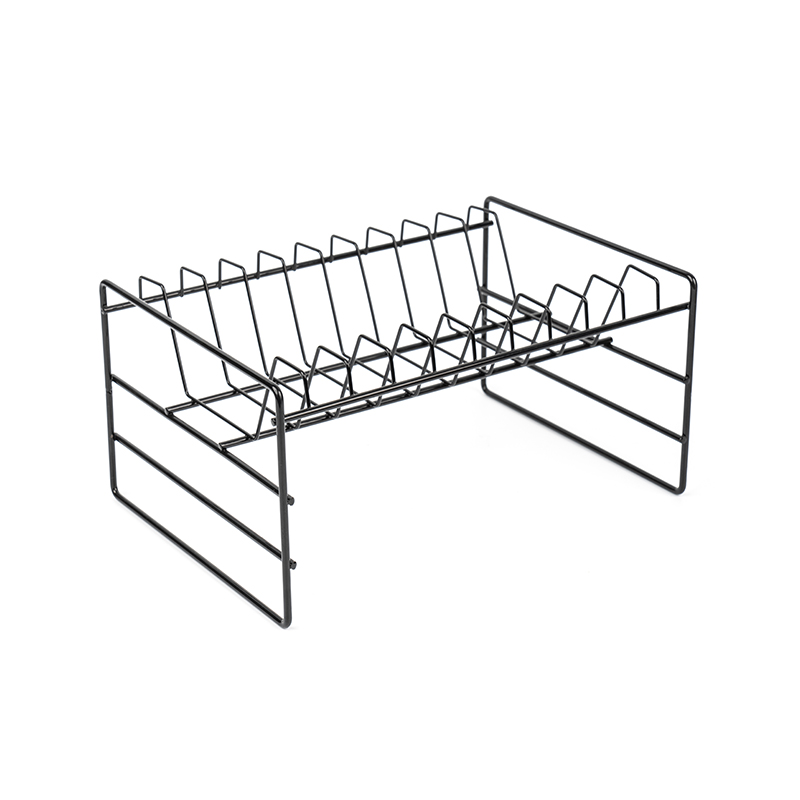 Wholesale Black Multifunctional Sink Storage Rack for Utensils Manufacturer, FacYuyao City Chengze Technology Co., Ltd is China OEM/ODM Black Multifunctional Sink Storage Rack for Utensils manufacturers and Black Mult...View Product →
Choosing a Rust-Resistant Dish Drying Rack
The most reliable way to avoid rust is to choose a rack made from 304 stainless steel, because it contains more chromium and nickel than lower-cost grades and forms a self-healing oxide layer that resists moisture.
Carbon steel racks with powder coating look good when new, but any scratch becomes a rust point. Grade 201 stainless is better but still corrodes in hard-water kitchens. Grade 304 stainless steel is the common standard for kitchen items that face water daily, and manufacturers with strict quality control processes test welds and plating before shipping.
Pay attention to how the rack is built. Welded joints are less likely to trap water than bolted connections, and a drain rack with rounded edges sheds water faster than a flat-bottomed model. If you want a product that already handles daily water exposure, consider a stainless steel dish drying rack or an acid and alkali-resistant drain rack designed for repeated cleaning. Material selection is the core reason why 304 stainless steel is chosen for cutlery and utensil holders, and the same reasoning applies to dish drying racks.
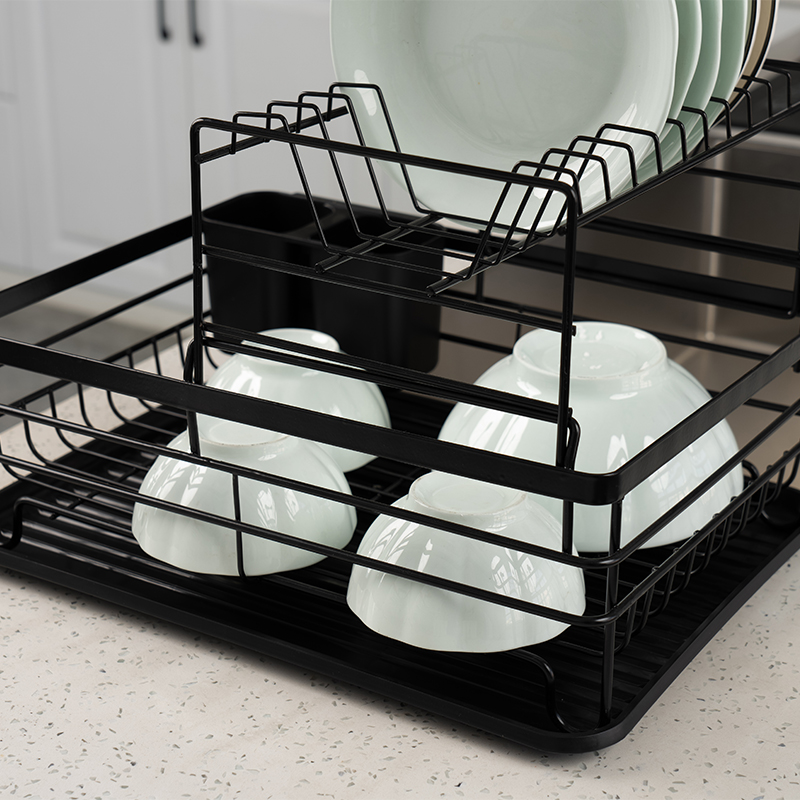 Wholesale Black kitchen countertop drain rack with drain board and dish rack ManYuyao City Chengze Technology Co., Ltd is China OEM/ODM Black kitchen countertop drain rack with drain board and dish rack manufacturers ...View Product →
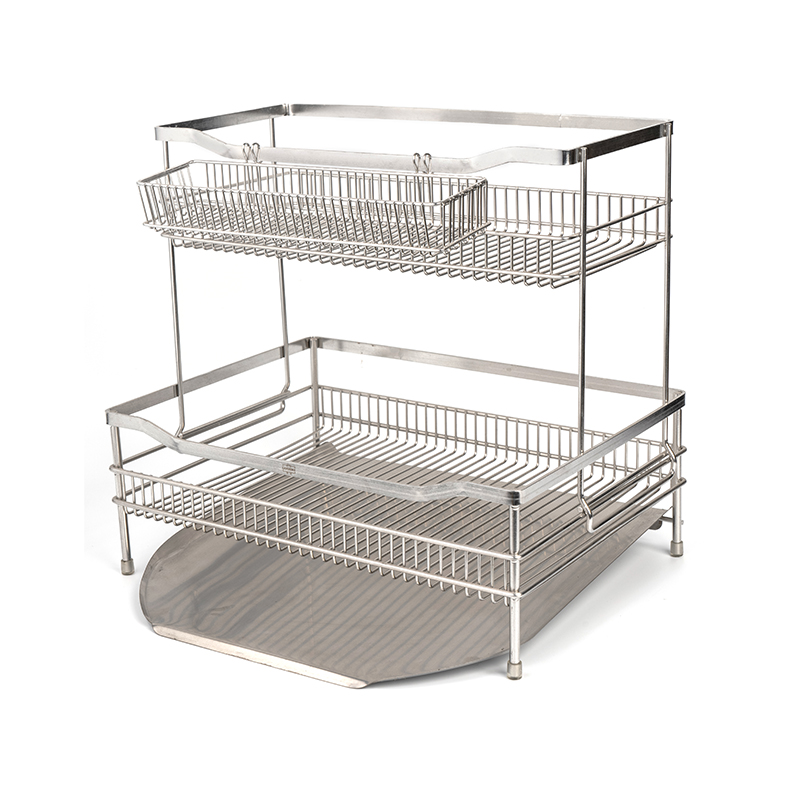 Wholesale Stainless Steel Double Layer Dish Drying Rack with Drainboard ManufactYuyao City Chengze Technology Co., Ltd is China OEM/ODM Stainless Steel Double Layer Dish Drying Rack with Drainboard manufacturers and S...View Product →
Frequently Asked Questions
Here are quick answers to common questions about dish rack rust.
Why does my stainless steel dish rack still rust?
Many racks sold as stainless are made from grade 201 or 430 stainless steel, which resist corrosion far less than 304 stainless steel. A stainless label refers to the material family, not a guarantee against rust. Scratches, hard water, and constant moisture can still cause surface corrosion on lower grades.
Is vinegar safe for a stainless steel rack?
Diluted white vinegar is safe for a short soak on quality stainless steel. Rinse it completely and dry the rack immediately, because long exposure to acid can dull the surface or weaken thin metal.
Can I use olive oil to protect the rack?
No. Olive oil dries sticky and can go rancid, leaving a film on dishes. Food-grade mineral oil works better because it stays stable, forms a thin moisture barrier, and does not turn into a sticky residue.
How often should I deep-clean the rack?
In a kitchen with hard water, deep-clean every two to four weeks. In softer-water homes, every two months is usually enough. Daily towel-drying is more effective than any deep-clean schedule.
What should I avoid when cleaning a dish rack?
Avoid steel wool on stainless steel, because the particles embed in the surface and cause new rust. Avoid abrasive cleaners on powder-coated or painted racks if you do not want to strip the protection.
Final Thoughts
Surface rust on a dish drying rack is fixable, and most racks can be saved with baking soda, vinegar, or citric acid and a little scrubbing.
The key is to clean the rack before rust spreads, dry it after every use, and recognize that a chipped, corroded, or structurally weak rack should be replaced. When you buy a new one, a 304 stainless steel or well-coated model will save you from repeating this chore.